The Palace Museum
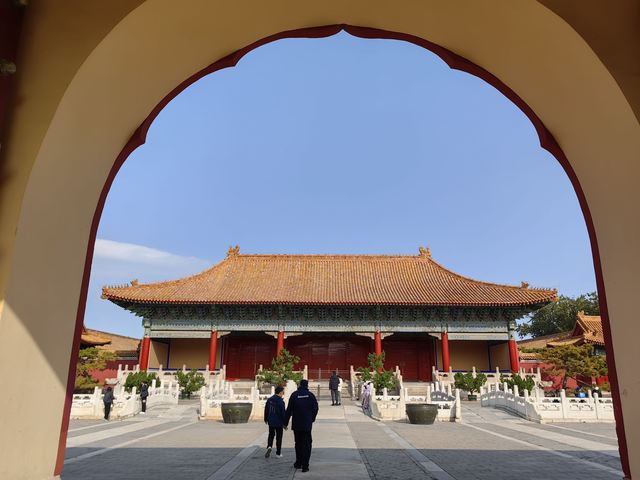
The Forbidden City, located in the heart of Beijing, served as the imperial palace for 24 emperors during the Ming and Qing dynasties. Construction began in the fourth year of the Yongle reign of the Ming dynasty (1406) and took 14 years to complete, giving it a history of over 600 years. As the world's largest and best-preserved ancient wooden architectural complex, the Forbidden City covers an area of 720,000 square meters and comprises more than 9,000 rooms, symmetrically arranged along a central axis. It is divided into two main sections: the Outer Court and the Inner Court. The Outer Court, centered on the Hall of Supreme Harmony, the Hall of Central Harmony, and the Hall of Preserving Harmony, was where grand state ceremonies and important rituals were held. The Inner Court includes the Palace of Heavenly Purity, the Hall of Union, the Palace of Earthly Tranquility, and the Six Eastern and Six Western Palaces, serving as the living quarters for the emperor and his consorts. With its red walls, golden-tiled roofs, intricately carved beams, and painted rafters, the Forbidden City exemplifies the exquisite craftsmanship of traditional Chinese architecture and embodies the ritualistic culture of imperial supremacy. Today, as the Palace Museum, it is open to the public and houses a collection of over 1.8 million precious artifacts, standing as a vital symbol of Chinese civilization and a treasured World Heritage Site.