Beijing Working People's Cultural Palace

⭐ 4.90

Working People's Cultural Palace, east side of Tiananmen, Dongcheng District, Beijing
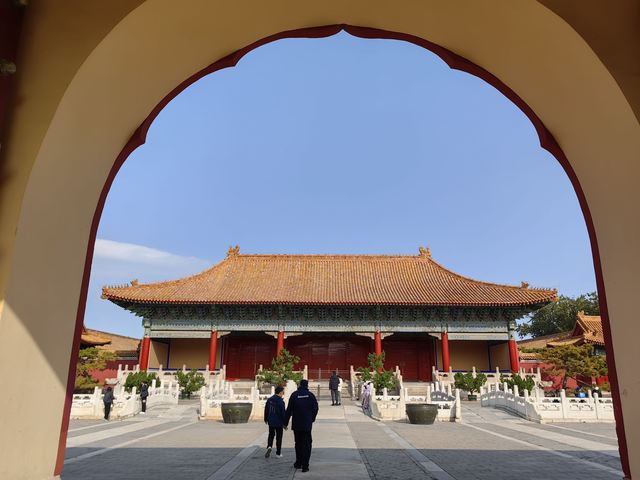
Beijing Working People's Cultural Palace
The Beijing Working People's Cultural Palace sits at the very heart of the capital, on the eastern side of Tiananmen Square, facing Zhongnanhai across the way and the Great Hall of the People to the west, enjoying a location of exceptional distinction. Originally the Imperial Ancestral Temple (Tai Miao) where Ming and Qing dynasty emperors performed sacrificial rites to their ancestors, the complex was first built in the eighteenth year of the Yongle reign of the Ming Dynasty (1420 AD), giving it a history of more than six hundred years. It is one of the most complete and grandest surviving imperial ancestral temple complexes in China, and forms an important part of the Imperial Palaces of the Ming and Qing Dynasties in Beijing and Shenyang, a UNESCO World Heritage Site. In 1950, the temple was converted into the "Beijing Working People's Cultural Palace," with its name inscribed in calligraphy by Chairman Mao Zedong. It thus became the first former imperial temple to be transformed into a cultural venue open to the people after the founding of New China, symbolizing the historical significance of working people becoming masters of the country. Stepping into the Cultural Palace, visitors are immediately greeted by the resplendent and majestic Three Great Halls: the Xiangdian (Hall of Enjoyment), the Qiandian (Sleeping Hall), and the Tiaomiao (Remote Ancestral Temple). The Xiangdian, also known as the main hall, forms the core of the entire complex. With a width of eleven bays and a depth of six, it is crowned by a double-eaved hip roof covered in yellow glazed tiles, projecting an imposing and supreme imperial grandeur. In front of the hall stretches a broad terrace supported by a three-tiered white marble sumeru-style base, where ritual objects such as bronze tripods, bronze cranes, and bronze deer were once displayed. Although the ages have brought many changes, the solemn atmosphere of the great ancestral ceremonies can still be felt today. Flanking the hall, the eastern and western side halls, together with the Halberd Gate and Glazed Tile Gate in front, form a clearly stratified and orderly central axis. The Qiandian, located behind the Xiangdian, is of slightly lower architectural rank and smaller scale, but possesses a more ancient and elegant charm. The Tiaomiao houses the spirit tablets of more distant ancestors; its layout echoes that of the Xiangdian, and together they embody the traditional Chinese concept of "revering heaven and following ancestral rites." Beyond the magnificent palace architecture, the gardens within the Working People's Cultural Palace are equally captivating. The grounds are home to a wealth of ancient and notable trees, with several hundred pine and cypress trees stretching their gnarled branches skyward to form a verdant canopy. The most famous of these is the "Spirit Cypress," a Chinese arborvitae recognized as one of the "Ten Ancient Trees of Beijing," reputed to have been planted by the hand of Ming Emperor Zhu Di several centuries ago. These venerable trees interplay beautifully with the vermilion walls and golden tiles, creating a space that is both solemn and full of life. Scattered throughout the gardens are numerous pavilions, terraces, and waterside structures, along with artificial rockeries and gently flowing streams, where winding paths lead to scenes of unexpected charm. Each spring brings a riot of magnolias, crabapples, and peach blossoms that adorn the ancient imperial gardens with fresh vitality; in summer, dense foliage provides cool shade and refreshing breezes, making it an ideal escape from the heat; autumn gilds the ginkgo leaves in gold and perfumes the air with osmanthus fragrance, as ancient cypresses and red foliage weave a brilliant tapestry; and when winter snow blankets the grounds, the red walls set against the white snow reveal a uniquely serene and majestic imperial beauty. In terms of cultural and historical value, the Working People's Cultural Palace is not only an outstanding example of ancient Chinese architectural art but also a repository of profound historical memory. During the Ming and Qing dynasties, emperors held grand ancestral ceremonies here every year, occasions of extraordinary solemnity that ranked among the most important state rituals. The layout of the Tai Miao strictly follows the ritual codes established in ancient classics such as the Zhou Li (Rites of Zhou) and the Kaogong Ji (Records of Craftsmen), embodying the dynastic planning concept of "altar on the left, altar of soil on the right." It serves as essential material evidence for the study of ancient Chinese political institutions, ritual culture, and architectural art. After the founding of New China, the transformation of the Tai Miao from an imperial forbidden ground into a cultural paradise for the people is itself a chapter of history worthy of remembrance. Today, the site is designated as a Major National Historical and Cultural Site and a Patriotism Education Base of Beijing, continuing to play a vital role in transmitting civilization and enlightening the public. In terms of visitor experience, the most striking impression of the Working People's Cultural Palace is the sense of "finding tranquility amid the bustle." Passing through the gates from the bustling Tiananmen Square, one feels as though transported through a tunnel of time, with the clamor shut out by the towering red walls and dense ancient cypresses. Although the area is not exceptionally vast, every scene is carefully maintained, with architecture, gardens, and flora blending in perfect harmony. The route is clearly laid out and is best explored at a leisurely pace over half a day to a full day. The site offers public cultural spaces such as reading rooms and chess rooms where visitors can rest, while regularly held calligraphy and painting exhibitions, photography displays, and cultural relic exhibitions add a rich artistic atmosphere. Strolling through the grounds, visitors can appreciate the beauty of classical architecture while feeling the vitality of contemporary culture, making it a venue that appeals to all ages and tastes. For practical information, visitors are advised to come in spring (April to May) or autumn (September to October), when the weather is pleasant and the flowers and trees are in full splendor, offering the best experience. Winter scenery after snowfall is also beautiful, but warm clothing is essential. The palace is extremely convenient to reach by public transportation: take Metro Line 1 or Line 2 to Tiananmen East Station and exit through Exit A; multiple bus routes such as No. 1, No. 52, and No. 99 also serve the area. Ticket prices are affordable, with discounts available for students and senior citizens. Opening hours are generally from 8:00 a.m. to 5:00 p.m. daily (subject to official notice). Visitors are recommended to wear comfortable flat shoes and enter through the South Gate (the main entrance), exploring the Three Great Halls in sequence before circling through the garden areas; a complete visit takes approximately two to three hours. The palace can also be combined with nearby attractions such as Tiananmen Square and the Forbidden City to form a classic cultural itinerary covering the core section of Beijing's central axis. A friendly reminder: please do not climb or carve on the ancient trees; observe proper order and behave courteously when visiting the halls, so that together we can help preserve this precious historical and cultural heritage.

Traveler reviews

Family, don't miss the Beijing Workers' Cultural Palace when you visit Beijing! I’d call it a hidden gem in the city! As soon as you enter the Cultural Palace, the red walls and yellow tiles bring a strong sense of history. Every architectural detail seems to tell stories of the past. Walking around, the elegant garden scenery makes you forget the city's hustle and bustle, and you feel completely at peace. Recently, the palace has had an osmanthus exhibition. As soon as you step into the exhibition area, the sweet scent of osmanthus surrounds you, sweet and penetrating. Golden osmanthus, silver osmanthus, and red osmanthus are in full bloom, with tiny petals clustered in groups, adorning the branches. As the breeze blows, the scattered petals fall like a golden rain, c...
⭐ 5 · Phoenix Cole Expand
The Cultural Palace not only houses the Imperial Ancestral Temple, one of the "Five Altars and Eight Temples" of old Beijing, but from the north side of the park, you can see the southeast corner tower of the Forbidden City across the Tongzi River. At...
⭐ 5 · Skyler Wren Expand