Simatai Great Wall

⭐ 5.00

Simatai Village, Gubeikou Town, Miyun District, Beijing, China
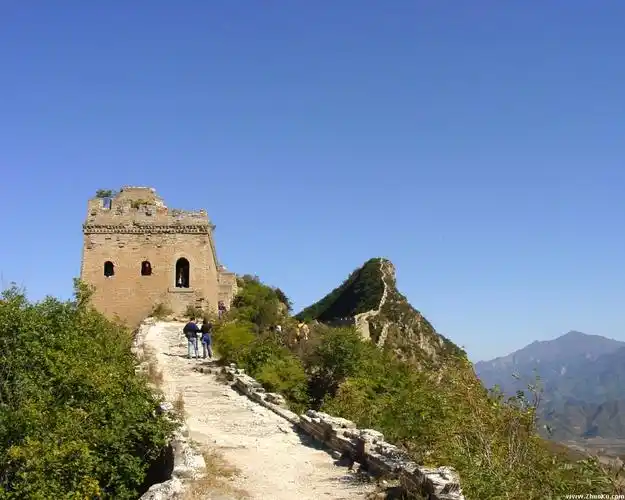
Simatai Great Wall
Construction began in 1373 during the early Ming Dynasty, when the Hongwu Emperor ordered fortifications reinforced against Mongol incursions from the steppes. Later, the celebrated general Qi Jiguang—who famously defeated the wokou pirates along China's southeastern coast—oversaw major strengthening in the 1560s. Simatai formed the eastern anchor of the Jizhen defensive line, a system contemporary with Spain's El Escorial and the bastioned fortresses of Renaissance Italy. Designated a UNESCO World Heritage Site in 1987 as part of the Great Wall, Simatai is widely regarded as the "crown jewel" of Wall research, offering scholars an unparalleled window into late-imperial military architecture. What sets Simatai apart is the sheer variety packed into 5.4 km. Its 35 watchtowers range from single-arch sentries to five-eyed keeps and multi-storey towers, with ceilings featuring intricate coffered patterns in grid and checkerboard designs rivaling European Gothic cathedral woodwork. Brick inscriptions such as "Built in the Fifth Year of Wanli" (1577) remain visible, offering invaluable dating evidence for Ming engineers. The Wall's dramatic profile includes the near-vertical Heavenly Ladder, ascending at roughly 85 degrees, and the Sky Bridge, a knife-edge ridge barely 40 cm wide in places—comparable in exposure to Italy's via ferrata routes in the Dolomites. Crowning the ridge at 986 metres, Wangjing Tower—"The Beijing-Watcher"—is Simatai's highest point. On clear days, visitors can trace the faint outline of Beijing's skyline nearly 100 km to the southwest, framed by rolling Yanshan peaks. Morning visits often catch cloud seas pooling in the valleys below—a phenomenon Chinese poets compare to "a heavenly river"—while autumn paints the slopes in russet maples and winter cloaks the battlements in snow. The climb demands stamina but rewards hikers with panoramas reminiscent of those from Mont Ventoux in Provence or the fire lookouts of the American Rockies. Simatai holds a singular distinction: it is the only section of the Great Wall open for night tours throughout the year. After dusk, warm-toned floodlights trace the Wall's undulating form across the mountainsides, evoking the dragon of Chinese legend. Below, the adjacent Gubei Water Town—a recreated Ming-style village—glows with lanterns and reflects in its canals, creating a tableau not unlike a Venetian carnival set against alpine scenery. The combination of illuminated Wall, lantern-lit streets, and starlit mountain backdrop produces a magical atmosphere impossible to experience at more developed sites such as Badaling, making Simatai a magnet for photographers and romantics alike. The site sits near Gubeikou Town in Miyun District, roughly 130 km from central Beijing—a two-hour drive via the G45 Jingcheng Expressway, Exit 24. Set your GPS to "Gubei Water Town Parking." Daytime admission runs from 9:00 to 16:30 (last entry 16:00); night sessions operate 18:00 to 22:30. Tickets cost 40 RMB, with a one-way cable car at 90 RMB and round-trip at 160 RMB—strongly recommended for average fitness levels, as the cable car delivers hikers to Towers 5–8, from where the most dramatic sections can be tackled on foot. The best season runs May through October. Given Simatai's precipitous gradients, sturdy non-slip hiking shoes are essential, and visitors should follow staff directions at all times. Climbing on closed sections or scrambling onto unrestored stretches is strictly prohibited and genuinely dangerous. Those with heart conditions, high blood pressure, or severe vertigo should approach the Heavenly Ladder and Sky Bridge with particular caution. Graffiti and brick-removal are criminal offences under Chinese heritage law. Travellers who treat Simatai with the respect owed to a 650-year-old monument will find their reward in an experience few places on earth can match: walking a genuine, unrestored ribbon of Ming history along the roof of northern China.

Traveler reviews

Many sections have no railings, so it feels quite wild and original. The slopes aren't very steep, but it's not really suitable for older visitors. We took the cable car up at 9:15, then hiked up to Tower 10, and walked back down — the whole trip took us less than three hours. Right below the Wa...
⭐ 4 · Charlie Brooks Expand
Simatai Great Wall is now combined with Gubei Water Town as one ticket. You can buy tickets separately, and even after taking the shuttle bus in, there's still a fair bit of walking before you reach the wall itself. I climbed up to Tower 4, bu...
⭐ 5 · Robin Hayes Expand