Tian's Chongqing Chicken Pot
Sichuan cuisine · ⭐ 3.9
No. 2, Peide Lane
Dragon Mate tips
If you are traveling in China to visit Nanjing, Dragon Mate users do not strongly recommend this restaurant. If you enjoy exploring, you can still try it and see what you find. This restaurant is located at No. 2, Peide Lane. It is a Sichuan cuisine place, and the flavors are spicy (numbing/spicy). Dragon Mate recommends you try: Tofu Skin, Spam, Large Chicken Stew.
If you cannot eat spicy food, use Dragon Mate to say “no spicy” before ordering, and tell the staff clearly.
If you do not eat pork, make sure to use Dragon Mate voice to clearly tell the staff “no pork” before ordering.
Restaurant guide
- City: Nanjing
- Category: Sichuan cuisine
- Rating: 3.9
- Address: No. 2, Peide Lane
- Popular dishes: Tofu Skin, Spam, Large Chicken Stew, Pork Rib Stew, Old-style fried dough sticks
China trip · China travel
Traveling in China? For your China trip and China travel needs—finding great food, discovering beautiful sights, ordering dishes, and communicating—Dragon Mate can handle it all. Dragon Mate is the most useful assistant for traveling in China.

Dishes
 Tofu SkinTofu skin, also known as百叶 or bean curd sheet, is a soy-based product made primarily from yellow beans. It has a pale yellow color, a delicate texture, and is as thin as paper. It can be prepared by mixing cold, stir-frying, or used as an ingredient. Commonly paired with vegetables, meat, or seafood in cooking to enhance texture and flavor.
 SpamSpam is a canned food product made primarily from pork, processed through grinding, seasoning, and steaming. It has a fine texture and delicious taste, commonly used as an ingredient in hot pot, barbecue dishes, or eaten directly sliced.
 Large Chicken StewA hearty stew made with whole chicken and vegetables, slow-cooked to tender perfection.
 Pork Rib StewBraised spare ribs dish mainly uses pork ribs with vegetables or tofu as accompaniments, cooked by slow stewing. After blanching, ribs are simmered in a clay pot with ingredients, water, and seasonings until tender and the broth is rich.
 Old-style fried dough sticksOld oil sticks are a classic Chinese breakfast dish, primarily made from flour and cooking oil. They are prepared by kneading the dough, rolling it out, cutting it into strips, and then frying until golden and crispy.
 Fatty Intestine Chicken StewFatty intestine chicken stew is made with pork intestines and chicken, simmered with ginger, scallions, garlic, and other seasonings. The intestines are blanched first to remove odor, then cooked slowly with chicken to blend flavors. The broth is rich and the ingredients are tender and flavorful.
 Cured PorkPreserved pork, primarily made from fatty pork belly, is prepared by curing, baking, or sun-drying. It has a golden color, firm texture, and features a unique savory aroma with a smoky flavor.
 Fermented soybean skinFermented soybean curd, a traditional Chinese soy product. Made from yellow soybeans through soaking, grinding, boiling, and other processes, which form a film on the surface of soy milk that is then dried. It has a yellow-white color, dry texture, and a rich soy aroma. In cooking, it can be paired with meat or vegetables and prepared using methods such as stir-frying, stewing, or boiling to create various delicious dishes.
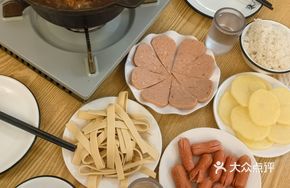 Extra Large Chicken PotExtra Large Chicken Pot is a Chinese dish made with a whole chicken and various seasonings and side dishes simmered together. Main ingredients include chicken, chili, Sichuan pepper, ginger, garlic, etc., with a rich and spicy flavor.
 Sour CabbageSauerkraut is a type of pickled vegetable made from fresh vegetables through a pickling process. During production, vegetables ferment under the influence of salt and other seasonings, developing a unique sour taste and flavor. Sauerkraut is commonly used as a side dish or in cooking other dishes to add acidity and texture.
 Fish BallsFish balls are spherical foods made primarily from fish meat, processed through fine cutting, stirring, and shaping techniques. To prepare them, fresh fish meat is selected, deboned, cut into small pieces, then mashed with the back of a knife to form fish paste. Appropriate amounts of starch, egg white, salt, and other seasonings are added and mixed evenly. Finally, the mixture is shaped by hand or tools into small balls and boiled in hot water until cooked through.