Wang Xizhi's Former Residence
⭐ 3.60
Lanshan District, Linyi City, Shandong Province, China
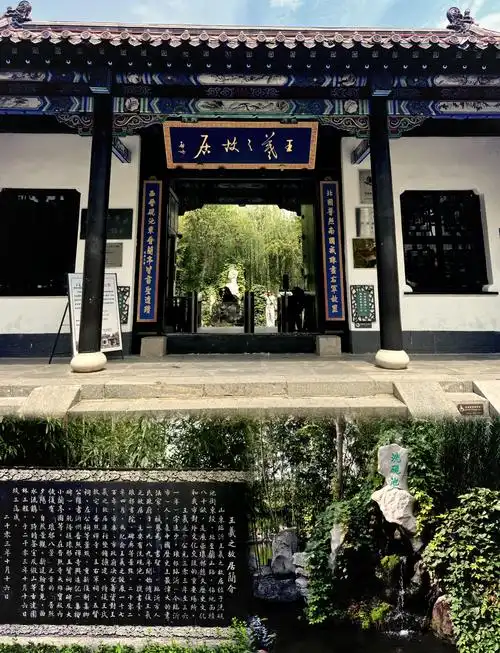 Wang Xizhi (303–361 AD) lived through one of history's most transformative eras: the Eastern Jin Dynasty, contemporary with the fall of the Western Roman Empire and the flowering of Late Antique culture in the Mediterranean. While Augustine was writing *Confessions* and Emperor Constantine had recently reshaped Christianity, Wang was perfecting the art of running script that would define East Asian aesthetics for seventeen centuries. His masterpiece, the *Preface to the Orchid Pavilion* (353 AD)—composed during a riverside poetry gathering—is often compared to a Bach cantata or a Shakespeare sonnet in its fusion of technical brilliance and emotional depth. Visiting his birthplace offers a window into this parallel world of refined aristocratic culture, the equivalent of standing in the room where Beethoven composed his Ninth.
The 80-mu (about 13-acre) compound follows classical Chinese garden principles, enclosed by gray brick walls and arranged around the still waters of the Ink-Washing Pool. Puzhao Temple's surviving Mahavira Hall anchors the site and gives its name to "Puzhao Sunset," ranked first among the Eight Scenic Views of ancient Langya. Winding paths lead through bamboo groves to the Goose Pool, marked by a stele traditionally attributed to Wang's son Wang Xianzhi, and to a recreated "winding stream" channel that echoes the legendary Orchid Pavilion gathering. The architectural mood is restrained and contemplative—closer in spirit to a Japanese Zen garden than to the bombast of European baroque palaces.
The site's cultural heart is its hundred-meter Calligraphy Stele Corridor, inset with rubbings and inscriptions by master calligraphers through the centuries. The Wang Youjun Ancestral Hall venerates Wang Xizhi alongside his son Wang Xianzhi and grandson Wang Zhiyong, while the Five Sages Hall commemorates five distinguished scholars from the Langya region. Most remarkable is the Jin Dynasty Tomb beneath the Ink-Washing Pool, unearthed during the 2003 expansion. As an intact Eastern Jin aristocratic burial of impressive scale—on par with Britain's Sutton Hoo or the Roman catacombs in structural ambition—it was selected as one of China's Top Ten Archaeological Discoveries, offering rare insight into Wei-Jin burial customs and the material world of elite calligraphers.
The residence sits at 21 Xiyanchi Street in central Linyi's Lanshan District, easily reached by city bus K6 (south gate) or K5 (north gate), or a pleasant walk or bike ride from downtown. Admission is around 20 RMB, with free entry for seniors, children, and military personnel and half-price student tickets. Hours run 8:30 to 17:30, extended to 18:00 in summer (last ticket sold at 17:00). An audio guide rents for roughly 15 RMB and is highly recommended for context on the calligraphic references. Plan 1.5 to 2 hours, entering through the south gate and following the route: Ink-Washing Pool → Goose Pool → Wang Youjun Hall → Five Sages Hall → Jin Tomb Exhibition Hall.
Photographs are prohibited in some exhibition halls, and visitors should dress modestly and speak softly in the temple and ancestral halls. For a fuller day, combine the visit with the Linyi City Museum, which provides excellent regional context. Soft morning or late-afternoon light offers the best photography, when the temple's golden eaves catch the sun and the pool mirrors the surrounding bamboo. Few sites offer such an intimate encounter with the birthplace of an artistic tradition still revered across East Asia—and almost none can claim a still-extant tomb waiting beneath their central pond.
Wang Xizhi (303–361 AD) lived through one of history's most transformative eras: the Eastern Jin Dynasty, contemporary with the fall of the Western Roman Empire and the flowering of Late Antique culture in the Mediterranean. While Augustine was writing *Confessions* and Emperor Constantine had recently reshaped Christianity, Wang was perfecting the art of running script that would define East Asian aesthetics for seventeen centuries. His masterpiece, the *Preface to the Orchid Pavilion* (353 AD)—composed during a riverside poetry gathering—is often compared to a Bach cantata or a Shakespeare sonnet in its fusion of technical brilliance and emotional depth. Visiting his birthplace offers a window into this parallel world of refined aristocratic culture, the equivalent of standing in the room where Beethoven composed his Ninth.
The 80-mu (about 13-acre) compound follows classical Chinese garden principles, enclosed by gray brick walls and arranged around the still waters of the Ink-Washing Pool. Puzhao Temple's surviving Mahavira Hall anchors the site and gives its name to "Puzhao Sunset," ranked first among the Eight Scenic Views of ancient Langya. Winding paths lead through bamboo groves to the Goose Pool, marked by a stele traditionally attributed to Wang's son Wang Xianzhi, and to a recreated "winding stream" channel that echoes the legendary Orchid Pavilion gathering. The architectural mood is restrained and contemplative—closer in spirit to a Japanese Zen garden than to the bombast of European baroque palaces.
The site's cultural heart is its hundred-meter Calligraphy Stele Corridor, inset with rubbings and inscriptions by master calligraphers through the centuries. The Wang Youjun Ancestral Hall venerates Wang Xizhi alongside his son Wang Xianzhi and grandson Wang Zhiyong, while the Five Sages Hall commemorates five distinguished scholars from the Langya region. Most remarkable is the Jin Dynasty Tomb beneath the Ink-Washing Pool, unearthed during the 2003 expansion. As an intact Eastern Jin aristocratic burial of impressive scale—on par with Britain's Sutton Hoo or the Roman catacombs in structural ambition—it was selected as one of China's Top Ten Archaeological Discoveries, offering rare insight into Wei-Jin burial customs and the material world of elite calligraphers.
The residence sits at 21 Xiyanchi Street in central Linyi's Lanshan District, easily reached by city bus K6 (south gate) or K5 (north gate), or a pleasant walk or bike ride from downtown. Admission is around 20 RMB, with free entry for seniors, children, and military personnel and half-price student tickets. Hours run 8:30 to 17:30, extended to 18:00 in summer (last ticket sold at 17:00). An audio guide rents for roughly 15 RMB and is highly recommended for context on the calligraphic references. Plan 1.5 to 2 hours, entering through the south gate and following the route: Ink-Washing Pool → Goose Pool → Wang Youjun Hall → Five Sages Hall → Jin Tomb Exhibition Hall.
Photographs are prohibited in some exhibition halls, and visitors should dress modestly and speak softly in the temple and ancestral halls. For a fuller day, combine the visit with the Linyi City Museum, which provides excellent regional context. Soft morning or late-afternoon light offers the best photography, when the temple's golden eaves catch the sun and the pool mirrors the surrounding bamboo. Few sites offer such an intimate encounter with the birthplace of an artistic tradition still revered across East Asia—and almost none can claim a still-extant tomb waiting beneath their central pond.