Lu Xun's Hometown
⭐ 4.50
Urban District, Shaoxing City, Zhejiang Province, China
 Lu Xun (1881–1936) stands alongside Rabindranath Tagore and Franz Kafka as one of the transformative literary voices of the early twentieth century, yet his genius emerged from a remarkably specific place: the canal-laced quarters of old Shaoxing, a Jiangnan city whose waterways earned it the epithet "Venice of the East." Born into a declining scholarly family, the young Zhou Shuren—as Lu Xun was then known—absorbed the rhythms of traditional Chinese life here before departing for Nanjing, Tokyo, and eventually Beijing, where his short stories and essays would ignite China's New Culture Movement. Walking his childhood streets offers a rare literary pilgrimage, akin to visiting Dickens's Portsmouth or Goethe's Frankfurt.
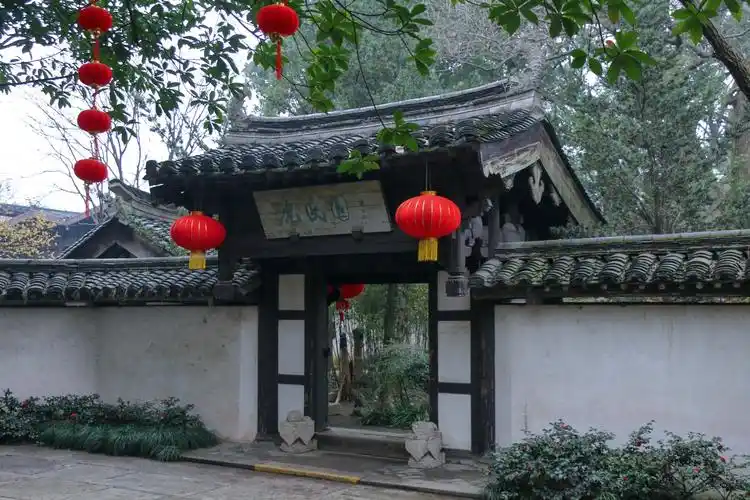
The architecture preserves an outstanding ensemble of late-Qing dynasty "taimên" mansions—stately brick-and-timber compounds whose black-tiled roofs, whitewashed walls, carved window lattices, and stone-paved courtyards exemplify the refined Jiangnan scholar-gentry style. The Zhou family's Old and New Taimên reveal the hierarchical layout of a wealthy Qing household, where multiple generations lived according to strict Confucian family rituals. Unlike the imperial grandeur of Beijing's Forbidden City, these buildings convey the more intimate domestic world of China's educated elite.
Two spaces anchor the visitor experience: the Hundred Plants Garden, Lu Xun's childhood playground immortalized in his essay "From Hundred Plants Garden to Three-Flavor Study," with its mulberry trees and earthen walls still recognizably intact; and the Three-Flavor Study itself, a preserved private school where the young scholar secretly carved the character "早" (early) into his desk—a moment every Chinese student encounters in school textbooks. The Lu Xun Memorial Hall displays manuscripts, photographs, and personal artifacts that trace his evolution from medical student to literary revolutionary.
The site offers cultural programming that brings textbooks to life: morning readings at Three-Flavor Study and traditional Shaoxing opera performances recreate the atmosphere of late-imperial education. Admission is free, but visitors must reserve through the official WeChat accounts of Shaoxing Cultural Tourism Group or Shaoxing Lu Xun Memorial Hall, presenting ID at entry. Opening hours run 8:30–21:00 Tuesday through Sunday (last entry 20:30; extended summer evenings), with shorter Monday hours of 8:30–17:00. Free commentary is available in limited supply from the visitor center, though booking a guided tour is recommended for deeper insight.
Plan roughly three to four hours following a clockwise route: Lu Xun Ancestral Residence, Three-Flavor Study, Lu Xun Former Residence, Hundred Plants Garden, and Memorial Hall. The site sits adjacent to Shen Garden—a Song-dynasty romance garden celebrated in Lu Xun's poetry—and the historic Cangqiao Straight Street, where travelers can sample Shaoxing specialties including stinky tofu and yellow wine ice cream. Weekends draw crowds; weekday mornings or late afternoons offer a quieter experience. Comfortable flat shoes are essential, as the cobbled and stone-paved lanes, though atmospheric, can be uneven underfoot.
Lu Xun (1881–1936) stands alongside Rabindranath Tagore and Franz Kafka as one of the transformative literary voices of the early twentieth century, yet his genius emerged from a remarkably specific place: the canal-laced quarters of old Shaoxing, a Jiangnan city whose waterways earned it the epithet "Venice of the East." Born into a declining scholarly family, the young Zhou Shuren—as Lu Xun was then known—absorbed the rhythms of traditional Chinese life here before departing for Nanjing, Tokyo, and eventually Beijing, where his short stories and essays would ignite China's New Culture Movement. Walking his childhood streets offers a rare literary pilgrimage, akin to visiting Dickens's Portsmouth or Goethe's Frankfurt.
The architecture preserves an outstanding ensemble of late-Qing dynasty "taimên" mansions—stately brick-and-timber compounds whose black-tiled roofs, whitewashed walls, carved window lattices, and stone-paved courtyards exemplify the refined Jiangnan scholar-gentry style. The Zhou family's Old and New Taimên reveal the hierarchical layout of a wealthy Qing household, where multiple generations lived according to strict Confucian family rituals. Unlike the imperial grandeur of Beijing's Forbidden City, these buildings convey the more intimate domestic world of China's educated elite.
Two spaces anchor the visitor experience: the Hundred Plants Garden, Lu Xun's childhood playground immortalized in his essay "From Hundred Plants Garden to Three-Flavor Study," with its mulberry trees and earthen walls still recognizably intact; and the Three-Flavor Study itself, a preserved private school where the young scholar secretly carved the character "早" (early) into his desk—a moment every Chinese student encounters in school textbooks. The Lu Xun Memorial Hall displays manuscripts, photographs, and personal artifacts that trace his evolution from medical student to literary revolutionary.
The site offers cultural programming that brings textbooks to life: morning readings at Three-Flavor Study and traditional Shaoxing opera performances recreate the atmosphere of late-imperial education. Admission is free, but visitors must reserve through the official WeChat accounts of Shaoxing Cultural Tourism Group or Shaoxing Lu Xun Memorial Hall, presenting ID at entry. Opening hours run 8:30–21:00 Tuesday through Sunday (last entry 20:30; extended summer evenings), with shorter Monday hours of 8:30–17:00. Free commentary is available in limited supply from the visitor center, though booking a guided tour is recommended for deeper insight.
Plan roughly three to four hours following a clockwise route: Lu Xun Ancestral Residence, Three-Flavor Study, Lu Xun Former Residence, Hundred Plants Garden, and Memorial Hall. The site sits adjacent to Shen Garden—a Song-dynasty romance garden celebrated in Lu Xun's poetry—and the historic Cangqiao Straight Street, where travelers can sample Shaoxing specialties including stinky tofu and yellow wine ice cream. Weekends draw crowds; weekday mornings or late afternoons offer a quieter experience. Comfortable flat shoes are essential, as the cobbled and stone-paved lanes, though atmospheric, can be uneven underfoot.