Minhou County Museum
⭐ 4.20
No. 18, Xiyuangong Road, Shangjie Town, Minhou County, Fuzhou City, Fujian Province, China
 Minhou sits at the heart of what locals proudly call the "First County of the Eight Min," a cradle of civilization in southeastern China whose Tanshishan Culture flourished during the Neolithic era roughly 5,000 years ago—roughly contemporary with Britain's Stonehenge builders and the pottery-making communities of the Danube basin. The museum's permanent exhibition, "The First County of the Eight Min – Minhou's Human and Ecological Story," unfolds in three sweeping chapters: "Passing the Torch," "Three Counties United," and "Convergence of Winds," tracing the migrations and cultural exchanges that shaped Fujian from prehistoric shell-mound villages to the maritime trading networks of imperial China, much as the Silk Road wove together the Mediterranean world.
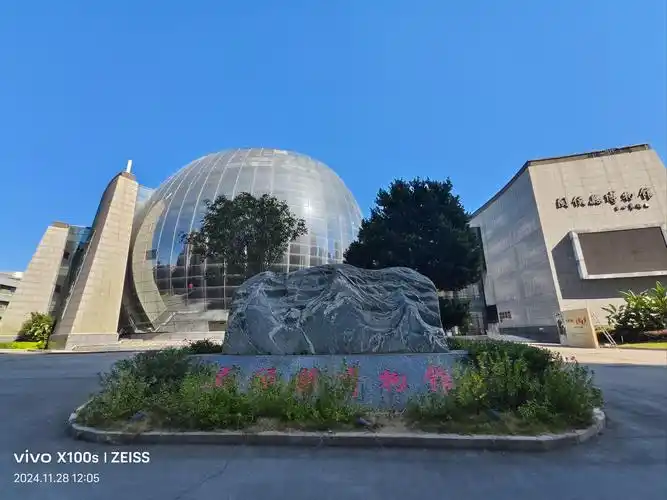
The architecture is unmistakably contemporary: a spacious, light-filled hall with clean geometric lines, thoughtfully laid out to keep visitors flowing effortlessly between galleries. Just as the British Museum balances soaring Victorian galleries with modern additions, Minhou County Museum pairs traditional artifact displays with a striking CAVE immersive theater, AR stations, and gesture-recognition interfaces that bring history into the digital age. Outside, the cultural atmosphere deepens with two neighboring treasures: the Tanshishan archaeological site museum, preserving the Neolithic shell mound in situ, and the Folk Culture Garden, which echoes open-air ethnographic parks like Skansen in Stockholm.
Culturally, the museum is a feast for the curious. Standout experiences include a naked-eye 3D reenactment of the legendary "Eight Surnames Enter Fujian" migration—an event often compared to the Germanic and Anglo-Saxon wanderings that reshaped early medieval Europe—interactive Southern Shaolin kung fu drills that track your movements, holographic Min Opera performances, and AR adventures along the Maritime Silk Road, the same seaborne trade network that connected Yuan-dynasty Quanzhou (then called Zayton) to Venetian and Genoese merchants. A hundred-meter animated ecological scroll further traces the region's river valleys and coastline. Younger visitors rate the fun factor a lively 4.5 out of 5.
Practical matters are refreshingly simple. The museum is at 46 Minsu Garden Road, Ganzhe Subdistrict, Minhou County, Fuzhou, and entry is completely free—just bring a passport or ID for registration at the door. Hours run Tuesday through Sunday, 9:00 a.m. to 5:00 p.m., with last admission at 4:30 p.m.; it closes on Mondays. Free underground parking is available on-site, and air conditioning throughout makes a light jacket a wise idea in summer. Plan on roughly 1.5 to 2 hours, though weekend crowds at the interactive stations may mean a short wait.
For a richer half-day, combine your visit with the adjacent Tanshishan archaeological museum, creating an "authentic ruins plus digital exhibits" cultural circuit—much as tourists pair the Roman Forum with the Capitoline Museums in Rome. Arriving between 9:30 and 10:00 a.m. helps you beat the rush and catch the free guided tours offered at 10:00 a.m. and 3:00 p.m. Before heading out, check the official WeChat account for any temporary special exhibitions or occasional evening events.
Why visit? Because Minhou County Museum offers something rare: a thoughtful, technologically inventive introduction to a corner of China whose 5,000-year story rarely reaches Western guidebooks. Few places let you spar silently with a holographic kung fu master one moment and step into a vivid reconstruction of Neolithic seafaring the next. For families, culture seekers, and anyone tracing the deep roots of Maritime China, it is an unexpectedly rewarding detour from Fuzhou's better-known highlights.
Minhou sits at the heart of what locals proudly call the "First County of the Eight Min," a cradle of civilization in southeastern China whose Tanshishan Culture flourished during the Neolithic era roughly 5,000 years ago—roughly contemporary with Britain's Stonehenge builders and the pottery-making communities of the Danube basin. The museum's permanent exhibition, "The First County of the Eight Min – Minhou's Human and Ecological Story," unfolds in three sweeping chapters: "Passing the Torch," "Three Counties United," and "Convergence of Winds," tracing the migrations and cultural exchanges that shaped Fujian from prehistoric shell-mound villages to the maritime trading networks of imperial China, much as the Silk Road wove together the Mediterranean world.
The architecture is unmistakably contemporary: a spacious, light-filled hall with clean geometric lines, thoughtfully laid out to keep visitors flowing effortlessly between galleries. Just as the British Museum balances soaring Victorian galleries with modern additions, Minhou County Museum pairs traditional artifact displays with a striking CAVE immersive theater, AR stations, and gesture-recognition interfaces that bring history into the digital age. Outside, the cultural atmosphere deepens with two neighboring treasures: the Tanshishan archaeological site museum, preserving the Neolithic shell mound in situ, and the Folk Culture Garden, which echoes open-air ethnographic parks like Skansen in Stockholm.
Culturally, the museum is a feast for the curious. Standout experiences include a naked-eye 3D reenactment of the legendary "Eight Surnames Enter Fujian" migration—an event often compared to the Germanic and Anglo-Saxon wanderings that reshaped early medieval Europe—interactive Southern Shaolin kung fu drills that track your movements, holographic Min Opera performances, and AR adventures along the Maritime Silk Road, the same seaborne trade network that connected Yuan-dynasty Quanzhou (then called Zayton) to Venetian and Genoese merchants. A hundred-meter animated ecological scroll further traces the region's river valleys and coastline. Younger visitors rate the fun factor a lively 4.5 out of 5.
Practical matters are refreshingly simple. The museum is at 46 Minsu Garden Road, Ganzhe Subdistrict, Minhou County, Fuzhou, and entry is completely free—just bring a passport or ID for registration at the door. Hours run Tuesday through Sunday, 9:00 a.m. to 5:00 p.m., with last admission at 4:30 p.m.; it closes on Mondays. Free underground parking is available on-site, and air conditioning throughout makes a light jacket a wise idea in summer. Plan on roughly 1.5 to 2 hours, though weekend crowds at the interactive stations may mean a short wait.
For a richer half-day, combine your visit with the adjacent Tanshishan archaeological museum, creating an "authentic ruins plus digital exhibits" cultural circuit—much as tourists pair the Roman Forum with the Capitoline Museums in Rome. Arriving between 9:30 and 10:00 a.m. helps you beat the rush and catch the free guided tours offered at 10:00 a.m. and 3:00 p.m. Before heading out, check the official WeChat account for any temporary special exhibitions or occasional evening events.
Why visit? Because Minhou County Museum offers something rare: a thoughtful, technologically inventive introduction to a corner of China whose 5,000-year story rarely reaches Western guidebooks. Few places let you spar silently with a holographic kung fu master one moment and step into a vivid reconstruction of Neolithic seafaring the next. For families, culture seekers, and anyone tracing the deep roots of Maritime China, it is an unexpectedly rewarding detour from Fuzhou's better-known highlights.