West Lake Park
⭐ 4.70
West Lake Park, Gulou District, Fuzhou, Fujian Province, China
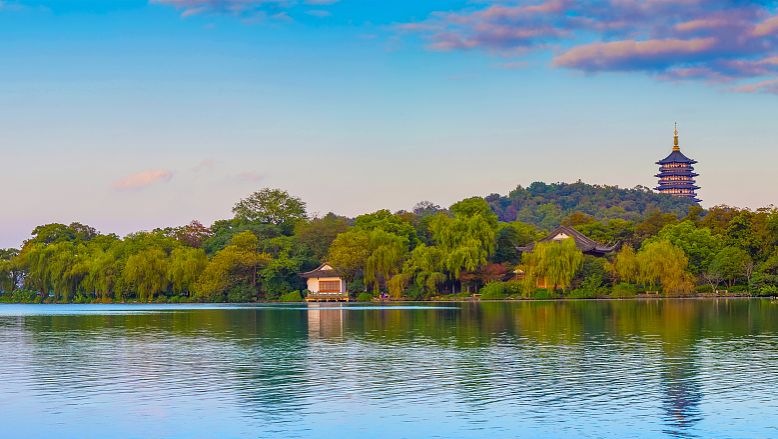 Founded in 282 AD during the Western Jin dynasty—roughly contemporary with the late Roman Empire—Fuzhou's West Lake Park predates the famous Hangzhou West Lake by some four centuries. Originally laid out as a royal garden for the kings of the Min kingdom during the Five Dynasties period, the park has been continuously refined across the Song, Ming, and Qing dynasties. The great Southern Song poet Xin Qiji compared its beauty to the legendary Xi Shi before her marriage, a comparison that captures the landscape's delicate, untouched quality. Standing here, one experiences a continuous thread of Chinese imperial garden culture stretching back nearly seventeen centuries.
The park's layout exemplifies the classical Chinese principle of "made by human hands, yet appearing as nature's own work." At its heart stretches an expansive lake, with three islands—Kaihua, Xieping, and Yaojiao—rising like green jewels from the water. Willow-shaded embankments, the graceful Feihong Bridge, and the elegant Yudai Bridge connect these islands in a choreography of water and stone. A wooden boardwalk circles the entire shoreline, perfect for leisurely strolling or cycling, while the carefully composed vistas reveal fresh perspectives at every turn, much like the celebrated serpentine designs of European landscape gardens at Stowe or Versailles.
The park brims with cultural treasures that reward curious visitors. The thousand-year-old Kaihua Temple, with its solemn red walls and curling incense smoke, anchors the spiritual heart of the grounds. Nearby, the Wanzaitang memorial hall honors centuries of Fujianese poets whose verses still echo across the lake. Most striking is the Gui Zhai, the modest study where the young Lin Zexu—the official who destroyed British opium in 1839 and sparked the First Opium War—once read his Confucian classics. Twin osmanthus trees he planted with his own hands still flourish in the courtyard, a living connection to one of modern China's most consequential figures.
Each season paints the park in distinct colors: spring brings "Immortal Bridge and Willow Shadows," where trailing willows mingle with blooming peach blossoms; summer transforms the lake into a fragrant sea of lotus blossoms at the Lotus Pavilion; the autumn chrysanthemum festival in November draws crowds admiring golden blooms; and winter reveals crystalline waters reflecting quiet skies. Throughout the year, locals practice tai chi at dawn, cool off in shaded pavilions, and practice calligraphy with water on stone—offering travelers an authentic glimpse of contemporary Chinese urban life woven seamlessly into an ancient landscape.
The park sits at 71 Hubin Road in Gulou District, easily reached via Metro Line 4 to Ximen Station or buses 54, 65, and 66. Admission is free, with daily hours from 5:30 AM to 10:30 PM (last entry at 10:00 PM). Allow two to three hours for a full visit; paddleboats can be hired for around 20 yuan per hour. Specific halls like Gui Zhai have limited opening hours, so check ahead. Early morning and late afternoon offer the softest light and fewest crowds. The park lies adjacent to the Fujian Provincial Museum and just a short ride from the historic Three Lanes and Seven Alleys district, making it easy to combine into a half- or full-day cultural exploration.
Founded in 282 AD during the Western Jin dynasty—roughly contemporary with the late Roman Empire—Fuzhou's West Lake Park predates the famous Hangzhou West Lake by some four centuries. Originally laid out as a royal garden for the kings of the Min kingdom during the Five Dynasties period, the park has been continuously refined across the Song, Ming, and Qing dynasties. The great Southern Song poet Xin Qiji compared its beauty to the legendary Xi Shi before her marriage, a comparison that captures the landscape's delicate, untouched quality. Standing here, one experiences a continuous thread of Chinese imperial garden culture stretching back nearly seventeen centuries.
The park's layout exemplifies the classical Chinese principle of "made by human hands, yet appearing as nature's own work." At its heart stretches an expansive lake, with three islands—Kaihua, Xieping, and Yaojiao—rising like green jewels from the water. Willow-shaded embankments, the graceful Feihong Bridge, and the elegant Yudai Bridge connect these islands in a choreography of water and stone. A wooden boardwalk circles the entire shoreline, perfect for leisurely strolling or cycling, while the carefully composed vistas reveal fresh perspectives at every turn, much like the celebrated serpentine designs of European landscape gardens at Stowe or Versailles.
The park brims with cultural treasures that reward curious visitors. The thousand-year-old Kaihua Temple, with its solemn red walls and curling incense smoke, anchors the spiritual heart of the grounds. Nearby, the Wanzaitang memorial hall honors centuries of Fujianese poets whose verses still echo across the lake. Most striking is the Gui Zhai, the modest study where the young Lin Zexu—the official who destroyed British opium in 1839 and sparked the First Opium War—once read his Confucian classics. Twin osmanthus trees he planted with his own hands still flourish in the courtyard, a living connection to one of modern China's most consequential figures.
Each season paints the park in distinct colors: spring brings "Immortal Bridge and Willow Shadows," where trailing willows mingle with blooming peach blossoms; summer transforms the lake into a fragrant sea of lotus blossoms at the Lotus Pavilion; the autumn chrysanthemum festival in November draws crowds admiring golden blooms; and winter reveals crystalline waters reflecting quiet skies. Throughout the year, locals practice tai chi at dawn, cool off in shaded pavilions, and practice calligraphy with water on stone—offering travelers an authentic glimpse of contemporary Chinese urban life woven seamlessly into an ancient landscape.
The park sits at 71 Hubin Road in Gulou District, easily reached via Metro Line 4 to Ximen Station or buses 54, 65, and 66. Admission is free, with daily hours from 5:30 AM to 10:30 PM (last entry at 10:00 PM). Allow two to three hours for a full visit; paddleboats can be hired for around 20 yuan per hour. Specific halls like Gui Zhai have limited opening hours, so check ahead. Early morning and late afternoon offer the softest light and fewest crowds. The park lies adjacent to the Fujian Provincial Museum and just a short ride from the historic Three Lanes and Seven Alleys district, making it easy to combine into a half- or full-day cultural exploration.