Lin Zexu Memorial Hall
⭐ 4.20
Yining City, Ili Kazakh Autonomous Prefecture, Xinjiang, China
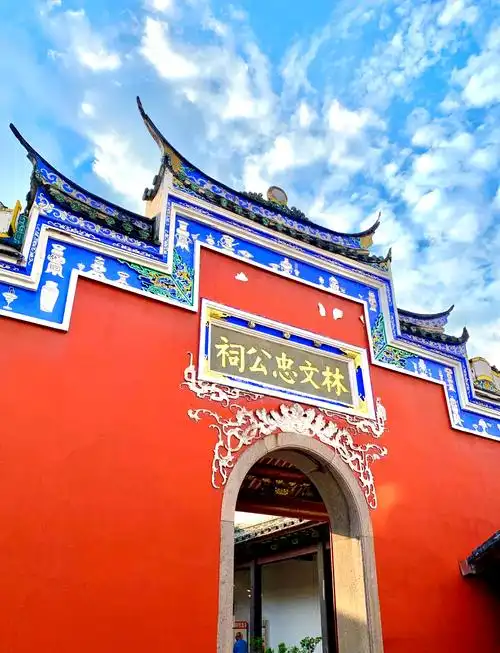 Lin Zexu (1785–1850) was China's foremost 19th-century opponent of the opium trade—imagine a Victorian-era abolitionist confronting the British Empire at its industrial peak. As Imperial Commissioner, his 1839 destruction of over 1,000 tons of British opium at Humen—often compared to the Boston Tea Party for its anti-colonial defiance—triggered the First Opium War. Following defeat, he was exiled to this remote Silk Road frontier, a fate echoing Napoleonic-era dissidents banished to distant outposts. Yet unlike exiled poets who languished, Lin surveyed the Ili Valley, supervised the "Lin Gong Canal," and championed karez wells—an ingenious Persian-origin underground irrigation system more than 2,500 years old, still used from Iran to Turpan.
Opened August 18, 1994, the memorial occupies roughly 10,000 square meters, with more than 2,000 square meters of built space arranged around a forecourt, central exhibition halls, and a tranquil rear courtyard gallery. A full-length bronze statue of Lin anchors the entrance like a vigilant sentinel. The architecture is deliberately sober—gray walls, traditional rooflines, restrained ornamentation—designed to echo Lin's gravitas rather than compete with the surrounding Tianshan mountain scenery. The atmosphere recalls provincial European national museums where architectural restraint signals historical seriousness.
The permanent collection of over 2,000 photographs, documents, and artifacts unfolds in four acts: Lin's life, his anti-opium campaign, his Ili exile, and his enduring legacy. The recent exhibition "Guardians of the Mountains and Rivers—Lin Zexu in Xinjiang," endorsed by China's National Cultural Heritage Administration, recreates scenes of canal construction and frontier reclamation through period dioramas. The galleries also revisit Lin's place in the global anti-narcotics movement—a figure whose reputation, like Nelson Mandela's, has traveled well beyond national borders.
Admission is free and no reservation is required, but visitors should carry valid photo ID. Hours run Tuesday through Sunday, 10:30 a.m. to 6 p.m. (extended to 6:30 p.m. in peak season), with closures on Mondays and the day after public holidays. Free guided tours depart at scheduled intervals; calling 0999-8123131 ahead is wise to confirm policies. Buses 1 and 12 stop directly at the "Lin Zexu Memorial Hall" station, an easy ride from central Yining. Tours and signage are primarily in Chinese, so travelers should download a translation app or request an English-speaking guide through their hotel.
Few sites worldwide let visitors trace a single figure's transformation from national champion to frontier pioneer—a biographical arc as compelling as Churchill retreating to paint or Ovid lamenting on the Black Sea. For Western travelers exploring the Silk Road or venturing beyond the standard Beijing–Shanghai circuit, the hall offers intimate access to modern Chinese patriotic consciousness and the human capacity to build meaning from exile. Allow 90 minutes to two hours, dress modestly, and bring curiosity.
Lin Zexu (1785–1850) was China's foremost 19th-century opponent of the opium trade—imagine a Victorian-era abolitionist confronting the British Empire at its industrial peak. As Imperial Commissioner, his 1839 destruction of over 1,000 tons of British opium at Humen—often compared to the Boston Tea Party for its anti-colonial defiance—triggered the First Opium War. Following defeat, he was exiled to this remote Silk Road frontier, a fate echoing Napoleonic-era dissidents banished to distant outposts. Yet unlike exiled poets who languished, Lin surveyed the Ili Valley, supervised the "Lin Gong Canal," and championed karez wells—an ingenious Persian-origin underground irrigation system more than 2,500 years old, still used from Iran to Turpan.
Opened August 18, 1994, the memorial occupies roughly 10,000 square meters, with more than 2,000 square meters of built space arranged around a forecourt, central exhibition halls, and a tranquil rear courtyard gallery. A full-length bronze statue of Lin anchors the entrance like a vigilant sentinel. The architecture is deliberately sober—gray walls, traditional rooflines, restrained ornamentation—designed to echo Lin's gravitas rather than compete with the surrounding Tianshan mountain scenery. The atmosphere recalls provincial European national museums where architectural restraint signals historical seriousness.
The permanent collection of over 2,000 photographs, documents, and artifacts unfolds in four acts: Lin's life, his anti-opium campaign, his Ili exile, and his enduring legacy. The recent exhibition "Guardians of the Mountains and Rivers—Lin Zexu in Xinjiang," endorsed by China's National Cultural Heritage Administration, recreates scenes of canal construction and frontier reclamation through period dioramas. The galleries also revisit Lin's place in the global anti-narcotics movement—a figure whose reputation, like Nelson Mandela's, has traveled well beyond national borders.
Admission is free and no reservation is required, but visitors should carry valid photo ID. Hours run Tuesday through Sunday, 10:30 a.m. to 6 p.m. (extended to 6:30 p.m. in peak season), with closures on Mondays and the day after public holidays. Free guided tours depart at scheduled intervals; calling 0999-8123131 ahead is wise to confirm policies. Buses 1 and 12 stop directly at the "Lin Zexu Memorial Hall" station, an easy ride from central Yining. Tours and signage are primarily in Chinese, so travelers should download a translation app or request an English-speaking guide through their hotel.
Few sites worldwide let visitors trace a single figure's transformation from national champion to frontier pioneer—a biographical arc as compelling as Churchill retreating to paint or Ovid lamenting on the Black Sea. For Western travelers exploring the Silk Road or venturing beyond the standard Beijing–Shanghai circuit, the hall offers intimate access to modern Chinese patriotic consciousness and the human capacity to build meaning from exile. Allow 90 minutes to two hours, dress modestly, and bring curiosity.