Zhangshiyan Scenic Area
⭐ 4.20
Zhangshiyan Scenic Area, Zanhuang County, Shijiazhuang City, Hebei Province, China
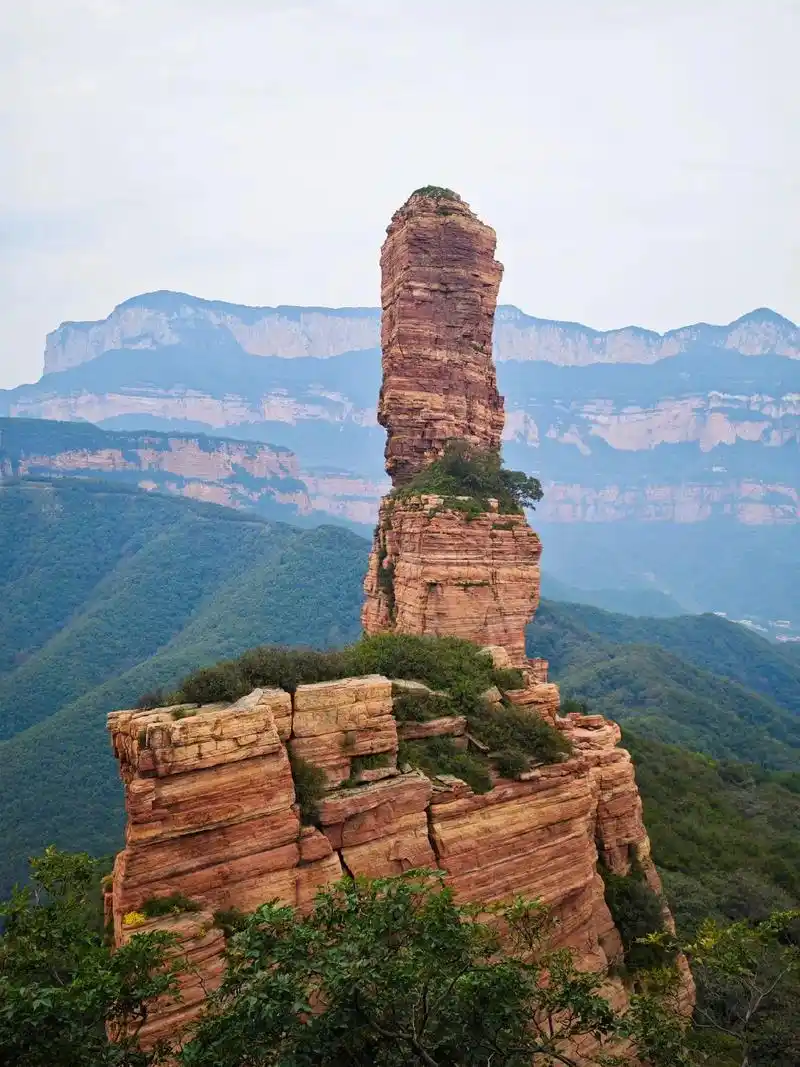 The cliffs of Zhangshiyan are composed of red quartz sandstone laid down more than a billion years ago, then folded, faulted, and sculpted by water during the orogeny that lifted the Taihang Mountains. Geologists compare the resulting Ω-shaped barrier valleys and tiered escarpments to a miniature Grand Canyon, though the rust-red palette is closer to Jordan's Petra or Utah's Bryce Canyon. The landform is globally unique—nowhere else on Earth does this exact combination of rock type, tectonic history, and erosion pattern occur—prompting UNESCO-affiliated researchers to flag it for international study.
The signature sight is the "Hundred-Mile Red Wall," a continuous rampart of crimson sandstone stretching roughly 50 km along the ridge, often compared in scale to Hadrian's Wall but painted in nature's own vermilion. Punctuating this wall are freestanding monoliths such as Jiunü Peak (Nine Maidens), the Yimiya Ledge, and the aptly named Sky-Supporting Pillar. The interplay of vertical cliffs, slot gorges, and forested hollows has long drawn Chinese landscape painters and now attracts photographers chasing "red-velvet" compositions at sunrise and sunset.
Hidden in the Paper-Hut (Zhitutao) section is the park's most interactive marvel: a curving cliff face 310 meters wide and 103 meters tall that reflects sound with remarkable clarity, earning a Guinness World Record as the planet's largest natural echo wall. Visitors can shout, sing, or clap and hear their voice return in crystalline fashion—an acoustic phenomenon akin to whispering inside St. Paul's Cathedral in London or the Pisa Baptistery, yet staged by nature rather than architects. It is the essential photo stop and a memorable hands-on experience for families.
Set at elevations between 800 and 1,700 meters in the Taihang foothills, the park enjoys a microclimate noticeably cooler than the baking plains below. Summer daytime temperatures average a refreshing 21°C, making it one of North China's most popular retreats—imagine an alpine summer reminiscent of Switzerland's lower valleys. Spring brings wildflower carpets, summer tumbles with waterfalls, autumn sets the hillsides ablaze in a palette some travelers liken to Monet's Giverny, and winter cloaks the formations in rime ice and glittering icicles.
Zhangshiyan lies about 110 km southwest of Shijiazhou, a 1.5- to 2-hour drive, with direct coaches running from Nanjiao Long-Distance Bus Station. Allow half a day to a full day to cover the four principal zones—Jiunü Peak, Zhitutao, Yuantong Temple, and Donglingbei. Cable cars, a "magic carpet" conveyor ascent, and a slide descent make the site accessible to children and elderly visitors, while the Yuantong Temple cable car offers sweeping panoramas. Village guesthouses near the gate serve hearty Hebei farmhouse fare such as baked flatbread (tiebingzi) and stewed local fish.
For Western travelers charting China's geological heritage beyond the obvious icons of Zhangjiajie and Danxia, Zhangshiyan offers a quieter, scientifically priceless alternative where crowds thin out and the scale of the red cliffs remains overwhelming. The combination of a Guinness-record acoustic phenomenon, a one-of-a-kind landform, four-season scenery, and easy access from Hebei's capital makes it a compelling detour on any northern China itinerary—especially in midsummer, when the cool mountain air and dramatic light reward those willing to venture off the standard tourist trail.
The cliffs of Zhangshiyan are composed of red quartz sandstone laid down more than a billion years ago, then folded, faulted, and sculpted by water during the orogeny that lifted the Taihang Mountains. Geologists compare the resulting Ω-shaped barrier valleys and tiered escarpments to a miniature Grand Canyon, though the rust-red palette is closer to Jordan's Petra or Utah's Bryce Canyon. The landform is globally unique—nowhere else on Earth does this exact combination of rock type, tectonic history, and erosion pattern occur—prompting UNESCO-affiliated researchers to flag it for international study.
The signature sight is the "Hundred-Mile Red Wall," a continuous rampart of crimson sandstone stretching roughly 50 km along the ridge, often compared in scale to Hadrian's Wall but painted in nature's own vermilion. Punctuating this wall are freestanding monoliths such as Jiunü Peak (Nine Maidens), the Yimiya Ledge, and the aptly named Sky-Supporting Pillar. The interplay of vertical cliffs, slot gorges, and forested hollows has long drawn Chinese landscape painters and now attracts photographers chasing "red-velvet" compositions at sunrise and sunset.
Hidden in the Paper-Hut (Zhitutao) section is the park's most interactive marvel: a curving cliff face 310 meters wide and 103 meters tall that reflects sound with remarkable clarity, earning a Guinness World Record as the planet's largest natural echo wall. Visitors can shout, sing, or clap and hear their voice return in crystalline fashion—an acoustic phenomenon akin to whispering inside St. Paul's Cathedral in London or the Pisa Baptistery, yet staged by nature rather than architects. It is the essential photo stop and a memorable hands-on experience for families.
Set at elevations between 800 and 1,700 meters in the Taihang foothills, the park enjoys a microclimate noticeably cooler than the baking plains below. Summer daytime temperatures average a refreshing 21°C, making it one of North China's most popular retreats—imagine an alpine summer reminiscent of Switzerland's lower valleys. Spring brings wildflower carpets, summer tumbles with waterfalls, autumn sets the hillsides ablaze in a palette some travelers liken to Monet's Giverny, and winter cloaks the formations in rime ice and glittering icicles.
Zhangshiyan lies about 110 km southwest of Shijiazhou, a 1.5- to 2-hour drive, with direct coaches running from Nanjiao Long-Distance Bus Station. Allow half a day to a full day to cover the four principal zones—Jiunü Peak, Zhitutao, Yuantong Temple, and Donglingbei. Cable cars, a "magic carpet" conveyor ascent, and a slide descent make the site accessible to children and elderly visitors, while the Yuantong Temple cable car offers sweeping panoramas. Village guesthouses near the gate serve hearty Hebei farmhouse fare such as baked flatbread (tiebingzi) and stewed local fish.
For Western travelers charting China's geological heritage beyond the obvious icons of Zhangjiajie and Danxia, Zhangshiyan offers a quieter, scientifically priceless alternative where crowds thin out and the scale of the red cliffs remains overwhelming. The combination of a Guinness-record acoustic phenomenon, a one-of-a-kind landform, four-season scenery, and easy access from Hebei's capital makes it a compelling detour on any northern China itinerary—especially in midsummer, when the cool mountain air and dramatic light reward those willing to venture off the standard tourist trail.