Dafo Temple
⭐ 4.60
Dafo Temple Alley, Minzhu West Street, Ganzhou District, Zhangye City, Gansu Province, China
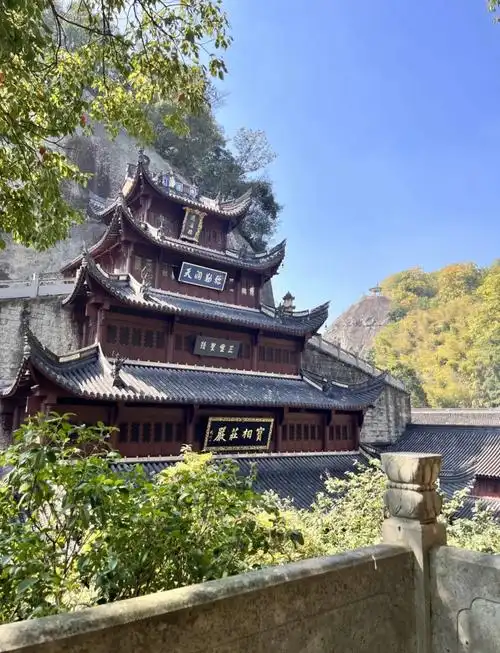 Constructed in 1098 under the patronage of the Western Xia state preceptor Nie Mie, the Grand Buddha Temple predates many of Europe's great Gothic cathedrals—Notre-Dame de Paris was consecrated just five years earlier. While Chartres was rising in France, this Silk Road sanctuary was already serving as a royal temple where Tangut, Han Chinese, Tibetan, and Uyghur Buddhist traditions converged. Renamed Bajue Temple during the Ming dynasty and Hongren Temple under the Qing, it earned its popular nickname from the colossal Buddha within. As the largest and best-preserved Western Xia royal temple in existence, it offers a rare window into a Tangut civilization largely lost to history.
The Mahavira Hall rivals most medieval European church interiors—a nine-bay-wide, seven-bay-deep timber structure crowned by a sweeping hip-and-gable roof. Comparable in scale to a modest Romanesque cathedral, it is the largest surviving Western Xia wooden hall in China. Inside, the giant reclining Sakyamuni, measuring 7.5 meters across the shoulders, rests on a wooden armature finished in clay and adorned with gold leaf and vibrant mineral pigments. The Buddha's serene expression, framed by ten principal disciples and eighteen arhats arranged in mournful attendance, creates an atmosphere of profound spiritual gravity that few religious spaces anywhere can match.
The temple's Scripture Repository guards one of China's most remarkable literary treasures—6,361 volumes of the Yongle Northern Tripitaka, the best-preserved set of this Ming imperial Buddhist canon in the country. Hand-copied in gold ink, the Great Prajnaparamita Sutra complements this collection. Equally intriguing for scholars of world literature, vivid murals lining the hall include the Monkey King presenting treasure and other imagery widely interpreted as visual sources predating the classic novel Journey to the West, offering tantalizing clues to the evolution of one of the world's great adventure tales.
Located at 28 Minzhu West Street in Zhangye's old town, the temple offers excellent value at 40 yuan per person, half price for students. During peak season, gates stay open from 8:00 a.m. to 9:00 p.m., with the last ticket sold at 8:30 p.m. The core circuit—covering the Grand Buddha Hall, Scripture Pavilion, and earthen stupa—typically takes 45 to 60 minutes. Photography is strictly prohibited inside the halls, so visitors should arrive prepared to experience the art purely through observation. Official guides and AR-enabled smart-glasses rentals are highly recommended for unlocking the full historical depth of this remarkable complex.
Beyond the Western Xia main hall, the complex embraces a Ming-dynasty scripture library, a Tibetan-style stupa, and even a Shanxi merchants' guild hall from the Qing era—evidence of how trade routes carried not just silk but also architectural ideas across Eurasia. Comparable in cultural layering to sites like Istanbul's Hagia Sophia or Jerusalem's Church of the Holy Sepulchre, the Grand Buddha Temple rewards travelers who seek out the roads less traveled. After touring, walk to nearby Ganzhou Market to sample regional specialties like hand-rolled "swooping fish" noodles and sizzling stir-fried lamb—a fitting conclusion to a journey through nine centuries of living history.
Constructed in 1098 under the patronage of the Western Xia state preceptor Nie Mie, the Grand Buddha Temple predates many of Europe's great Gothic cathedrals—Notre-Dame de Paris was consecrated just five years earlier. While Chartres was rising in France, this Silk Road sanctuary was already serving as a royal temple where Tangut, Han Chinese, Tibetan, and Uyghur Buddhist traditions converged. Renamed Bajue Temple during the Ming dynasty and Hongren Temple under the Qing, it earned its popular nickname from the colossal Buddha within. As the largest and best-preserved Western Xia royal temple in existence, it offers a rare window into a Tangut civilization largely lost to history.
The Mahavira Hall rivals most medieval European church interiors—a nine-bay-wide, seven-bay-deep timber structure crowned by a sweeping hip-and-gable roof. Comparable in scale to a modest Romanesque cathedral, it is the largest surviving Western Xia wooden hall in China. Inside, the giant reclining Sakyamuni, measuring 7.5 meters across the shoulders, rests on a wooden armature finished in clay and adorned with gold leaf and vibrant mineral pigments. The Buddha's serene expression, framed by ten principal disciples and eighteen arhats arranged in mournful attendance, creates an atmosphere of profound spiritual gravity that few religious spaces anywhere can match.
The temple's Scripture Repository guards one of China's most remarkable literary treasures—6,361 volumes of the Yongle Northern Tripitaka, the best-preserved set of this Ming imperial Buddhist canon in the country. Hand-copied in gold ink, the Great Prajnaparamita Sutra complements this collection. Equally intriguing for scholars of world literature, vivid murals lining the hall include the Monkey King presenting treasure and other imagery widely interpreted as visual sources predating the classic novel Journey to the West, offering tantalizing clues to the evolution of one of the world's great adventure tales.
Located at 28 Minzhu West Street in Zhangye's old town, the temple offers excellent value at 40 yuan per person, half price for students. During peak season, gates stay open from 8:00 a.m. to 9:00 p.m., with the last ticket sold at 8:30 p.m. The core circuit—covering the Grand Buddha Hall, Scripture Pavilion, and earthen stupa—typically takes 45 to 60 minutes. Photography is strictly prohibited inside the halls, so visitors should arrive prepared to experience the art purely through observation. Official guides and AR-enabled smart-glasses rentals are highly recommended for unlocking the full historical depth of this remarkable complex.
Beyond the Western Xia main hall, the complex embraces a Ming-dynasty scripture library, a Tibetan-style stupa, and even a Shanxi merchants' guild hall from the Qing era—evidence of how trade routes carried not just silk but also architectural ideas across Eurasia. Comparable in cultural layering to sites like Istanbul's Hagia Sophia or Jerusalem's Church of the Holy Sepulchre, the Grand Buddha Temple rewards travelers who seek out the roads less traveled. After touring, walk to nearby Ganzhou Market to sample regional specialties like hand-rolled "swooping fish" noodles and sizzling stir-fried lamb—a fitting conclusion to a journey through nine centuries of living history.