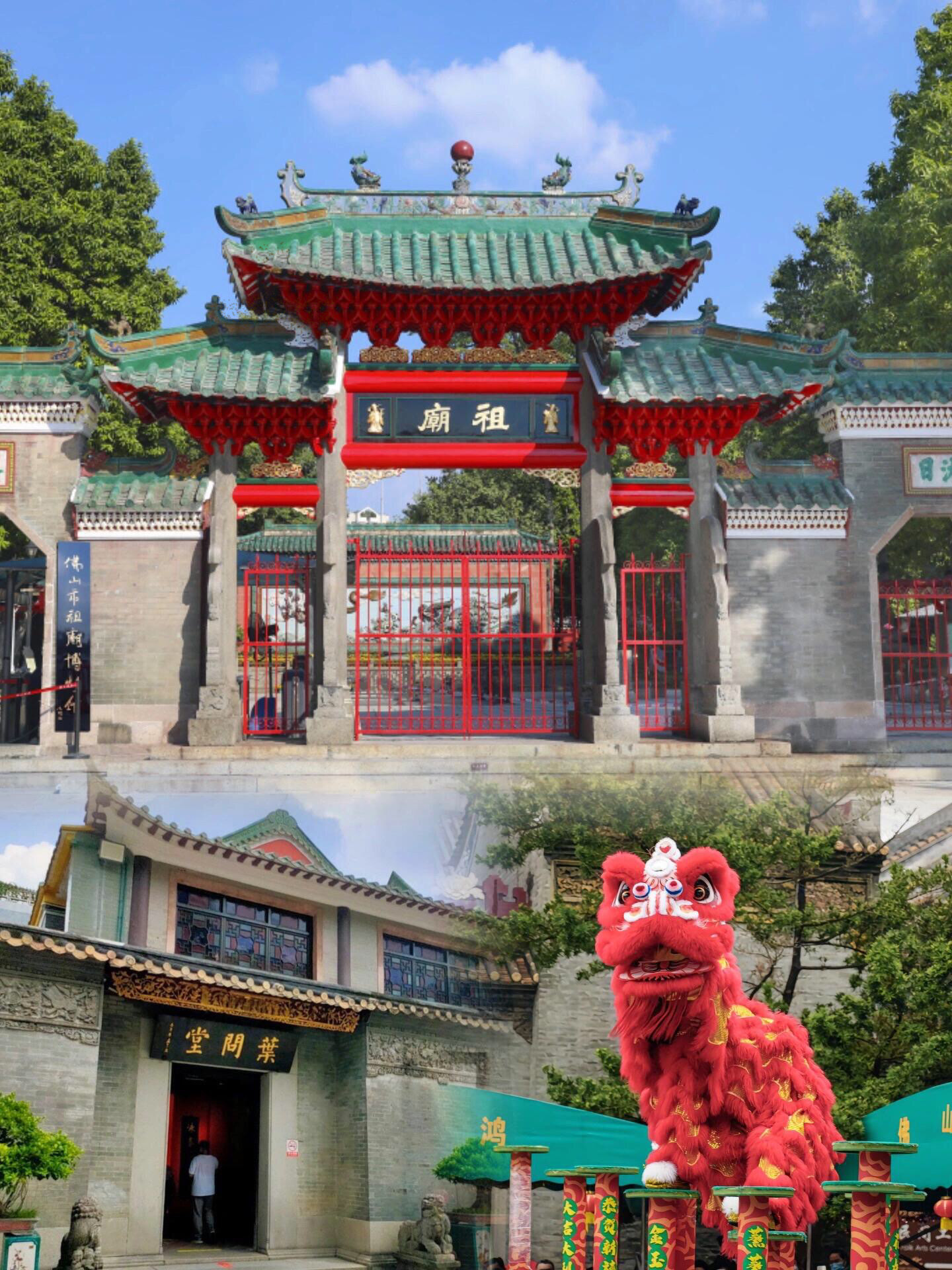
Founded during the Northern Song dynasty's Yuanfeng era (1078–1085), Foshan Ancestral Temple predates many of Europe's great Gothic cathedrals and has served as the spiritual and civic heart of this historic Lingnan trading city for over nine centuries. Originally built to honor the Northern Emperor (Xuantian Shangdi), the temple functioned as the region's political, economic, and ceremonial nucleus, witnessing the rise of Foshan from a modest settlement into one of southern China's most prosperous manufacturing hubs, famed for ceramics, metalwork, and silk.
The architectural ensemble represents the pinnacle of Lingnan ancestral hall design, a regional style that flourished in parallel with Mediterranean and Iberian vernacular traditions during the same centuries. The temple's crowning glory is its ceramic roof ridge work, crafted in the renowned Shiwan kilns, with the "Three-Door Tile Ridge" hailed as the "King of Floral Ridges." Intricate brick, stone, wood, and lime carvings adorn every eave, beam, and column, creating a visual richness that rivals the ornamental exuberance of Spanish Plateresque facades or Sicilian Baroque churches.
Beyond its architectural splendor, the temple is the spiritual birthplace of two martial arts legends, Ip Man, the grandmaster who brought Wing Chun to the world through Bruce Lee, and Wong Fei-hung, the folk hero of countless martial arts films. Dedicated halls honor both figures, while the magnificent Wanfu Stage, the best-preserved Qing dynasty theater in southern China, continues to host traditional Cantonese opera performances, much like the historic playhouses of Elizabethan London or Commedia dell'Arte venues in Renaissance Italy.
Admission is exceptionally affordable at just 20 RMB (around $3 USD), with half-price student tickets and free entry for seniors and disabled visitors. The museum opens daily from 8:30 AM to 6:00 PM (last entry 5:30 PM), though it typically closes on Mondays for maintenance. With 384 catalogued cultural relics including ancient steles, ritual bronzes, and folk artifacts, the collection offers remarkable depth. The site sits at Zumiao Station on the Guangzhou-Foshan Metro, making it easily accessible from either city.
For the best experience, arrive in the morning to explore the main halls while light streams through carved windows, illuminating the ceramic ridge decorations. Time your visit around the scheduled lion dance and martial arts demonstrations at 10:00 AM, 2:15 PM, and 3:30 PM, when the spaces around Wanfu Stage offer ideal viewing. Weekend visitors should stay for the Cantonese opera performances, an immersive dive into Lingnan's living theatrical heritage that no guidebook can fully capture.
This is where centuries of southern Chinese culture remain not merely preserved but actively performed, a rare combination of monumental architecture, martial heritage, and living folk tradition found in few places beyond Asia. For travelers seeking an authentic encounter with Guangdong's soul, away from the glass towers of nearby Shenzhen or the colonial facades of Guangzhou, Foshan Ancestral Temple delivers an experience both deeply Chinese and universally resonant.