Zhuhai Fishing Port
⭐ 3.00
Zhuhai Fishing Port, Xiangzhou District, Zhuhai City, Guangdong Province, China
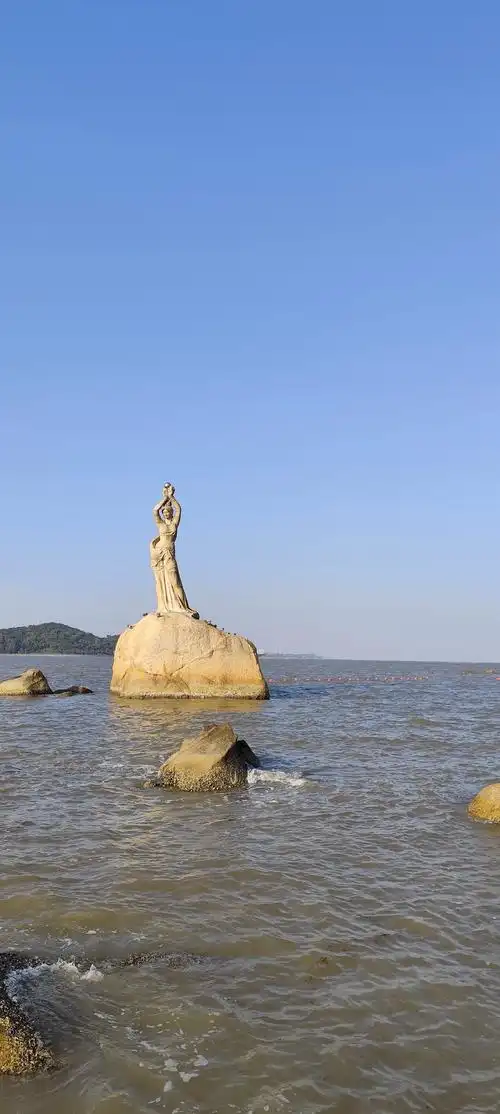 Like Marseille's Vieux-Port or Lisbon's Alfama dockside, Zhuhai's fishing heritage stretches back centuries. The Xiangzhou wharf served as the region's principal landing for catches from the South China Sea for over a hundred years, sustaining the original fishing village that would eventually grow into today's metropolis. In 2019 the working fleet moved south to the new Hongwan Central Fishing Port, officially designated a national-level port in 2023 and joining China's network of strategic hubs for fisheries, cold-chain logistics, and storm shelter for vessels.
The old Xiangzhou site preserves the bones of the original quay: weathered concrete aprons, mooring bollards, and a small fleet of fishing-boat sculptures that mark where trawlers once unloaded. Unlike the densely packed lanes of Lisbon's Alfama, this is a calmer, almost open-air museum, flanked by modest lanes of snack shops selling rice-noodle rolls and fried wontons. From the waterfront, the twin oyster-shell domes of the Zhuhai Grand Theatre, designed by Zaha Hadid Architects and nicknamed the "Sun-Moon Shell," rise directly across the bay — an unlikely modern companion to the heritage walk.
The Hongwan Central Fishing Port is a different animal entirely: a sprawling, working industrial harbour on the Modaomen waterway. Tall steel gantries frame rows of berths where trawlers moor in tight formation, and the cavernous seafood trading hall buzzes with auctions, ice-packed crates, and refrigerated trucks. The scale recalls Rotterdam's Europoort at peak season. A planned Fisherman's Wharf promenade with shops and restaurants is rising alongside, hinting at a future where visitors can watch the catch come in without straying into restricted work zones.
Together the two sites tell a story familiar to many old port cities: the shift from hand-to-mouth fishing economies to high-tech maritime industry. The Xiangzhou fragment is Zhuhai's collective memory of the village that became a Special Economic Zone in 1980, then a global tourism city. Hongwan, by contrast, embodies China's push toward modern, centralised marine-resource management, replacing scattered coastal landings with one efficient hub. Visiting both lets travellers sense that transition in a single afternoon.
Xiangzhou's old wharf sits at 51 Qinglv Middle Road, a short walk from the Sun-Moon Shell and easily reached by taxi or bus from central Zhuhai; admission is free and a leisurely visit takes 30 to 60 minutes. Hongwan Central Fishing Port lies about 10 km southwest — a 20 to 25 minute taxi ride, or self-drive if you have a car. Working areas are off-limits: stay in designated viewing zones and respect barriers. August brings heat, humidity, and typhoon risk; aim for early morning or late afternoon.
Few coastal cities let you walk from a sleepy heritage quay to a state-of-the-art fishing complex within an hour. Photographers will love the contrast of weathered wharf and gleaming fleet; foodies can sample authentic Cantonese seafood in nearby Wanzai Seafood Street, where live catch is cooked to order; culture seekers gain an unfiltered view of how modern China has reimagined its traditional industries. It is Zhuhai at its most authentic, beyond the polished resorts.
Like Marseille's Vieux-Port or Lisbon's Alfama dockside, Zhuhai's fishing heritage stretches back centuries. The Xiangzhou wharf served as the region's principal landing for catches from the South China Sea for over a hundred years, sustaining the original fishing village that would eventually grow into today's metropolis. In 2019 the working fleet moved south to the new Hongwan Central Fishing Port, officially designated a national-level port in 2023 and joining China's network of strategic hubs for fisheries, cold-chain logistics, and storm shelter for vessels.
The old Xiangzhou site preserves the bones of the original quay: weathered concrete aprons, mooring bollards, and a small fleet of fishing-boat sculptures that mark where trawlers once unloaded. Unlike the densely packed lanes of Lisbon's Alfama, this is a calmer, almost open-air museum, flanked by modest lanes of snack shops selling rice-noodle rolls and fried wontons. From the waterfront, the twin oyster-shell domes of the Zhuhai Grand Theatre, designed by Zaha Hadid Architects and nicknamed the "Sun-Moon Shell," rise directly across the bay — an unlikely modern companion to the heritage walk.
The Hongwan Central Fishing Port is a different animal entirely: a sprawling, working industrial harbour on the Modaomen waterway. Tall steel gantries frame rows of berths where trawlers moor in tight formation, and the cavernous seafood trading hall buzzes with auctions, ice-packed crates, and refrigerated trucks. The scale recalls Rotterdam's Europoort at peak season. A planned Fisherman's Wharf promenade with shops and restaurants is rising alongside, hinting at a future where visitors can watch the catch come in without straying into restricted work zones.
Together the two sites tell a story familiar to many old port cities: the shift from hand-to-mouth fishing economies to high-tech maritime industry. The Xiangzhou fragment is Zhuhai's collective memory of the village that became a Special Economic Zone in 1980, then a global tourism city. Hongwan, by contrast, embodies China's push toward modern, centralised marine-resource management, replacing scattered coastal landings with one efficient hub. Visiting both lets travellers sense that transition in a single afternoon.
Xiangzhou's old wharf sits at 51 Qinglv Middle Road, a short walk from the Sun-Moon Shell and easily reached by taxi or bus from central Zhuhai; admission is free and a leisurely visit takes 30 to 60 minutes. Hongwan Central Fishing Port lies about 10 km southwest — a 20 to 25 minute taxi ride, or self-drive if you have a car. Working areas are off-limits: stay in designated viewing zones and respect barriers. August brings heat, humidity, and typhoon risk; aim for early morning or late afternoon.
Few coastal cities let you walk from a sleepy heritage quay to a state-of-the-art fishing complex within an hour. Photographers will love the contrast of weathered wharf and gleaming fleet; foodies can sample authentic Cantonese seafood in nearby Wanzai Seafood Street, where live catch is cooked to order; culture seekers gain an unfiltered view of how modern China has reimagined its traditional industries. It is Zhuhai at its most authentic, beyond the polished resorts.