Fushan Old Street
⭐ 3.20
Fushan Old Street, Fushan District, Yantai City, Shandong Province, China
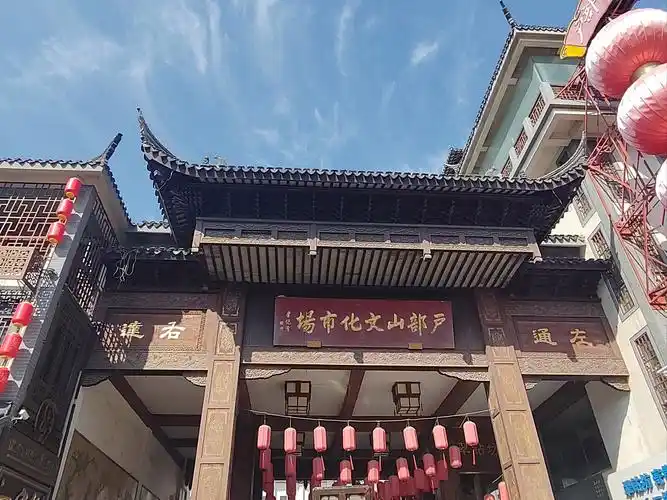 Fushan has functioned as a market town since the Jin dynasty (12th century), when it was first established as a county seat. By the Ming and Qing eras, the streetscape still visible today had taken shape, with Chengli Main Street serving as the commercial spine. While European travelers may find the scale modest compared to Bruges or Venice, the parallel to a Tuscan hill town or a Provençal market village is apt: a place where centuries of trade shaped a tight urban fabric that survives almost intact. For anyone curious about how ordinary Chinese provincial towns grew over the centuries, this is a walkable, living archive rather than a museum exhibit.
Most surviving buildings date from the late Qing through the Republican era (roughly 1880s–1930s), built in the regional hard-gable brick-and-timber style typical of the Shandong peninsula. Shop fronts open directly onto the lane, while deep residential courtyards extend behind, embodying the classic Chinese shop-house layout in which merchant and family life shared one roof. The blue-grey cobblestones underfoot show polished grooves from a century of carts and feet, and a few doorways still carry carved brick lintels and lime-plaster mouldings. Unlike the restored heritage districts of Luoyang or Pingyao, here the patina is genuine: peeling walls, patched brickwork, crooked timber, and all.
The lane is also an unofficial open-air museum of Jiaodong folk culture. In modest family-run shops, fourth- and fifth-generation makers still hand-pull the wide, chewy noodles that made Fushan famous, simmer a cold-set bean-jelly that is then pan-fried until crisp outside and custardy within, and boil sugar syrup for a flaky layered candy. Look further and you will find paper-cutting masters, porcelain-menders using centuries-old rivet techniques, and silversmiths working by hand. Surviving food-heritage sites, like the century-old Yongshengtai soy-sauce yard, hint at the town's forgotten role as a regional condiment hub, and the result feels less like a heritage site than a working neighborhood that happens to be several hundred years old.
Entry is free, and there is no official tour or visitor center—the streets are open around the clock. From Yantai Station, take bus K61 to Fushan Bus Station and walk a short distance east; drivers can use the underground lot beneath Guyi Cultural Square, which is often free. The best times to visit are weekday mornings or the day after rain, when soft light fills the alleys and crowds thin out. Wear flat, soft-soled shoes: the cobblestones are uneven and slippery when wet. Allow 90 minutes to 2.5 hours, drifting east to west along Chengli Main Street and detouring into the side alleys whenever curiosity beckons.
For travelers who have already ticked off Yantai's beaches, the mythical Penglai Pavilion, or the wine country around the city, Fushan Old Street offers something harder to find: an unromanticized, lived-in China where laundry still hangs above flagstone lanes and neighbors chat across doorways. Pair it with the Fushan District Museum and the scenic Mt. Ci (Cishan) area for a relaxed half-day, or use it as a quiet counterpoint to the polished heritage streets of Lijiang and Pingyao. Come hungry, bring patience, and let the unhurried pace of the place quietly set yours.
Fushan has functioned as a market town since the Jin dynasty (12th century), when it was first established as a county seat. By the Ming and Qing eras, the streetscape still visible today had taken shape, with Chengli Main Street serving as the commercial spine. While European travelers may find the scale modest compared to Bruges or Venice, the parallel to a Tuscan hill town or a Provençal market village is apt: a place where centuries of trade shaped a tight urban fabric that survives almost intact. For anyone curious about how ordinary Chinese provincial towns grew over the centuries, this is a walkable, living archive rather than a museum exhibit.
Most surviving buildings date from the late Qing through the Republican era (roughly 1880s–1930s), built in the regional hard-gable brick-and-timber style typical of the Shandong peninsula. Shop fronts open directly onto the lane, while deep residential courtyards extend behind, embodying the classic Chinese shop-house layout in which merchant and family life shared one roof. The blue-grey cobblestones underfoot show polished grooves from a century of carts and feet, and a few doorways still carry carved brick lintels and lime-plaster mouldings. Unlike the restored heritage districts of Luoyang or Pingyao, here the patina is genuine: peeling walls, patched brickwork, crooked timber, and all.
The lane is also an unofficial open-air museum of Jiaodong folk culture. In modest family-run shops, fourth- and fifth-generation makers still hand-pull the wide, chewy noodles that made Fushan famous, simmer a cold-set bean-jelly that is then pan-fried until crisp outside and custardy within, and boil sugar syrup for a flaky layered candy. Look further and you will find paper-cutting masters, porcelain-menders using centuries-old rivet techniques, and silversmiths working by hand. Surviving food-heritage sites, like the century-old Yongshengtai soy-sauce yard, hint at the town's forgotten role as a regional condiment hub, and the result feels less like a heritage site than a working neighborhood that happens to be several hundred years old.
Entry is free, and there is no official tour or visitor center—the streets are open around the clock. From Yantai Station, take bus K61 to Fushan Bus Station and walk a short distance east; drivers can use the underground lot beneath Guyi Cultural Square, which is often free. The best times to visit are weekday mornings or the day after rain, when soft light fills the alleys and crowds thin out. Wear flat, soft-soled shoes: the cobblestones are uneven and slippery when wet. Allow 90 minutes to 2.5 hours, drifting east to west along Chengli Main Street and detouring into the side alleys whenever curiosity beckons.
For travelers who have already ticked off Yantai's beaches, the mythical Penglai Pavilion, or the wine country around the city, Fushan Old Street offers something harder to find: an unromanticized, lived-in China where laundry still hangs above flagstone lanes and neighbors chat across doorways. Pair it with the Fushan District Museum and the scenic Mt. Ci (Cishan) area for a relaxed half-day, or use it as a quiet counterpoint to the polished heritage streets of Lijiang and Pingyao. Come hungry, bring patience, and let the unhurried pace of the place quietly set yours.