Qi Jiguang Memorial Hall
⭐ 3.80
Qixia, Fushan District, Yantai, Shandong, China
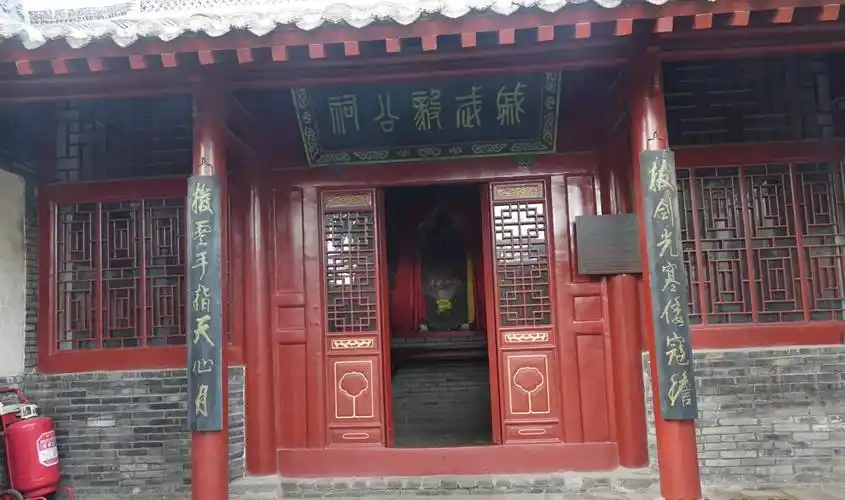 The Qi Jiguang Temple traces its origins to a modest family ancestral hall from the Jiajing reign (1522-1566). After Qi's death in 1588, the Chongzhen Emperor elevated it in 1635 with the imperial title "Memorial for Merit Temple" to honor Qi's campaigns against the wokou pirates who ravaged China's coast. This period coincides with Elizabeth I's England battling Barbary corsairs in the Mediterranean and Spain defending against English privateers—a truly global age of maritime conflict. A Qing renovation in 1707 and a comprehensive 1985 restoration preserved this rare physical testament to one of Ming China's greatest military innovators.
The temple follows the classic Ming family-temple layout of three sequential courtyards facing south, comprising a gatehouse, central hall, and main shrine, each three bays wide. The single-eave hard-ridge brick-and-timber structure covers roughly 595 square meters. Carved into the door panels, the couplet "Eternal Glorious Rite, Hundred Battles Earn Renown" sets the martial tone. Inside the main hall stands Qi's armored seated statue, while biographical panels line the walls. Two ancient Ming-era ginkgo trees and a grove of cypresses—some over 400 years old—create a canopy that complements the understated elegance of the surrounding gray brick walls.
Beyond honoring a family lineage, the temple embodies China's enduring spirit of resistance against foreign invasion. It ranks among the country's most important protected monuments for its connection to Qi's military genius, including his revolutionary "Mandarin Duck Formation," which integrated pikes, swords, and shields into a flexible combat unit—comparable in tactical innovation to contemporary Swiss pike squares in Europe. Two nearby Ming imperial archways, honoring the Qis' "Mother and Son's Filial Piety" and "Father and Son's Governor-Generalships," display exquisite stone carving worthy of comparison with European Renaissance funerary monuments.
The temple opens daily from 7:00 AM to 5:00 PM as part of the Qi Jiguang Homeland scenic area, with admission covered by the combined ticket (approximately 35 RMB). Travelers can reach the site via Penglai bus routes 1, 6, or 11, alighting at the "Qi Jiguang Homeland" stop, or by taxi or self-drive to the South Gate. Visitors should dress modestly and maintain a respectful silence—this is an active commemorative site, not merely a museum. Touching exhibits or climbing the ancient trees is strictly prohibited.
Allow 40 to 60 minutes for the temple alone, but purchase the combined ticket to explore the full scenic area: the archways, the temple, the family residence, the weapons museum, and the rear garden. The recommended route—archways, temple, mansion, memorial hall—takes two to three hours and provides comprehensive context. With extra time, combine your visit with nearby Penglai Pavilion and the ancient Penglai Water Fortress, perhaps China's answer to Mediterranean harbor citadels, for a half-day immersion into China's seafaring heritage and its legendary "fairy island" mythology.
The Qi Jiguang Temple traces its origins to a modest family ancestral hall from the Jiajing reign (1522-1566). After Qi's death in 1588, the Chongzhen Emperor elevated it in 1635 with the imperial title "Memorial for Merit Temple" to honor Qi's campaigns against the wokou pirates who ravaged China's coast. This period coincides with Elizabeth I's England battling Barbary corsairs in the Mediterranean and Spain defending against English privateers—a truly global age of maritime conflict. A Qing renovation in 1707 and a comprehensive 1985 restoration preserved this rare physical testament to one of Ming China's greatest military innovators.
The temple follows the classic Ming family-temple layout of three sequential courtyards facing south, comprising a gatehouse, central hall, and main shrine, each three bays wide. The single-eave hard-ridge brick-and-timber structure covers roughly 595 square meters. Carved into the door panels, the couplet "Eternal Glorious Rite, Hundred Battles Earn Renown" sets the martial tone. Inside the main hall stands Qi's armored seated statue, while biographical panels line the walls. Two ancient Ming-era ginkgo trees and a grove of cypresses—some over 400 years old—create a canopy that complements the understated elegance of the surrounding gray brick walls.
Beyond honoring a family lineage, the temple embodies China's enduring spirit of resistance against foreign invasion. It ranks among the country's most important protected monuments for its connection to Qi's military genius, including his revolutionary "Mandarin Duck Formation," which integrated pikes, swords, and shields into a flexible combat unit—comparable in tactical innovation to contemporary Swiss pike squares in Europe. Two nearby Ming imperial archways, honoring the Qis' "Mother and Son's Filial Piety" and "Father and Son's Governor-Generalships," display exquisite stone carving worthy of comparison with European Renaissance funerary monuments.
The temple opens daily from 7:00 AM to 5:00 PM as part of the Qi Jiguang Homeland scenic area, with admission covered by the combined ticket (approximately 35 RMB). Travelers can reach the site via Penglai bus routes 1, 6, or 11, alighting at the "Qi Jiguang Homeland" stop, or by taxi or self-drive to the South Gate. Visitors should dress modestly and maintain a respectful silence—this is an active commemorative site, not merely a museum. Touching exhibits or climbing the ancient trees is strictly prohibited.
Allow 40 to 60 minutes for the temple alone, but purchase the combined ticket to explore the full scenic area: the archways, the temple, the family residence, the weapons museum, and the rear garden. The recommended route—archways, temple, mansion, memorial hall—takes two to three hours and provides comprehensive context. With extra time, combine your visit with nearby Penglai Pavilion and the ancient Penglai Water Fortress, perhaps China's answer to Mediterranean harbor citadels, for a half-day immersion into China's seafaring heritage and its legendary "fairy island" mythology.