Penglai Pavilion
⭐ 4.60
Penglai Pavilion Scenic Area, Penglai Pavilion Street, Penglai District, Yantai City, Shandong Province, China
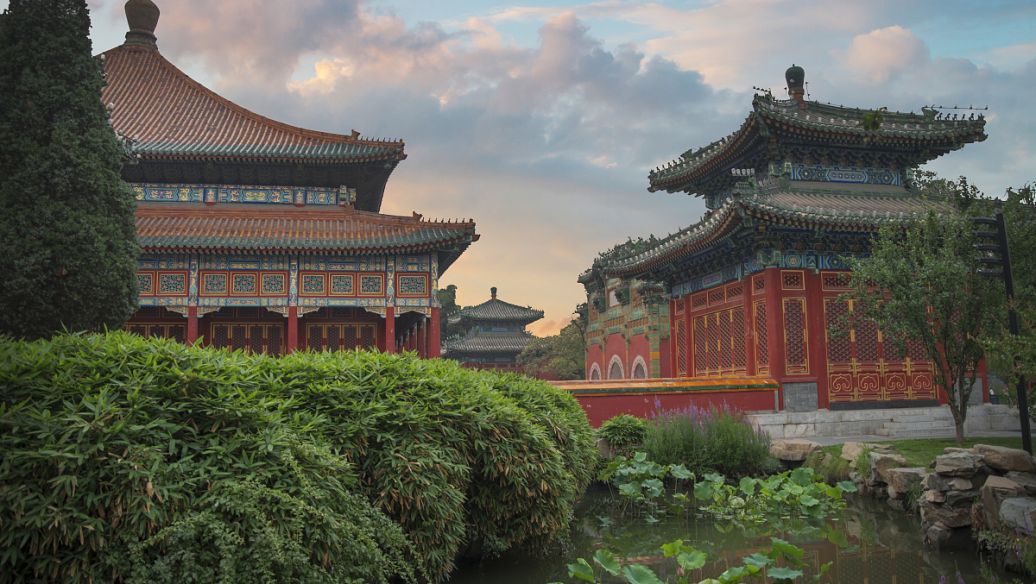 Penglai Pavilion was erected in 1061 AD during the Northern Song Dynasty under Emperor Renzong, just four years before England's Domesday Book surveyed William the Conqueror's new realm. Remarkably, while Europe's wooden structures of that era have largely vanished beneath later stone cathedrals, Penglai's timber halls have survived nearly a millennium through careful restoration rather than reconstruction, making it one of China's rarest surviving Song-era wooden buildings. The great Song poet Su Shi inscribed his celebrated "Sea Market" poem on a stone tablet here, joining a literary lineage comparable to Petrarch immortalizing beloved landscapes. Designated a national key cultural relic, the pavilion proudly bears the title "foremost tower north of the Yangtze."
The architectural ensemble cascades down the cliff face in organic harmony with the rugged terrain, much like a Mediterranean hilltop village growing directly from living rock. Six principal halls—including the Tianhou Temple, Dragon King Palace, Lüzu Hall, Sanqing Hall, and Amituo Temple—feature sweeping upturned eaves and intricate dougong bracket sets that recall the craftsmanship of Norway's medieval stave churches. The main two-story pavilion commands a breathtaking vantage where visitors can actually distinguish the contrasting colors of the Yellow Sea and Bohai Sea. The ingenious Wind-Avoidance Pavilion, with no south-facing windows yet remarkably draft-free, demonstrates Song-era architectural brilliance that would have impressed Roman engineers.
Penglai Pavilion occupies the spiritual heart of the Eight Immortals legend—China's answer to Greek myths where gods walk among mortals—where the immortals famously crossed the sea aboard magical objects to attend a heavenly peach banquet. The Tianhou Temple honors Mazu, the sea goddess long venerated by coastal communities much as Mediterranean sailors once prayed to Poseidon for safe passage. Lüzu Hall and Sanqing Hall anchor the site's deep Daoist heritage, while nearby Penglai Water City once served as a vital Ming Dynasty naval fortress where General Qi Jiguang defended against Japanese pirates—a maritime chapter contemporary with the Spanish Armada's defeat in 1588.
The scenic area lies at 59 Yingbin Road in Penglai District, Yantai, and holds China's prestigious 5A national tourism rating. Admission costs 100 RMB for adults, with complimentary entry for seniors over 60, children under 1.4 meters, and active military personnel; students pay half price. During peak season the site operates from 7:30 AM to 8:30 PM, and advance real-name reservations are required through official platforms. The complex connects easily with the adjacent Eight Immortals Crossing the Sea Scenic Area and Sanxian Mountain for travelers seeking extended exploration.
For visitors seeking experiences beyond the Great Wall or Forbidden City, Penglai offers something rarer: an authentic encounter with living mythology set against dramatic coastal scenery that rivals the Italian Amalfi Coast or Portugal's Sintra cliffs. Arrive at dawn when morning mist transforms the peaks into the legendary "earthly paradise" the ancients described—shrouded summits evoke Scotland's misty highlands or the fabled Avalon of Arthurian romance. Follow a counterclockwise route—Wind-Avoidance Pavilion, Main Tower, Su Shrine, Lüzu Hall, then Tianheng Mountain—allowing two and a half to three hours for the complete experience. Wear sturdy non-slip shoes for the stone steps, apply sunscreen, and bring your camera to capture what poets have called China's most enchanting seascape.
Penglai Pavilion was erected in 1061 AD during the Northern Song Dynasty under Emperor Renzong, just four years before England's Domesday Book surveyed William the Conqueror's new realm. Remarkably, while Europe's wooden structures of that era have largely vanished beneath later stone cathedrals, Penglai's timber halls have survived nearly a millennium through careful restoration rather than reconstruction, making it one of China's rarest surviving Song-era wooden buildings. The great Song poet Su Shi inscribed his celebrated "Sea Market" poem on a stone tablet here, joining a literary lineage comparable to Petrarch immortalizing beloved landscapes. Designated a national key cultural relic, the pavilion proudly bears the title "foremost tower north of the Yangtze."
The architectural ensemble cascades down the cliff face in organic harmony with the rugged terrain, much like a Mediterranean hilltop village growing directly from living rock. Six principal halls—including the Tianhou Temple, Dragon King Palace, Lüzu Hall, Sanqing Hall, and Amituo Temple—feature sweeping upturned eaves and intricate dougong bracket sets that recall the craftsmanship of Norway's medieval stave churches. The main two-story pavilion commands a breathtaking vantage where visitors can actually distinguish the contrasting colors of the Yellow Sea and Bohai Sea. The ingenious Wind-Avoidance Pavilion, with no south-facing windows yet remarkably draft-free, demonstrates Song-era architectural brilliance that would have impressed Roman engineers.
Penglai Pavilion occupies the spiritual heart of the Eight Immortals legend—China's answer to Greek myths where gods walk among mortals—where the immortals famously crossed the sea aboard magical objects to attend a heavenly peach banquet. The Tianhou Temple honors Mazu, the sea goddess long venerated by coastal communities much as Mediterranean sailors once prayed to Poseidon for safe passage. Lüzu Hall and Sanqing Hall anchor the site's deep Daoist heritage, while nearby Penglai Water City once served as a vital Ming Dynasty naval fortress where General Qi Jiguang defended against Japanese pirates—a maritime chapter contemporary with the Spanish Armada's defeat in 1588.
The scenic area lies at 59 Yingbin Road in Penglai District, Yantai, and holds China's prestigious 5A national tourism rating. Admission costs 100 RMB for adults, with complimentary entry for seniors over 60, children under 1.4 meters, and active military personnel; students pay half price. During peak season the site operates from 7:30 AM to 8:30 PM, and advance real-name reservations are required through official platforms. The complex connects easily with the adjacent Eight Immortals Crossing the Sea Scenic Area and Sanxian Mountain for travelers seeking extended exploration.
For visitors seeking experiences beyond the Great Wall or Forbidden City, Penglai offers something rarer: an authentic encounter with living mythology set against dramatic coastal scenery that rivals the Italian Amalfi Coast or Portugal's Sintra cliffs. Arrive at dawn when morning mist transforms the peaks into the legendary "earthly paradise" the ancients described—shrouded summits evoke Scotland's misty highlands or the fabled Avalon of Arthurian romance. Follow a counterclockwise route—Wind-Avoidance Pavilion, Main Tower, Su Shrine, Lüzu Hall, then Tianheng Mountain—allowing two and a half to three hours for the complete experience. Wear sturdy non-slip shoes for the stone steps, apply sunscreen, and bring your camera to capture what poets have called China's most enchanting seascape.