Chaozhou Woodcarving Museum
⭐ 3.80
Chaozhou Woodcarving Museum, Xiangqiao District, Chaozhou City, Guangdong Province, China
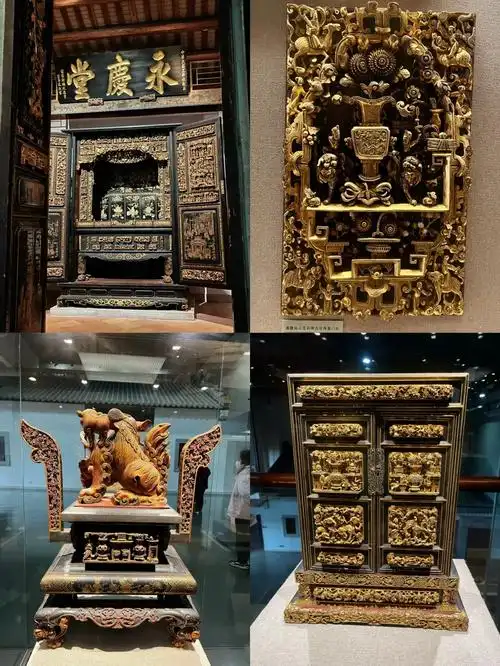 Chaozhou woodcarving emerged during the Tang Dynasty (618–907 CE), flourishing through the Ming and Qing eras as coastal Fujian-Guangdong merchants blended southern folk motifs with the rigorous carving traditions of central China. Like the gilded altarpieces of Bavaria's Baroque churches or the tracery of Gothic cathedrals, Chaozhou's multi-layered openwork transforms structural wood into lacework of light and shadow. In 2006, China recognized it among its first batch of National Intangible Cultural Heritages, placing it alongside venerable craft traditions such as Suzhou embroidery and Jingdezhen porcelain in national significance.
The undisputed highlight is Jilue Huang Ancestral Hall, built during the Guangxu era (1875–1908) of the Qing Dynasty on Yi'an Road in the ancient city. This national protected monument functions as a living museum, its entire roof framework, beams, and door lintels swathed in gilded carvings depicting opera scenes like "The Flooding of Jinshan Temple." Comparable to England's medieval church rood screens or Italy's carved sacristies, the craftsmanship here astonishes visitors with figures no larger than a fingernail rendered in astonishing detail. The hall's century-old gold lacquer still gleams, demonstrating a finishing technique rivaling Florentine gilding guilds.
Beyond the ancestral hall, two private studios anchor the contemporary scene. The Gu Liuxi Woodcarving Museum houses around 1,600 modern masterworks, including a colossal openwork carving of the Song Dynasty scroll "Along the River During Qingming Festival"—a Herculean effort reminiscent of the Bayeux Tapestry's narrative ambition. The Guo Shaojun Woodcarving Art Gallery in Longhu Town features a 2000-square-meter workshop where visitors can watch masters at work on roughing, refining, and piercing stages, with hands-on study programs available for families and children.
Culturally, the carvings serve far more than decoration. Opera figure carvings transmit Confucian virtues of loyalty and filial piety, while shrimp and crab basket motifs symbolize prosperity—much as European folk carvings carried blessings and warnings within their iconography. Both studios are helmed by nationally recognized heritage inheritors, transforming these spaces into active workshops rather than static displays, similar to how Florence's artisan studios preserve Renaissance techniques through daily practice.
Plan a half- to full-day cultural route: visit Jilue Huang Ancestral Hall in the morning (8:30–17:30, closed Mondays, around ¥10 entry), easily combined with walks to Kaiyuan Temple and the famous Paifang Street. The Gu Liuxi Museum on Xinyang Road and Guo Shaojun Gallery in Longhu Town (about 6–7 km from the old city) are both free but require taxis—always call ahead to confirm opening hours. Pack sun protection and water, refrain from touching carvings, and disable flash photography to help preserve these irreplaceable treasures for future generations.
Chaozhou woodcarving emerged during the Tang Dynasty (618–907 CE), flourishing through the Ming and Qing eras as coastal Fujian-Guangdong merchants blended southern folk motifs with the rigorous carving traditions of central China. Like the gilded altarpieces of Bavaria's Baroque churches or the tracery of Gothic cathedrals, Chaozhou's multi-layered openwork transforms structural wood into lacework of light and shadow. In 2006, China recognized it among its first batch of National Intangible Cultural Heritages, placing it alongside venerable craft traditions such as Suzhou embroidery and Jingdezhen porcelain in national significance.
The undisputed highlight is Jilue Huang Ancestral Hall, built during the Guangxu era (1875–1908) of the Qing Dynasty on Yi'an Road in the ancient city. This national protected monument functions as a living museum, its entire roof framework, beams, and door lintels swathed in gilded carvings depicting opera scenes like "The Flooding of Jinshan Temple." Comparable to England's medieval church rood screens or Italy's carved sacristies, the craftsmanship here astonishes visitors with figures no larger than a fingernail rendered in astonishing detail. The hall's century-old gold lacquer still gleams, demonstrating a finishing technique rivaling Florentine gilding guilds.
Beyond the ancestral hall, two private studios anchor the contemporary scene. The Gu Liuxi Woodcarving Museum houses around 1,600 modern masterworks, including a colossal openwork carving of the Song Dynasty scroll "Along the River During Qingming Festival"—a Herculean effort reminiscent of the Bayeux Tapestry's narrative ambition. The Guo Shaojun Woodcarving Art Gallery in Longhu Town features a 2000-square-meter workshop where visitors can watch masters at work on roughing, refining, and piercing stages, with hands-on study programs available for families and children.
Culturally, the carvings serve far more than decoration. Opera figure carvings transmit Confucian virtues of loyalty and filial piety, while shrimp and crab basket motifs symbolize prosperity—much as European folk carvings carried blessings and warnings within their iconography. Both studios are helmed by nationally recognized heritage inheritors, transforming these spaces into active workshops rather than static displays, similar to how Florence's artisan studios preserve Renaissance techniques through daily practice.
Plan a half- to full-day cultural route: visit Jilue Huang Ancestral Hall in the morning (8:30–17:30, closed Mondays, around ¥10 entry), easily combined with walks to Kaiyuan Temple and the famous Paifang Street. The Gu Liuxi Museum on Xinyang Road and Guo Shaojun Gallery in Longhu Town (about 6–7 km from the old city) are both free but require taxis—always call ahead to confirm opening hours. Pack sun protection and water, refrain from touching carvings, and disable flash photography to help preserve these irreplaceable treasures for future generations.