Phoenix Mountain
⭐ 4.20
Phoenix Mountain Scenic Area
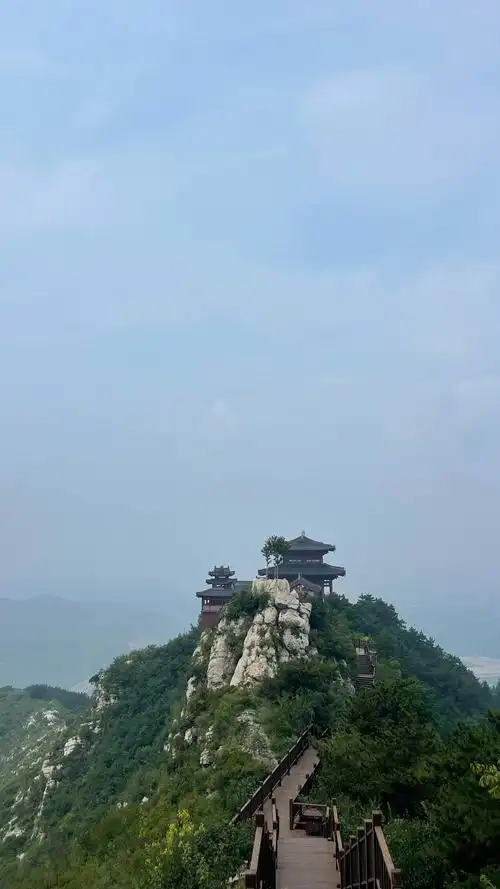 Phoenix Mountain claims the title "Cradle of Northeastern Buddhism." In 341 CE—roughly when the Roman emperor Constantine was consolidating his new Christian capital at Constantinople—the monk Longxiang founded a temple here, the earliest recorded Buddhist sanctuary in northeast China. Even more remarkably, the pilgrim Tan Wujie set out for India in 420 CE, two centuries before the better-known Xuanzang. The mountain's continuous Buddhist presence parallels great European pilgrimage centers such as Monte Cassino or Canterbury, making it a key stop for travelers tracing religious history along the Silk Road's northern routes.
The mountain's signature "Three Pagodas and Four Temples" complex showcases nearly a millennium of construction. The thirteen-story Moyun Pagoda, a Liao Dynasty brick tower from the 11th century, rises like a stone cousin of an Italian Romanesque campanile. Its tight eaves and weathered carvings share the same vertical, fortress-like aesthetic as medieval European church towers—structures built to endure both weather and time. The four temples (Yanshou, Tianqing, Yunje, and Huayan) cling to the hillside in the traditional layered style, while a Northern Wei rock-cut shrine tucked into a cliff face echoes Europe's earliest cave monasteries.
The spiritual heart of Fenghuang Mountain is the Fobao Pagoda, which tradition holds to enshrine authentic relics of Shakyamuni Buddha and his predecessor Dipankara—a treasure as rare in Buddhism as the relics of St. James at Santiago de Compostela are for Catholics. For scholars, the site offers an unparalleled timeline of Buddhist transmission: fifth-century stone carvings, tenth-century Liao pagodas, and Qing Dynasty restorations all layered within a single walk. It is a living archive of how Indian Buddhism adapted to Northeast China's frontier cultures over sixteen centuries.
At only 660 meters, the main peak rewards visitors without demanding a strenuous climb. Trails wind through fir and oak forest at 85% coverage, with spring azaleas and fiery autumn maples framing the route. Natural rock formations resembling a reclining Buddha and an elephant's trunk punctuate the path, giving the ascent a playful quality. A full loop on foot takes four to five hours at an easy pace, suitable for children and older travelers, while a shuttle bus can carry less mobile visitors directly to the lower temple cluster.
Phoenix Mountain sits just four kilometers east of Chaoyang's city center, reached directly on city buses 10, 14, and 15. Peak-season hours run roughly 06:00 to 18:00; entrance fees and discounts are posted at the gate. Allow four to six hours for a meaningful visit. Bring water and a light snack, wear sturdy non-slip shoes—stone steps become slick after August rains—and dress modestly when entering temple halls, where photography is forbidden. The recommended counter-clockwise route runs from the gate through Tianqing Temple, the Moyun Pagoda, Yunje Temple, Huayan Temple, and finally the summit's Fengguan Rock.
Western travelers who appreciate sites like Pompeii, the cave churches of Matera, or the rock-hewn sanctuaries of Lalibela will find here a quieter but equally layered experience—one where you can trace a faith's sixteen-century journey within a single half-day walk. The mountain suits visitors drawn to religious heritage, ancient architecture, and gentle cultural hiking rather than dramatic alpine scenery. Come expecting contemplation rather than spectacle, and Phoenix Mountain will reward you with one of Northeast China's most underrated pilgrimages.
Phoenix Mountain claims the title "Cradle of Northeastern Buddhism." In 341 CE—roughly when the Roman emperor Constantine was consolidating his new Christian capital at Constantinople—the monk Longxiang founded a temple here, the earliest recorded Buddhist sanctuary in northeast China. Even more remarkably, the pilgrim Tan Wujie set out for India in 420 CE, two centuries before the better-known Xuanzang. The mountain's continuous Buddhist presence parallels great European pilgrimage centers such as Monte Cassino or Canterbury, making it a key stop for travelers tracing religious history along the Silk Road's northern routes.
The mountain's signature "Three Pagodas and Four Temples" complex showcases nearly a millennium of construction. The thirteen-story Moyun Pagoda, a Liao Dynasty brick tower from the 11th century, rises like a stone cousin of an Italian Romanesque campanile. Its tight eaves and weathered carvings share the same vertical, fortress-like aesthetic as medieval European church towers—structures built to endure both weather and time. The four temples (Yanshou, Tianqing, Yunje, and Huayan) cling to the hillside in the traditional layered style, while a Northern Wei rock-cut shrine tucked into a cliff face echoes Europe's earliest cave monasteries.
The spiritual heart of Fenghuang Mountain is the Fobao Pagoda, which tradition holds to enshrine authentic relics of Shakyamuni Buddha and his predecessor Dipankara—a treasure as rare in Buddhism as the relics of St. James at Santiago de Compostela are for Catholics. For scholars, the site offers an unparalleled timeline of Buddhist transmission: fifth-century stone carvings, tenth-century Liao pagodas, and Qing Dynasty restorations all layered within a single walk. It is a living archive of how Indian Buddhism adapted to Northeast China's frontier cultures over sixteen centuries.
At only 660 meters, the main peak rewards visitors without demanding a strenuous climb. Trails wind through fir and oak forest at 85% coverage, with spring azaleas and fiery autumn maples framing the route. Natural rock formations resembling a reclining Buddha and an elephant's trunk punctuate the path, giving the ascent a playful quality. A full loop on foot takes four to five hours at an easy pace, suitable for children and older travelers, while a shuttle bus can carry less mobile visitors directly to the lower temple cluster.
Phoenix Mountain sits just four kilometers east of Chaoyang's city center, reached directly on city buses 10, 14, and 15. Peak-season hours run roughly 06:00 to 18:00; entrance fees and discounts are posted at the gate. Allow four to six hours for a meaningful visit. Bring water and a light snack, wear sturdy non-slip shoes—stone steps become slick after August rains—and dress modestly when entering temple halls, where photography is forbidden. The recommended counter-clockwise route runs from the gate through Tianqing Temple, the Moyun Pagoda, Yunje Temple, Huayan Temple, and finally the summit's Fengguan Rock.
Western travelers who appreciate sites like Pompeii, the cave churches of Matera, or the rock-hewn sanctuaries of Lalibela will find here a quieter but equally layered experience—one where you can trace a faith's sixteen-century journey within a single half-day walk. The mountain suits visitors drawn to religious heritage, ancient architecture, and gentle cultural hiking rather than dramatic alpine scenery. Come expecting contemplation rather than spectacle, and Phoenix Mountain will reward you with one of Northeast China's most underrated pilgrimages.