West Lake Park
⭐ 3.20
Zhanjiang, Guangdong, China
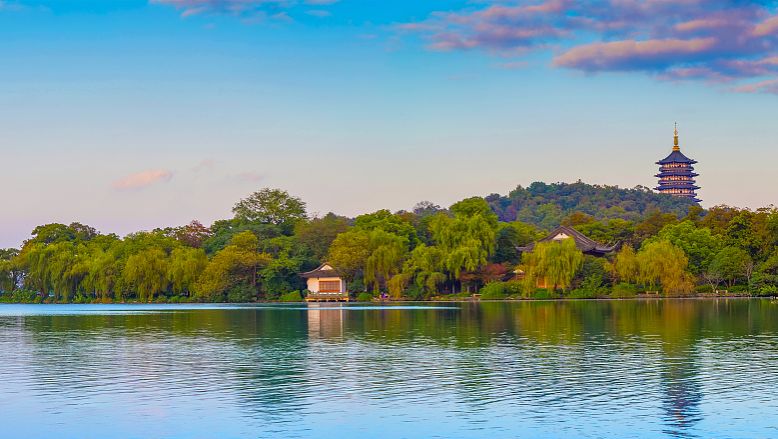 Leizhou West Lake, originally called Luo Lake, earned its current name in the 11th century when the Su brothers—two of the Northern Song dynasty's most accomplished literary figures—were demoted to this distant peninsula as punishment for political dissent. Their exile to Leizhou, once considered a remote frontier roughly equivalent to Britain's Roman-era outpost at Hadrian's Wall, paradoxically enriched the region's cultural fabric. The brothers' recreational boat outings left an indelible literary mark, and the lake became a pilgrimage site for those celebrating scholars who endured persecution with grace. Compared to the grand imperial gardens of Suzhou or Hangzhou's celebrated West Lake, Leizhou's version offers a more intimate, melancholic charm rooted firmly in themes of displacement and resilience.
At the heart of the lake sits Su Gong Pavilion, a Ming-dynasty structure built on a small island and fronted by a stone statue of Su Shi himself. The pavilion's hanging couplet, "Brothers gathered and scattered across the four corners of the sky," poignantly captures both the Su brothers' wandering fate and the universal sibling bond. This single lakeside tableau encapsulates the entire park's emotional register: scholarly reflection set against tropical greenery, with the calligraphic weight of a thousand years compressed into one modest wooden hall.
Adjacent to the pavilion, the Ten Worthies Shrine honors an extraordinary lineup of Song-dynasty luminaries—including the statesman Kou Zhun and the national hero Wen Tianxiang, whose famous patriotic poem "Righteousness" remains a cornerstone of Chinese literary identity. The shrine preserves original stone steles inscribed by Wen Tianxiang himself, making it an invaluable resource for researchers studying exile culture. Nearby, Kou's Shrine and the ancient Lai Well commemorate Chancellor Kou Zhun, while the Nine-Turn Bridge, Biehu Pavilion, and a ceremonial archway commemorating the local scholar Xi Hu Ping bring classical Jiangnan garden aesthetics to this southern setting.
Practical considerations are essential here: the park sits in Leizhou proper, not Zhanjiang city center—roughly a one-hour drive from downtown Zhanjiang, so visitors should not confuse it with the famous West Lakes of Hangzhou or Huizhou. Commercial facilities within the park are minimal, meaning travelers should carry their own water and mosquito repellent, particularly during humid summer evenings. The best photographic light falls at sunrise and the hour before sunset, when joggers and tai chi practitioners fill the shaded paths and the lake mirrors the subtropical sky in shades of amber and rose.
For visitors seeking layered context, the park pairs beautifully with neighboring attractions. Just steps away stands Tianning Chan Temple, where Su Shi himself inscribed the phrase "First Among Ten Thousand Mountains," while the Leizhou City Museum provides broader archaeological perspective on this historically significant region. Together, these three sites create a compact but deeply rewarding half-day circuit that transforms a sleepy tropical garden into a vivid meditation on Chinese political history, literary endurance, and the strange ways punishment can become legacy. It is, ultimately, a place where the weight of empire meets the gentleness of water.
Leizhou West Lake, originally called Luo Lake, earned its current name in the 11th century when the Su brothers—two of the Northern Song dynasty's most accomplished literary figures—were demoted to this distant peninsula as punishment for political dissent. Their exile to Leizhou, once considered a remote frontier roughly equivalent to Britain's Roman-era outpost at Hadrian's Wall, paradoxically enriched the region's cultural fabric. The brothers' recreational boat outings left an indelible literary mark, and the lake became a pilgrimage site for those celebrating scholars who endured persecution with grace. Compared to the grand imperial gardens of Suzhou or Hangzhou's celebrated West Lake, Leizhou's version offers a more intimate, melancholic charm rooted firmly in themes of displacement and resilience.
At the heart of the lake sits Su Gong Pavilion, a Ming-dynasty structure built on a small island and fronted by a stone statue of Su Shi himself. The pavilion's hanging couplet, "Brothers gathered and scattered across the four corners of the sky," poignantly captures both the Su brothers' wandering fate and the universal sibling bond. This single lakeside tableau encapsulates the entire park's emotional register: scholarly reflection set against tropical greenery, with the calligraphic weight of a thousand years compressed into one modest wooden hall.
Adjacent to the pavilion, the Ten Worthies Shrine honors an extraordinary lineup of Song-dynasty luminaries—including the statesman Kou Zhun and the national hero Wen Tianxiang, whose famous patriotic poem "Righteousness" remains a cornerstone of Chinese literary identity. The shrine preserves original stone steles inscribed by Wen Tianxiang himself, making it an invaluable resource for researchers studying exile culture. Nearby, Kou's Shrine and the ancient Lai Well commemorate Chancellor Kou Zhun, while the Nine-Turn Bridge, Biehu Pavilion, and a ceremonial archway commemorating the local scholar Xi Hu Ping bring classical Jiangnan garden aesthetics to this southern setting.
Practical considerations are essential here: the park sits in Leizhou proper, not Zhanjiang city center—roughly a one-hour drive from downtown Zhanjiang, so visitors should not confuse it with the famous West Lakes of Hangzhou or Huizhou. Commercial facilities within the park are minimal, meaning travelers should carry their own water and mosquito repellent, particularly during humid summer evenings. The best photographic light falls at sunrise and the hour before sunset, when joggers and tai chi practitioners fill the shaded paths and the lake mirrors the subtropical sky in shades of amber and rose.
For visitors seeking layered context, the park pairs beautifully with neighboring attractions. Just steps away stands Tianning Chan Temple, where Su Shi himself inscribed the phrase "First Among Ten Thousand Mountains," while the Leizhou City Museum provides broader archaeological perspective on this historically significant region. Together, these three sites create a compact but deeply rewarding half-day circuit that transforms a sleepy tropical garden into a vivid meditation on Chinese political history, literary endurance, and the strange ways punishment can become legacy. It is, ultimately, a place where the weight of empire meets the gentleness of water.