Han River
⭐ 3.00
Han River Basin, Chaozhou, Guangdong, China
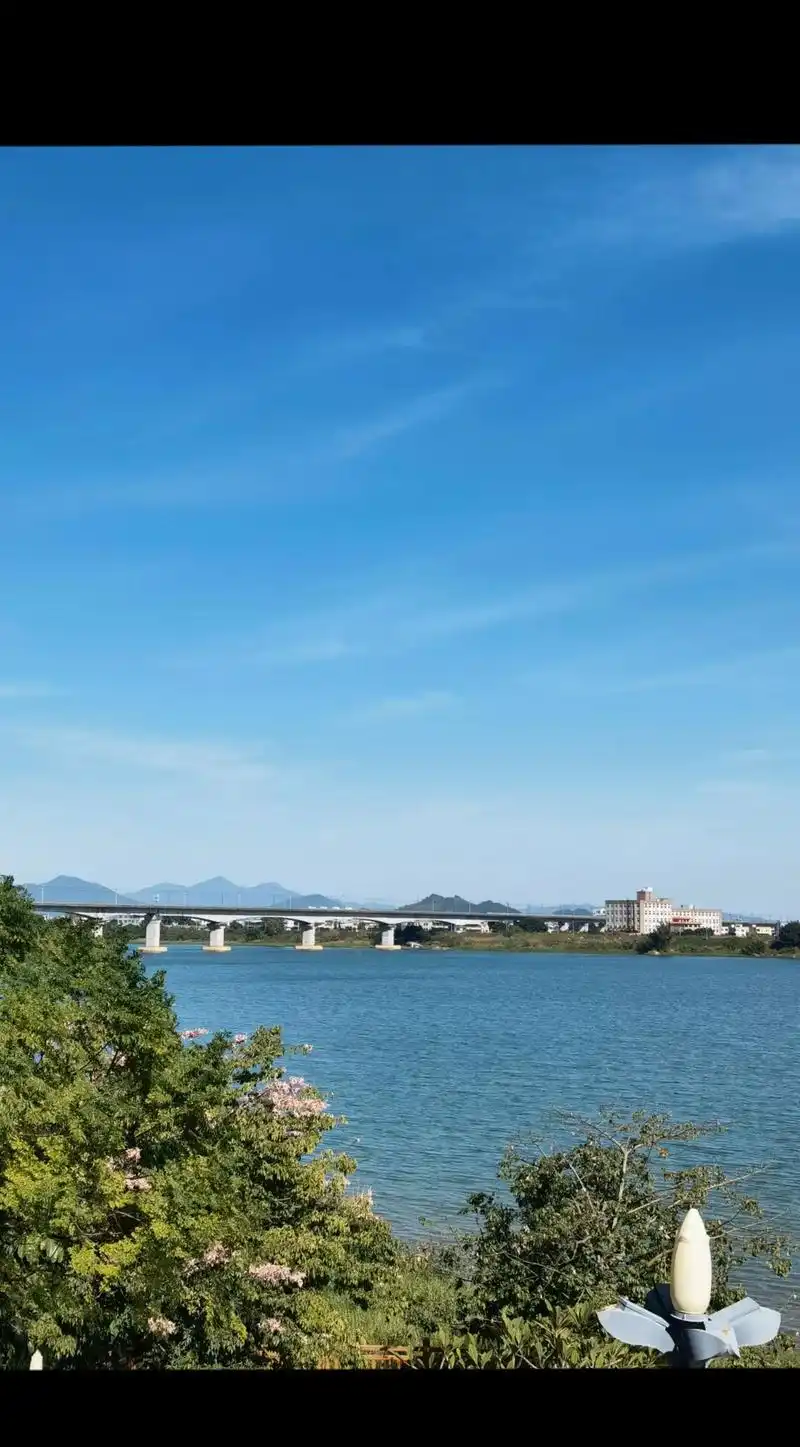 Stretching 470 kilometers through eastern Guangdong, Han River cradles the ancient port city of Chaozhou within three tributaries. Originally called "Crocodile Creek," it was renamed in 819 AD when Tang-dynasty poet-official Han Yu—exiled here in the manner of a Roman provincial reformer—tamed its waters and founded a school. The river subsequently anchored the Teochew cultural sphere, sustaining Ming and Qing merchant networks that reached Southeast Asia. Designated one of China's "Ten Most Beautiful Homeland Rivers," its banks remain lined with shrines, temples, and ancestral halls, making the waterway itself a chronological map of the region's millennium-long story—much as the Tiber frames Rome or the Spree frames Berlin.
The crown jewel of any Han River visit is Guangji Bridge, an 800-year-old engineering marvel predating Europe's medieval spans such as London's old stone bridge. Recognized among China's Four Great Ancient Bridges, it uniquely fuses three structural types: stone beam sections, fixed arches, and a pontoon middle—employing eighteen wooden boats that historically swiveled aside to let ships pass. This makes it arguably the world's earliest operational movable bridge, a concept not matched in Europe until medieval drawbridges. A modest 20-yuan admission grants access to walk its length; the most theatrical moment comes at dusk, when the floating section is detached in a centuries-old ceremony, then the entire span ignites in a free nightly light show rivaling any illumination along the Seine.
Across the river, climbing the slopes of Bijia Shan, stands the Han Yu Ancestral Temple, the oldest surviving shrine in China dedicated to the poet-official. Comparable in reverence to Rome's imperial fora or Edinburgh's monument-sprinkled Old Town, the complex features a forest of stone steles inscribed with Tang and Song calligraphy, plus a watchtower whose balcony commands a sweeping panorama of the river bend and Chaozhou's tiled roofline. Han Yu's literary fame in East Asia rivals that of Cicero in the West, and the temple remains an active site of Confucian veneration. Visitors should note that the site closes on Mondays; entry is free with a reservation via national-ID registration, and modest, quiet attire is appropriate to the scholarly atmosphere.
Connecting the river's disparate attractions is the Binjiang Greenway, a 10-kilometer urban waterfront promenade ideal for walking or cycling. Beginning at Guangji Tower and winding past sites such as the Qinglong Ancient Temple and the Thai-style Buddhist Hall, the path echoes similar riverside circuits along Paris's Seine quais or Copenhagen's harbor loop. Late afternoon is the prime window: locals return by sampan as the sun sinks, casting golden light across traditional architecture. Facilities are generous, though some stretches lack railings—caution with children is advised, and summer visitors should pack sunscreen and hats, as Chaozhou's subtropical sun far exceeds anything encountered in northern Europe.
The Han River experience crescendos after dark, when both riverbanks light up in coordinated illumination that transforms the city into a luminous stage. With the floating pontoon boats removed for the night, Guangji Bridge's remaining stone arch traces an elegant silhouette against reflected color, producing an atmosphere Western travelers might associate with Venice's Carnival or Budapest's illuminated Danube—but with far fewer crowds. A practical itinerary is to begin around 4:30 PM: cross the bridge, watch the sunset from the temple hill, then stroll back along the greenway as the lights ignite, fitting comfortably into half a day. Swimming is strictly prohibited—simply admire the spectacle from designated viewing platforms and let this underrated corner of imperial China reveal its quietly spectacular soul.
Stretching 470 kilometers through eastern Guangdong, Han River cradles the ancient port city of Chaozhou within three tributaries. Originally called "Crocodile Creek," it was renamed in 819 AD when Tang-dynasty poet-official Han Yu—exiled here in the manner of a Roman provincial reformer—tamed its waters and founded a school. The river subsequently anchored the Teochew cultural sphere, sustaining Ming and Qing merchant networks that reached Southeast Asia. Designated one of China's "Ten Most Beautiful Homeland Rivers," its banks remain lined with shrines, temples, and ancestral halls, making the waterway itself a chronological map of the region's millennium-long story—much as the Tiber frames Rome or the Spree frames Berlin.
The crown jewel of any Han River visit is Guangji Bridge, an 800-year-old engineering marvel predating Europe's medieval spans such as London's old stone bridge. Recognized among China's Four Great Ancient Bridges, it uniquely fuses three structural types: stone beam sections, fixed arches, and a pontoon middle—employing eighteen wooden boats that historically swiveled aside to let ships pass. This makes it arguably the world's earliest operational movable bridge, a concept not matched in Europe until medieval drawbridges. A modest 20-yuan admission grants access to walk its length; the most theatrical moment comes at dusk, when the floating section is detached in a centuries-old ceremony, then the entire span ignites in a free nightly light show rivaling any illumination along the Seine.
Across the river, climbing the slopes of Bijia Shan, stands the Han Yu Ancestral Temple, the oldest surviving shrine in China dedicated to the poet-official. Comparable in reverence to Rome's imperial fora or Edinburgh's monument-sprinkled Old Town, the complex features a forest of stone steles inscribed with Tang and Song calligraphy, plus a watchtower whose balcony commands a sweeping panorama of the river bend and Chaozhou's tiled roofline. Han Yu's literary fame in East Asia rivals that of Cicero in the West, and the temple remains an active site of Confucian veneration. Visitors should note that the site closes on Mondays; entry is free with a reservation via national-ID registration, and modest, quiet attire is appropriate to the scholarly atmosphere.
Connecting the river's disparate attractions is the Binjiang Greenway, a 10-kilometer urban waterfront promenade ideal for walking or cycling. Beginning at Guangji Tower and winding past sites such as the Qinglong Ancient Temple and the Thai-style Buddhist Hall, the path echoes similar riverside circuits along Paris's Seine quais or Copenhagen's harbor loop. Late afternoon is the prime window: locals return by sampan as the sun sinks, casting golden light across traditional architecture. Facilities are generous, though some stretches lack railings—caution with children is advised, and summer visitors should pack sunscreen and hats, as Chaozhou's subtropical sun far exceeds anything encountered in northern Europe.
The Han River experience crescendos after dark, when both riverbanks light up in coordinated illumination that transforms the city into a luminous stage. With the floating pontoon boats removed for the night, Guangji Bridge's remaining stone arch traces an elegant silhouette against reflected color, producing an atmosphere Western travelers might associate with Venice's Carnival or Budapest's illuminated Danube—but with far fewer crowds. A practical itinerary is to begin around 4:30 PM: cross the bridge, watch the sunset from the temple hill, then stroll back along the greenway as the lights ignite, fitting comfortably into half a day. Swimming is strictly prohibited—simply admire the spectacle from designated viewing platforms and let this underrated corner of imperial China reveal its quietly spectacular soul.