Paifang Street
⭐ 4.20
Paifang Street, Xiangqiao District, Chaozhou City, Guangdong Province, China
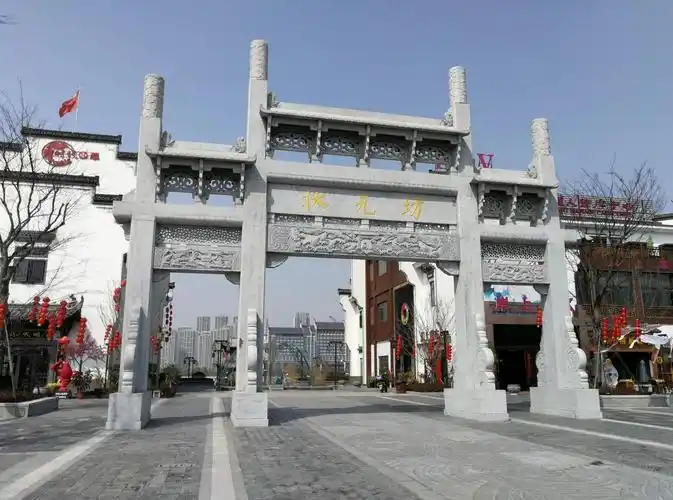 Stretching along Chaizhou's historic spine, Paifang Street traces its roots to the Ming and Qing dynasties, when the road once bore between forty and ninety ceremonial archways honoring examination laureates and virtuous citizens. Imagine walking through a corridor of triumphal monuments akin to Rome's Arch of Titus or Paris's Arc de Triomphe, but clustered along a single lane rather than encircling a plaza. The original structures were largely lost to war and modernization, yet in 2009 craftsmen faithfully rebuilt twenty-three archways using traditional stone-carving methods, restoring the scholarly grandeur that once earned Chaozhou the nickname "City of Memorial Arches."
What makes this street genuinely singular is the marriage between solemn Confucian archways and the lively arcade architecture of the Nanyang, or Southern Seas. Built by returning Chaozhou merchants in the late Qing, these covered walkways echo the shophouses of Penang and Singapore, with shops below and living quarters above, a layout perfectly suited to the rainy subtropical climate. The contrast is striking: grey stone archways carved with dragons, phoenixes, and exam legends stand shoulder to shoulder with colonnaded facades painted in faded pastel hues, creating a streetscape that no other city in China can replicate.
Beyond its visual drama, Paifang Street functions as an open-air museum of imperial examination culture and Confucian values. Stone tablets inscribed with the deeds of figures like Lin Daqin, a young Chaozhou prodigy who became zhuangyuan, or top scholar, invite visitors to ponder how meritocratic ideals shaped Chinese society for centuries, much like the universities of medieval Bologna or Oxford shaped European thought. Hidden in nearby lanes, the Ji Lue Huang Ancestral Hall showcases dazzling gilded woodcarving, while family-run workshops keep gongfu tea, Chaozhou embroidery, and hand-thrown pottery alive as living intangible heritage.
The street is freely accessible at all hours, with most shops opening between 8 a.m. and 11 p.m. Arriving around 5:30 p.m. is ideal: temperatures soften, lantern light begins to glow, and you can admire both daylight carvings and the magical after-dark atmosphere. Entry to Ji Lue Huang Ancestral Hall is also free, though visitors should speak quietly and refrain from touching the fragile carvings. Comfortable walking shoes are essential, as the entire route covers roughly two kilometers of uneven stone pavement.
A sensible itinerary begins at the Guangji Gate tower in the south, then drifts northward through the central archway cluster, pausing longest at the Zhuangyuan Fang and Ten Ministers Fang. From there, continue to Kaiyuan Temple or detour west to the famous Guangji Bridge for its evening light show. Allow three to four hours for a relaxed visit, and leave time to wander side alleys like Zaiyang Lane, where family kitchens serve steaming beef balls, crispy oyster omelets, and sweet duck-mother dumplings. Souvenir shops offer hands-on workshops in lacquerware and pottery, though prices vary and bargaining is expected.
Stretching along Chaizhou's historic spine, Paifang Street traces its roots to the Ming and Qing dynasties, when the road once bore between forty and ninety ceremonial archways honoring examination laureates and virtuous citizens. Imagine walking through a corridor of triumphal monuments akin to Rome's Arch of Titus or Paris's Arc de Triomphe, but clustered along a single lane rather than encircling a plaza. The original structures were largely lost to war and modernization, yet in 2009 craftsmen faithfully rebuilt twenty-three archways using traditional stone-carving methods, restoring the scholarly grandeur that once earned Chaozhou the nickname "City of Memorial Arches."
What makes this street genuinely singular is the marriage between solemn Confucian archways and the lively arcade architecture of the Nanyang, or Southern Seas. Built by returning Chaozhou merchants in the late Qing, these covered walkways echo the shophouses of Penang and Singapore, with shops below and living quarters above, a layout perfectly suited to the rainy subtropical climate. The contrast is striking: grey stone archways carved with dragons, phoenixes, and exam legends stand shoulder to shoulder with colonnaded facades painted in faded pastel hues, creating a streetscape that no other city in China can replicate.
Beyond its visual drama, Paifang Street functions as an open-air museum of imperial examination culture and Confucian values. Stone tablets inscribed with the deeds of figures like Lin Daqin, a young Chaozhou prodigy who became zhuangyuan, or top scholar, invite visitors to ponder how meritocratic ideals shaped Chinese society for centuries, much like the universities of medieval Bologna or Oxford shaped European thought. Hidden in nearby lanes, the Ji Lue Huang Ancestral Hall showcases dazzling gilded woodcarving, while family-run workshops keep gongfu tea, Chaozhou embroidery, and hand-thrown pottery alive as living intangible heritage.
The street is freely accessible at all hours, with most shops opening between 8 a.m. and 11 p.m. Arriving around 5:30 p.m. is ideal: temperatures soften, lantern light begins to glow, and you can admire both daylight carvings and the magical after-dark atmosphere. Entry to Ji Lue Huang Ancestral Hall is also free, though visitors should speak quietly and refrain from touching the fragile carvings. Comfortable walking shoes are essential, as the entire route covers roughly two kilometers of uneven stone pavement.
A sensible itinerary begins at the Guangji Gate tower in the south, then drifts northward through the central archway cluster, pausing longest at the Zhuangyuan Fang and Ten Ministers Fang. From there, continue to Kaiyuan Temple or detour west to the famous Guangji Bridge for its evening light show. Allow three to four hours for a relaxed visit, and leave time to wander side alleys like Zaiyang Lane, where family kitchens serve steaming beef balls, crispy oyster omelets, and sweet duck-mother dumplings. Souvenir shops offer hands-on workshops in lacquerware and pottery, though prices vary and bargaining is expected.