Yunmen Mountain
⭐ 4.60
Yunmen Mountain Scenic Area, Qingzhou, Weifang, Shandong, China
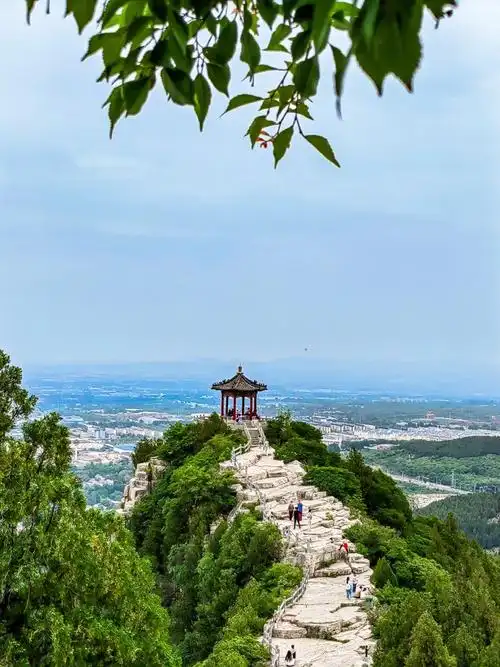 Towering over the southern edge of Qingzhou at the northern tip of the Tai-Yi mountain range, Yunmen Mountain has drawn pilgrims, poets, and scholars for fifteen centuries. The cliff-side inscriptions here span from the Northern Wei dynasty (386–534 AD) through to the modern era, creating what amounts to an open-air calligraphy gallery that rivals the cliff inscriptions at Mount Tai or even the ancient literary legacy carved into Mediterranean sites like Delphi. Over a hundred inscribed works transform the mountain into a stone-bound archive of Chinese intellectual history.
The undisputed icon is the towering Ming-dynasty "Shou" character carved into a north-facing cliff in 1566, commissioned by Prince Heng of the Ming imperial Zhu clan to celebrate his mother's birthday. Standing 7.5 meters tall—with its inner "cun" radical measuring a remarkable 2.3 meters—it is celebrated as the "Longevity Character Under Heaven" and is widely cited as the geographic inspiration for the famous Chinese idiom "May your longevity rival the Southern Mountain." For Western visitors familiar with monumental inscriptions like those at Mount Rushmore or ancient Egyptian hieroglyphic quarries, this single ideogram offers a uniquely Chinese fusion of calligraphy, landscape, and imperial devotion.
On the mountain's sunny southern flank, a complex of Sui-dynasty (581–618 AD) Buddhist grottoes houses 272 weathered but still expressive statues, now protected as a nationally designated cultural relic. Carved during an era when Buddhism flourished along the Silk Road, these figures echo the artistic traditions of contemporaries at China's great cave temple complexes such as Dunhuang and Longmen, while documenting Qingzhou's role as a major regional Buddhist center. The sculptures embody the same iconographic vocabulary that would eventually influence sacred art across East Asia.
At the summit, the extraordinary Yunmen Cave pierces completely through the peak, creating a natural portal. On humid summer and autumn mornings, mist streams dramatically through the opening, producing the legendary "Cloud Gate Fairyland" spectacle celebrated by classical poets. The climb itself follows the aptly named "999 Steps to Longevity" trail—a gentle staircase shaded by pines and cypresses covering more than 90 percent of the route—making the summit reachable in 45 to 60 minutes for visitors of all ages.
Practical access is straightforward: high-speed trains arrive at Qingzhou Station (not to be confused with Qingzhou North Station), from where Bus 9 or a 15–20 yuan taxi ride reaches the mountain. Admission runs 60 yuan in peak season (April–October) and 50 yuan off-season, with free entry for seniors over 60, children under 6, and active military personnel; a one-way cable car ticket costs around 40 yuan. The adjacent Qingzhou Old Town is free to explore and pairs well with a combined ticket to the nearby Camel Mountain grottoes across the valley.
Plan your ascent via the recommended route—Mountain Gate Archway, Longevity Steps, Wangshou Pavilion, the colossal "Shou" cliff, Yunmen Cave, and the Grand Cloud Summit—before looping back or descending the same path. Spring and autumn offer the most comfortable temperatures, while the hours just after summer rain produce the ethereal cloud effects that have enchanted travelers here for over a millennium. Few mountains in China deliver such a concentrated blend of natural beauty, imperial calligraphy, and living spiritual heritage within an easy half-day visit.
Towering over the southern edge of Qingzhou at the northern tip of the Tai-Yi mountain range, Yunmen Mountain has drawn pilgrims, poets, and scholars for fifteen centuries. The cliff-side inscriptions here span from the Northern Wei dynasty (386–534 AD) through to the modern era, creating what amounts to an open-air calligraphy gallery that rivals the cliff inscriptions at Mount Tai or even the ancient literary legacy carved into Mediterranean sites like Delphi. Over a hundred inscribed works transform the mountain into a stone-bound archive of Chinese intellectual history.
The undisputed icon is the towering Ming-dynasty "Shou" character carved into a north-facing cliff in 1566, commissioned by Prince Heng of the Ming imperial Zhu clan to celebrate his mother's birthday. Standing 7.5 meters tall—with its inner "cun" radical measuring a remarkable 2.3 meters—it is celebrated as the "Longevity Character Under Heaven" and is widely cited as the geographic inspiration for the famous Chinese idiom "May your longevity rival the Southern Mountain." For Western visitors familiar with monumental inscriptions like those at Mount Rushmore or ancient Egyptian hieroglyphic quarries, this single ideogram offers a uniquely Chinese fusion of calligraphy, landscape, and imperial devotion.
On the mountain's sunny southern flank, a complex of Sui-dynasty (581–618 AD) Buddhist grottoes houses 272 weathered but still expressive statues, now protected as a nationally designated cultural relic. Carved during an era when Buddhism flourished along the Silk Road, these figures echo the artistic traditions of contemporaries at China's great cave temple complexes such as Dunhuang and Longmen, while documenting Qingzhou's role as a major regional Buddhist center. The sculptures embody the same iconographic vocabulary that would eventually influence sacred art across East Asia.
At the summit, the extraordinary Yunmen Cave pierces completely through the peak, creating a natural portal. On humid summer and autumn mornings, mist streams dramatically through the opening, producing the legendary "Cloud Gate Fairyland" spectacle celebrated by classical poets. The climb itself follows the aptly named "999 Steps to Longevity" trail—a gentle staircase shaded by pines and cypresses covering more than 90 percent of the route—making the summit reachable in 45 to 60 minutes for visitors of all ages.
Practical access is straightforward: high-speed trains arrive at Qingzhou Station (not to be confused with Qingzhou North Station), from where Bus 9 or a 15–20 yuan taxi ride reaches the mountain. Admission runs 60 yuan in peak season (April–October) and 50 yuan off-season, with free entry for seniors over 60, children under 6, and active military personnel; a one-way cable car ticket costs around 40 yuan. The adjacent Qingzhou Old Town is free to explore and pairs well with a combined ticket to the nearby Camel Mountain grottoes across the valley.
Plan your ascent via the recommended route—Mountain Gate Archway, Longevity Steps, Wangshou Pavilion, the colossal "Shou" cliff, Yunmen Cave, and the Grand Cloud Summit—before looping back or descending the same path. Spring and autumn offer the most comfortable temperatures, while the hours just after summer rain produce the ethereal cloud effects that have enchanted travelers here for over a millennium. Few mountains in China deliver such a concentrated blend of natural beauty, imperial calligraphy, and living spiritual heritage within an easy half-day visit.