Yangjiabu New Year Painting Museum
⭐ 4.20
Yangjiabu New Year Painting Museum, Hanting District, Weifang, Shandong Province, China
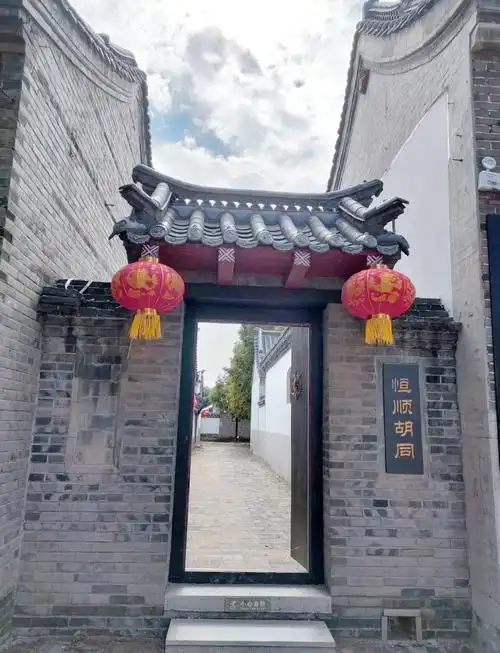 Yangjiabu woodblock New Year paintings trace their origins to the Ming Dynasty, placing them in the same era as Albrecht Dürer's revolutionary woodcuts in Renaissance Germany. Alongside Tianjin's Yangliuqing and Suzhou's Taohuawu, Yangjiabu forms one of China's "Big Three" folk painting centers, with Ming and Qing era production reportedly reaching tens of millions of prints annually, distributed across half of imperial China. The village once buzzed with every household producing art, a scene reminiscent of medieval European craft guilds or Nuremberg's famed printing quarter. Designated a National Intangible Cultural Heritage in 2006, the museum opened in 1988 to safeguard this remarkable lineage.
Housed in a 1,200-square-meter complex that blends traditional gray-brick northern Chinese courtyard architecture with modern exhibition design, the museum feels like stepping into a living folk village. Seven distinct zones unfold in sequence: origins, classical Ming-Qing blocks, craft demonstrations, contemporary innovations, symbolic meaning explanations, interactive workshops, and a working inheritor's studio. The bold, vigorous lines and saturated reds, yellows, and greens of the original prints echo the visual punch of Russian lubok folk prints or the wood-cuts of early 20th-century Scandinavian artists, yet the imagery of door gods, kitchen gods, and theatrical scenes is distinctly Chinese.
The cultural heart of the collection lies in its storytelling tradition. Door guardians ward off evil spirits, kitchen gods report family conduct to heaven, while auspicious bats, peaches, and peaches of immortality promise longevity, prosperity, and abundant offspring. The technical marvel is the mirror-image block method, every carved line and word is reversed, yet yields a perfectly legible, right-reading image after pressing. Surviving examples like the rare "Zengfu Caishen" (Increasing Fortune God) block are considered treasures by scholars of Chinese printmaking history, comparable in cultural weight to a rare Gutenberg-era printing plate.
Reaching the museum is straightforward: it's located at 1873 Futing Street in Hanting District, Weifang, within the Yangjiabu Folk Art Grand View Garden. Summer hours run roughly 7:30 a.m. to 6:00 p.m., and the park charges around 60 yuan for adults, with printing workshops adding 15 to 30 yuan per session. Plan to arrive by mid-morning, avoid Mondays, and allow three to four hours for a satisfying visit. The museum is also near Weifang's renowned Kite Museum, perfect for a cultural double-header.
The Yangjiabu New Year Painting Museum rewards travelers seeking authentic encounters with living tradition rather than sterile exhibits. Watching a master inheritor pull a freshly inked print from a 300-year-old block, hands stained with the same mineral pigments their ancestors used, offers an immediacy rare in modern museum-going. Families especially love the hands-on workshops, where children can make their own prints and leave with a tangible souvenir. For Western visitors interested in folk art, printmaking history, or simply the colorful soul of northern China, this hidden gem delivers far more than its modest footprint suggests.
Yangjiabu woodblock New Year paintings trace their origins to the Ming Dynasty, placing them in the same era as Albrecht Dürer's revolutionary woodcuts in Renaissance Germany. Alongside Tianjin's Yangliuqing and Suzhou's Taohuawu, Yangjiabu forms one of China's "Big Three" folk painting centers, with Ming and Qing era production reportedly reaching tens of millions of prints annually, distributed across half of imperial China. The village once buzzed with every household producing art, a scene reminiscent of medieval European craft guilds or Nuremberg's famed printing quarter. Designated a National Intangible Cultural Heritage in 2006, the museum opened in 1988 to safeguard this remarkable lineage.
Housed in a 1,200-square-meter complex that blends traditional gray-brick northern Chinese courtyard architecture with modern exhibition design, the museum feels like stepping into a living folk village. Seven distinct zones unfold in sequence: origins, classical Ming-Qing blocks, craft demonstrations, contemporary innovations, symbolic meaning explanations, interactive workshops, and a working inheritor's studio. The bold, vigorous lines and saturated reds, yellows, and greens of the original prints echo the visual punch of Russian lubok folk prints or the wood-cuts of early 20th-century Scandinavian artists, yet the imagery of door gods, kitchen gods, and theatrical scenes is distinctly Chinese.
The cultural heart of the collection lies in its storytelling tradition. Door guardians ward off evil spirits, kitchen gods report family conduct to heaven, while auspicious bats, peaches, and peaches of immortality promise longevity, prosperity, and abundant offspring. The technical marvel is the mirror-image block method, every carved line and word is reversed, yet yields a perfectly legible, right-reading image after pressing. Surviving examples like the rare "Zengfu Caishen" (Increasing Fortune God) block are considered treasures by scholars of Chinese printmaking history, comparable in cultural weight to a rare Gutenberg-era printing plate.
Reaching the museum is straightforward: it's located at 1873 Futing Street in Hanting District, Weifang, within the Yangjiabu Folk Art Grand View Garden. Summer hours run roughly 7:30 a.m. to 6:00 p.m., and the park charges around 60 yuan for adults, with printing workshops adding 15 to 30 yuan per session. Plan to arrive by mid-morning, avoid Mondays, and allow three to four hours for a satisfying visit. The museum is also near Weifang's renowned Kite Museum, perfect for a cultural double-header.
The Yangjiabu New Year Painting Museum rewards travelers seeking authentic encounters with living tradition rather than sterile exhibits. Watching a master inheritor pull a freshly inked print from a 300-year-old block, hands stained with the same mineral pigments their ancestors used, offers an immediacy rare in modern museum-going. Families especially love the hands-on workshops, where children can make their own prints and leave with a tangible souvenir. For Western visitors interested in folk art, printmaking history, or simply the colorful soul of northern China, this hidden gem delivers far more than its modest footprint suggests.