Ou Garden
⭐ 3.80
Ou Garden, Weicheng District, Weifang City, Shandong Province, China
 Built in the early years of the Kangxi reign (circa 1662–1722), Ou Garden began life as the eastern pleasure grounds of the Ming-era Heng Prince's palace—a princely estate of the sort that dotted Beijing and provincial capitals during the late Renaissance period in Europe. When the Qing court reassigned the property to Grand Secretary Feng Pu, a statesman of considerable literary renown, he transformed it into a private scholarly retreat. The garden's surviving Ming structures, including sections of walls and pavilions, make it something of a "living fossil" for tracing how Chinese garden design evolved across two dynasties—a parallel worth drawing to how European villas still preserve Renaissance bones beneath Baroque additions.
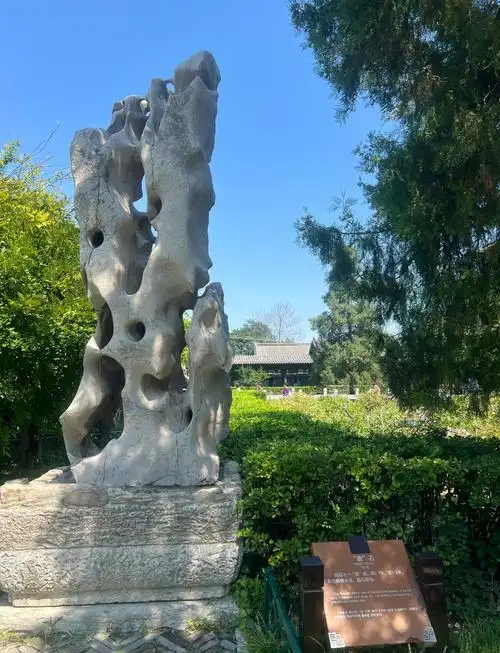
The garden's centrepiece is its celebrated three-peaked artificial rockery, designed and supervised by Zhang Ran, a master of the era's stone-stacking art. The craggy mountains are riddled with connecting caves and climbable passages, embodying the rugged, monumental aesthetic that distinguishes northern Chinese gardens from the more delicate, water-focused landscapes of Suzhou. Flanking a square pond stand four fantastical Taihu limestone boulders, each naturally resembling one of the four auspicious Chinese characters for "fortune, longevity, health, and peace"—a sculptural ensemble with no real Western equivalent, but one that recalls the symbolic role of heraldic stones in European Renaissance gardens.
Principal buildings such as Jiashan Hall and Songfeng Pavilion reveal the dignified geometry expected of a high official's residence, with broad halls and carefully proportioned rooms that speak to the Confucian values of order and hierarchy. Among the garden's quieter treasures is a set of "Thirteen Worthies" stone inscriptions honouring local luminaries from past centuries, as well as a 400-year-old Ming osmanthus tree that still blossoms each autumn. The overall layout follows the classical principle of winding paths that reveal fresh vistas at every turn, an experience Chinese gardeners liken to unfolding a painted scroll.
Ou Garden sits at 197 Ou Yuan Street, deep within the historic core of Qingzhou Ancient City. From April through October, it is open daily from 08:00 to 18:00, with Friday and Saturday hours extended to 20:30; in winter it closes an hour earlier. Tickets run roughly 18 to 25 yuan, with frequent online discounts and the option to bundle entry with other monuments in the walled town. The garden is compact but richly detailed, requiring only one to two hours for a thorough visit, which makes it easy to pair with the surrounding street of restored Ming and Qing memorial archways, local snack vendors, and the excellent Qingzhou Museum.
For the best experience, arrive in the early morning or late afternoon when the crowds thin and the light turns golden—ideal conditions for photographers, especially those interested in hanfu (traditional dress) portraits, as the garden's stone bridges, lattice windows, and ancient trees provide an atmospheric backdrop and several nearby shops offer costume rentals. The flagstone paths can become slippery after rain, so sturdy flat shoes are advisable. Although less famous than the great Suzhou gardens further south, Ou Garden offers Western visitors an unusually complete glimpse of how a privileged Qing-era literatus actually lived, worked, and wandered a few steps from his front gate.
Built in the early years of the Kangxi reign (circa 1662–1722), Ou Garden began life as the eastern pleasure grounds of the Ming-era Heng Prince's palace—a princely estate of the sort that dotted Beijing and provincial capitals during the late Renaissance period in Europe. When the Qing court reassigned the property to Grand Secretary Feng Pu, a statesman of considerable literary renown, he transformed it into a private scholarly retreat. The garden's surviving Ming structures, including sections of walls and pavilions, make it something of a "living fossil" for tracing how Chinese garden design evolved across two dynasties—a parallel worth drawing to how European villas still preserve Renaissance bones beneath Baroque additions.
The garden's centrepiece is its celebrated three-peaked artificial rockery, designed and supervised by Zhang Ran, a master of the era's stone-stacking art. The craggy mountains are riddled with connecting caves and climbable passages, embodying the rugged, monumental aesthetic that distinguishes northern Chinese gardens from the more delicate, water-focused landscapes of Suzhou. Flanking a square pond stand four fantastical Taihu limestone boulders, each naturally resembling one of the four auspicious Chinese characters for "fortune, longevity, health, and peace"—a sculptural ensemble with no real Western equivalent, but one that recalls the symbolic role of heraldic stones in European Renaissance gardens.
Principal buildings such as Jiashan Hall and Songfeng Pavilion reveal the dignified geometry expected of a high official's residence, with broad halls and carefully proportioned rooms that speak to the Confucian values of order and hierarchy. Among the garden's quieter treasures is a set of "Thirteen Worthies" stone inscriptions honouring local luminaries from past centuries, as well as a 400-year-old Ming osmanthus tree that still blossoms each autumn. The overall layout follows the classical principle of winding paths that reveal fresh vistas at every turn, an experience Chinese gardeners liken to unfolding a painted scroll.
Ou Garden sits at 197 Ou Yuan Street, deep within the historic core of Qingzhou Ancient City. From April through October, it is open daily from 08:00 to 18:00, with Friday and Saturday hours extended to 20:30; in winter it closes an hour earlier. Tickets run roughly 18 to 25 yuan, with frequent online discounts and the option to bundle entry with other monuments in the walled town. The garden is compact but richly detailed, requiring only one to two hours for a thorough visit, which makes it easy to pair with the surrounding street of restored Ming and Qing memorial archways, local snack vendors, and the excellent Qingzhou Museum.
For the best experience, arrive in the early morning or late afternoon when the crowds thin and the light turns golden—ideal conditions for photographers, especially those interested in hanfu (traditional dress) portraits, as the garden's stone bridges, lattice windows, and ancient trees provide an atmospheric backdrop and several nearby shops offer costume rentals. The flagstone paths can become slippery after rain, so sturdy flat shoes are advisable. Although less famous than the great Suzhou gardens further south, Ou Garden offers Western visitors an unusually complete glimpse of how a privileged Qing-era literatus actually lived, worked, and wandered a few steps from his front gate.