Bailang River
⭐ 3.50
Binhai New District, Weifang City, Shandong Province, China
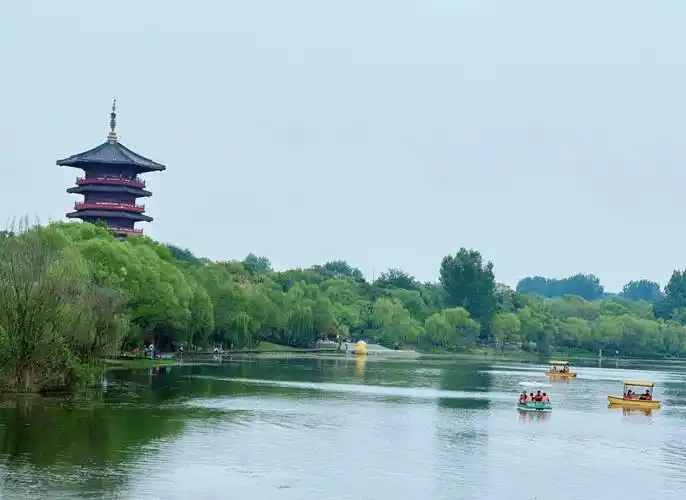 **Historical Context**: The river, anciently called the "White Wolf River," once earned its fierce name from devastating seasonal floods that shaped life along its banks for centuries. Through successive 20th- and 21st-century campaigns, Weifang tamed these waters in ways reminiscent of European river-reclamation projects such as the Rhine renaturation or London's Thames barrier initiatives. Today, the 127-km corridor stands as both a functional flood-control system and a living monument to Weifang's evolution from a traditional agricultural hub into a modern ecological city, carrying deep emotional resonance for generations of local residents.
**Ecological Landscape**: Two flagship wetland zones anchor the corridor. Upstream, the Bailang Oasis Wetland Park in Kuiwen District stretches 6.7 km along reed marshes, dawn-redwood groves, and summer lotus pools—an unexpected natural lung within the urban fabric. Downstream, the 713-hectare Bailang River National Wetland Park unfolds into expansive tidal flats, hosting over 30 migratory species including egrets and wild ducks from late autumn through winter, evoking the wildfowl spectacles of the Camargue or the Wadden Sea.
**Architecture and Design**: The riverbank infrastructure follows a "light-touch" philosophy. An 8-km wooden boardwalk winds silver-bright across the water, while more than 40 bridges—ranging from classical stone arches echoing Suzhou canal bridges to sleek modern covered walkways—double as both crossings and scenic attractions. Thirty-plus waterside platforms bring visitors within arm's reach of the river, and elevated vantage points like Egret Isle and Qiushui Cloud Pavilion offer sweeping views of mirror-like waters and wheeling birds, comparable to a stroll along Amsterdam's IJ or Hamburg's Alster lakes.
**Cultural Significance**: Beyond ecology, Bailang River is a thread of cultural memory. Waypoints such as Dongpo Locust Tree and Qingming Water Street evoke the lingering presence of Song-dynasty literary giants Su Shi and Zheng Banqiao, both of whom served in Weifang. Heritage architecture and intangible-cultural-heritage displays punctuate the route, transforming a riverside walk into a journey through regional identity. The blend of poetic history with everyday life—locals practicing tai chi at dawn, families picnicking on weekends—gives the river a soul reminiscent of a Flemish canal town or a Parisian quayside.
**Practical Visit Information**: The entire Bailang corridor is free, open 24/7, and never closes. Visitors can reach sections via Weifang city buses 26, 36, 39, and 51; self-driving visitors should navigate to "Bailang Oasis Wetland Park" or "Bailang River National Wetland Park." Allow 2–3 hours for a satisfying visit. Mosquitoes are fierce in August—bring repellent—and dawn or dusk offers the best light, bird activity, and photography. The riverside has minimal commercial development, so bring water and snacks.
**Why Visit**: Bailang River offers Western travelers something rare: an unfiltered window into how a contemporary Chinese provincial city has woven ecology, history, and daily life into a single, accessible public space. Less manicured than Singapore's Gardens by the Bay yet more authentically lived-in than many Western urban parks, it rewards slow travelers, birdwatchers, cyclists, and families seeking a peaceful half-day escape from the usual tourist circuit—an unhurried conversation between river, city, and the people who love both.
**Historical Context**: The river, anciently called the "White Wolf River," once earned its fierce name from devastating seasonal floods that shaped life along its banks for centuries. Through successive 20th- and 21st-century campaigns, Weifang tamed these waters in ways reminiscent of European river-reclamation projects such as the Rhine renaturation or London's Thames barrier initiatives. Today, the 127-km corridor stands as both a functional flood-control system and a living monument to Weifang's evolution from a traditional agricultural hub into a modern ecological city, carrying deep emotional resonance for generations of local residents.
**Ecological Landscape**: Two flagship wetland zones anchor the corridor. Upstream, the Bailang Oasis Wetland Park in Kuiwen District stretches 6.7 km along reed marshes, dawn-redwood groves, and summer lotus pools—an unexpected natural lung within the urban fabric. Downstream, the 713-hectare Bailang River National Wetland Park unfolds into expansive tidal flats, hosting over 30 migratory species including egrets and wild ducks from late autumn through winter, evoking the wildfowl spectacles of the Camargue or the Wadden Sea.
**Architecture and Design**: The riverbank infrastructure follows a "light-touch" philosophy. An 8-km wooden boardwalk winds silver-bright across the water, while more than 40 bridges—ranging from classical stone arches echoing Suzhou canal bridges to sleek modern covered walkways—double as both crossings and scenic attractions. Thirty-plus waterside platforms bring visitors within arm's reach of the river, and elevated vantage points like Egret Isle and Qiushui Cloud Pavilion offer sweeping views of mirror-like waters and wheeling birds, comparable to a stroll along Amsterdam's IJ or Hamburg's Alster lakes.
**Cultural Significance**: Beyond ecology, Bailang River is a thread of cultural memory. Waypoints such as Dongpo Locust Tree and Qingming Water Street evoke the lingering presence of Song-dynasty literary giants Su Shi and Zheng Banqiao, both of whom served in Weifang. Heritage architecture and intangible-cultural-heritage displays punctuate the route, transforming a riverside walk into a journey through regional identity. The blend of poetic history with everyday life—locals practicing tai chi at dawn, families picnicking on weekends—gives the river a soul reminiscent of a Flemish canal town or a Parisian quayside.
**Practical Visit Information**: The entire Bailang corridor is free, open 24/7, and never closes. Visitors can reach sections via Weifang city buses 26, 36, 39, and 51; self-driving visitors should navigate to "Bailang Oasis Wetland Park" or "Bailang River National Wetland Park." Allow 2–3 hours for a satisfying visit. Mosquitoes are fierce in August—bring repellent—and dawn or dusk offers the best light, bird activity, and photography. The riverside has minimal commercial development, so bring water and snacks.
**Why Visit**: Bailang River offers Western travelers something rare: an unfiltered window into how a contemporary Chinese provincial city has woven ecology, history, and daily life into a single, accessible public space. Less manicured than Singapore's Gardens by the Bay yet more authentically lived-in than many Western urban parks, it rewards slow travelers, birdwatchers, cyclists, and families seeking a peaceful half-day escape from the usual tourist circuit—an unhurried conversation between river, city, and the people who love both.