Shihu Garden
⭐ 4.60
Shihu Garden Scenic Area, Hanting District, Weifang, Shandong Province, China
 The story of Shihu Garden begins in the Jiajing era of the Ming dynasty (1522–1566), when it served as the residence of Hu Bangzuo, a Ministry of Justice official—roughly contemporary with the reign of England's Henry VIII. In 1885, the same year Bismarck convened the Berlin Conference, the wealthiest merchant of Weixian, Ding Shanbao, transformed it into the garden seen today. The name "Shihu" means "ten court tablets," a humble metaphor for its compact size. Designated a National Key Cultural Relic in 1988, the site retains its late-Qing character.
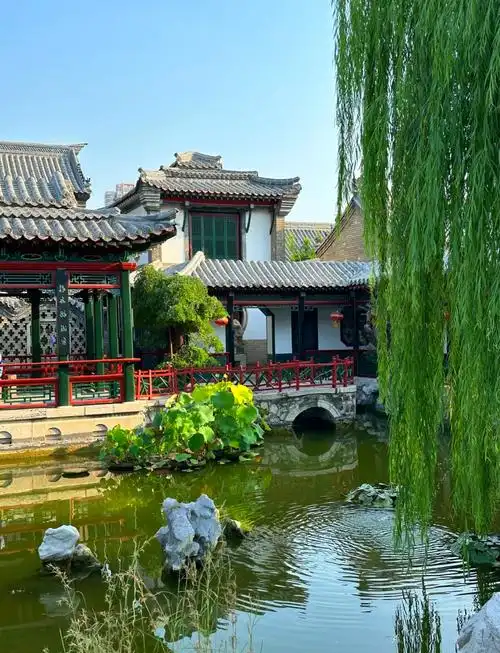
Shihu resembles a Suzhou garden transplanted to the Shandong plains—and that is precisely the point. Garden historian Chen Congzhou praised it as "the finest small garden of the northern realm." A central lotus pool anchors the layout, ringed by the Four-Faces Pavilion, arched bridges, and weathered limestone peaks. The centerpiece is Ink-Scent Tower, a genuine Ming-dynasty building whose spare elegance recalls a miniature Burghley House study. Zigzag corridors and tucked-away studios such as Deep Willows Reading Hall create the illusion of mountains within a few hundred square meters.
The garden functions as an open-air museum of Qing literati culture. More than ninety inscribed steles line its walls, including authentic calligraphy and paintings by Zheng Banqiao (1693–1765), the "Bamboo and Rock" master whose work is as revered in China as Piranesi's etchings are in the West. Zheng served as magistrate of Weixian and is celebrated here for his frugal, people-first governance. The garden also enjoys a pop-culture footnote: in 1986 it doubled as "Gao Lao Zhuang" in the beloved CCTV adaptation of Journey to the West.
Shihu Garden sits at 49 Hujiapaifang Street in Weicheng District, a short walk from the Bai-lang River. It opens daily from 09:00 to 17:00, last entry at 16:30. Tickets cost 22 yuan for adults, 11 yuan for students; visitors over 60 and children under 1.4 meters enter free. English signage is limited, so reserve a guided interpreter through your hotel concierge—the stele stories are well worth it. Wear flat shoes: paths are flagged with uneven local stone.
Plan 1.5 to 2 hours and follow the recommended clockwise route: Shihu Thatched Hall → Four-Faces Pavilion (the best mirror-reflection photo spot) → Ink-Scent Tower for a rooftop panorama. Step outside into the Shihu Cultural Block to try kite-making and New-Year woodblock printing, both Weifang crafts with centuries of pedigree. Sample local street food like Chaotianguo, a peppery pork-broth bowl served with flatbread, and crispy meat-stuffed flatbread. Visit after snow for the most magical Chinese-painting atmosphere, or arrive in hanfu—the garden is a favorite among costume photographers.
The story of Shihu Garden begins in the Jiajing era of the Ming dynasty (1522–1566), when it served as the residence of Hu Bangzuo, a Ministry of Justice official—roughly contemporary with the reign of England's Henry VIII. In 1885, the same year Bismarck convened the Berlin Conference, the wealthiest merchant of Weixian, Ding Shanbao, transformed it into the garden seen today. The name "Shihu" means "ten court tablets," a humble metaphor for its compact size. Designated a National Key Cultural Relic in 1988, the site retains its late-Qing character.
Shihu resembles a Suzhou garden transplanted to the Shandong plains—and that is precisely the point. Garden historian Chen Congzhou praised it as "the finest small garden of the northern realm." A central lotus pool anchors the layout, ringed by the Four-Faces Pavilion, arched bridges, and weathered limestone peaks. The centerpiece is Ink-Scent Tower, a genuine Ming-dynasty building whose spare elegance recalls a miniature Burghley House study. Zigzag corridors and tucked-away studios such as Deep Willows Reading Hall create the illusion of mountains within a few hundred square meters.
The garden functions as an open-air museum of Qing literati culture. More than ninety inscribed steles line its walls, including authentic calligraphy and paintings by Zheng Banqiao (1693–1765), the "Bamboo and Rock" master whose work is as revered in China as Piranesi's etchings are in the West. Zheng served as magistrate of Weixian and is celebrated here for his frugal, people-first governance. The garden also enjoys a pop-culture footnote: in 1986 it doubled as "Gao Lao Zhuang" in the beloved CCTV adaptation of Journey to the West.
Shihu Garden sits at 49 Hujiapaifang Street in Weicheng District, a short walk from the Bai-lang River. It opens daily from 09:00 to 17:00, last entry at 16:30. Tickets cost 22 yuan for adults, 11 yuan for students; visitors over 60 and children under 1.4 meters enter free. English signage is limited, so reserve a guided interpreter through your hotel concierge—the stele stories are well worth it. Wear flat shoes: paths are flagged with uneven local stone.
Plan 1.5 to 2 hours and follow the recommended clockwise route: Shihu Thatched Hall → Four-Faces Pavilion (the best mirror-reflection photo spot) → Ink-Scent Tower for a rooftop panorama. Step outside into the Shihu Cultural Block to try kite-making and New-Year woodblock printing, both Weifang crafts with centuries of pedigree. Sample local street food like Chaotianguo, a peppery pork-broth bowl served with flatbread, and crispy meat-stuffed flatbread. Visit after snow for the most magical Chinese-painting atmosphere, or arrive in hanfu—the garden is a favorite among costume photographers.