Dongshan Island Fishing Port
⭐ 4.20
Dongshan Island Fishing Port, Dongshan County, Zhangzhou City, Fujian Province, China
 **A Living Naval Frontier**
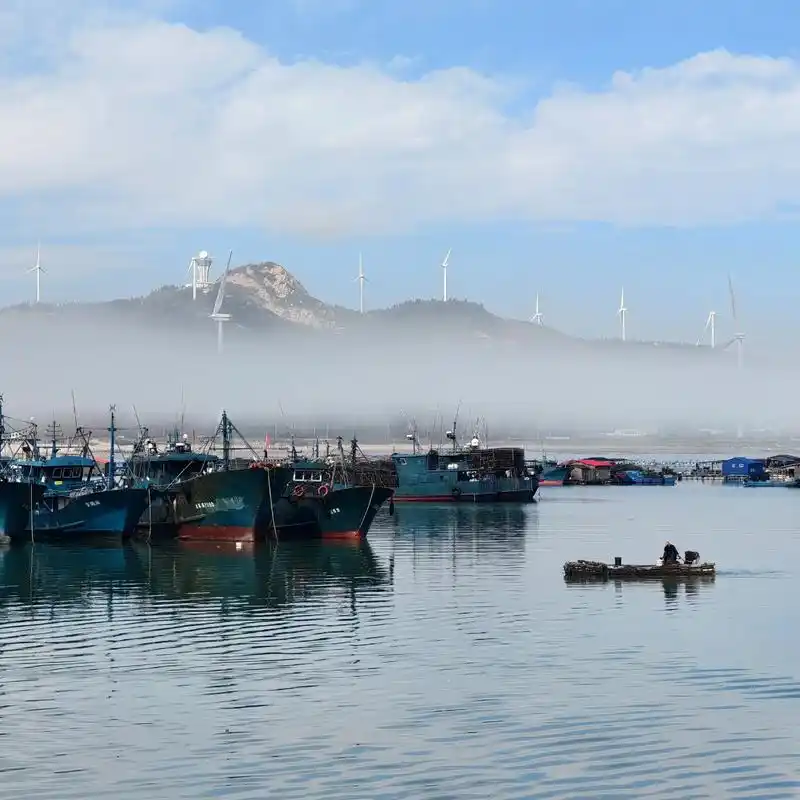
Fujian's coastal fortresses once guarded China's maritime frontier much like Malta's bastions defended the Mediterranean or the towered cliffs of Cornwall shielded England from seaborne invasion. Gongqian Harbor, the island's largest and only Grade-One national fishing port, dates to the Ming and Qing dynasties and served as the launch point for Admiral Shi Lang's 1683 fleet that reclaimed Taiwan—a naval campaign unfolding in the same era as Europe's War of the Spanish Succession. The harbor's layered history makes it a tangible relic of early modern Pacific rivalries.
**A Cluster of Distinctive Harbors**
Rather than one port, visitors encounter a constellation of working bays, each with its own personality. Gongqian offers the most authentic scenes: shoulder-hoisting fishermen unloading catches beneath swaying masts at dawn. Aojiao, crowned "China's Most Beautiful Fishing Village," has matured into a tidy fishing-and-tourism hub with a Mazu cultural park, a whitewashed lighthouse, and viewing platforms overlooking the whimsical "Four Beast" islets—dragon, tiger, lion, and elephant rocks that resemble the sculpted sea stacks of Ireland's Causeway coast.
**The Mazu Tradition**
Mazu, the revered Southern Chinese goddess of the sea, presides over coastal life here much as St. Nicholas and Aphrodite once anchored maritime worship across the Mediterranean. Fishermen still light incense before voyages, and her temples anchor village life. Unlike museum-piece ports, Dongshan operates as a working community—guts, ropes, and all—offering a glimpse into South Fujian's seafaring heritage that feels closer to a Sicilian fishing village than a sanitized tourist trap.
**Practical Visits and Seafood**
The quayside is the place to indulge. Bargain for small squid, octopus, and assorted reef fish straight off the boats, then walk them to a nearby dai pai dong–style eatery for a simple blanch or steaming—much like enjoying catch-of-the-day in Portugal's Algarve. Don't miss the local snack *shao jin ling* (braised tendon rolls). Confirm prices and processing fees before ordering, and stick to clearly marked stalls. Expect roughly ¥80–150 per person for a generous seafood feast.
**Best Timing and Safety**
August brings typhoon risk and the opening of the fishing season, when dawn and dusk deliver the spectacle of fleets returning through the harbor mouth—prime time for photographers. For stable weather and thinner crowds, May–June and September–October are ideal. Avoid stepping into active work zones or touching fishing gear; the locals are welcoming but the lines are heavy and the deck slippery.
**Suggested Two-Day Route**
Begin at Gongqian for sunrise unloading scenes, then taxi or drive south to Aojiao for its Mazu park, lighthouse, and seafood lunch. Loop back via the dramatic Sufeng Mountain coastal road—comparable to Italy's Amalfi curves—and end at Nanmen Bay, beloved by Chinese film crews for its pastel waterfront, for sunset. With extra time, add the half-day walk through Tongshan Ancient Town, a Ming-era garrison city where stone walls and Hakka-Minnan village clusters evoke Portugal's Óbidos or Croatia's walled coastal towns.
**A Living Naval Frontier**
Fujian's coastal fortresses once guarded China's maritime frontier much like Malta's bastions defended the Mediterranean or the towered cliffs of Cornwall shielded England from seaborne invasion. Gongqian Harbor, the island's largest and only Grade-One national fishing port, dates to the Ming and Qing dynasties and served as the launch point for Admiral Shi Lang's 1683 fleet that reclaimed Taiwan—a naval campaign unfolding in the same era as Europe's War of the Spanish Succession. The harbor's layered history makes it a tangible relic of early modern Pacific rivalries.
**A Cluster of Distinctive Harbors**
Rather than one port, visitors encounter a constellation of working bays, each with its own personality. Gongqian offers the most authentic scenes: shoulder-hoisting fishermen unloading catches beneath swaying masts at dawn. Aojiao, crowned "China's Most Beautiful Fishing Village," has matured into a tidy fishing-and-tourism hub with a Mazu cultural park, a whitewashed lighthouse, and viewing platforms overlooking the whimsical "Four Beast" islets—dragon, tiger, lion, and elephant rocks that resemble the sculpted sea stacks of Ireland's Causeway coast.
**The Mazu Tradition**
Mazu, the revered Southern Chinese goddess of the sea, presides over coastal life here much as St. Nicholas and Aphrodite once anchored maritime worship across the Mediterranean. Fishermen still light incense before voyages, and her temples anchor village life. Unlike museum-piece ports, Dongshan operates as a working community—guts, ropes, and all—offering a glimpse into South Fujian's seafaring heritage that feels closer to a Sicilian fishing village than a sanitized tourist trap.
**Practical Visits and Seafood**
The quayside is the place to indulge. Bargain for small squid, octopus, and assorted reef fish straight off the boats, then walk them to a nearby dai pai dong–style eatery for a simple blanch or steaming—much like enjoying catch-of-the-day in Portugal's Algarve. Don't miss the local snack *shao jin ling* (braised tendon rolls). Confirm prices and processing fees before ordering, and stick to clearly marked stalls. Expect roughly ¥80–150 per person for a generous seafood feast.
**Best Timing and Safety**
August brings typhoon risk and the opening of the fishing season, when dawn and dusk deliver the spectacle of fleets returning through the harbor mouth—prime time for photographers. For stable weather and thinner crowds, May–June and September–October are ideal. Avoid stepping into active work zones or touching fishing gear; the locals are welcoming but the lines are heavy and the deck slippery.
**Suggested Two-Day Route**
Begin at Gongqian for sunrise unloading scenes, then taxi or drive south to Aojiao for its Mazu park, lighthouse, and seafood lunch. Loop back via the dramatic Sufeng Mountain coastal road—comparable to Italy's Amalfi curves—and end at Nanmen Bay, beloved by Chinese film crews for its pastel waterfront, for sunset. With extra time, add the half-day walk through Tongshan Ancient Town, a Ming-era garrison city where stone walls and Hakka-Minnan village clusters evoke Portugal's Óbidos or Croatia's walled coastal towns.