Jiulong River Ecological Park
⭐ 3.50
Jiulong River Ecological Park, Longwen District, Zhangzhou, Fujian, China
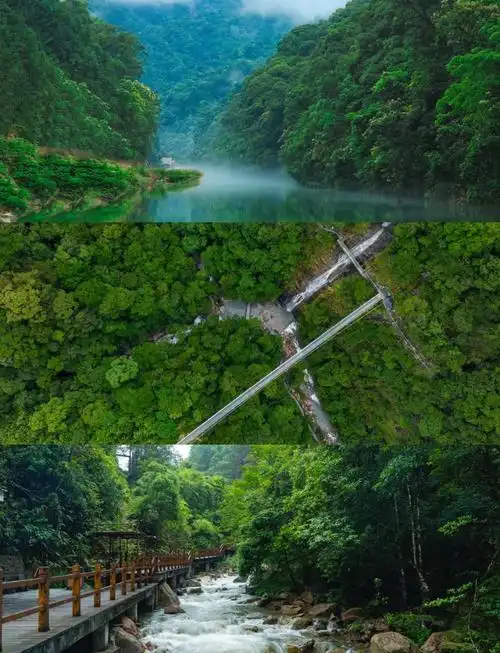 Long before this park existed, the Jiulong River served as Fujian's liquid highway, carrying tea, porcelain and timber downstream to Zhangzhou's bustling Ming-dynasty port, which traded directly with Portuguese, Spanish and Dutch merchants from the 16th century onward. The new greenway reclaims the historic flood-dyke and tidal flats along the western tributary, weaving the district's vanished fishing hamlets, paddies and weathered brick homesteads into a single 10.8-kilometre narrative corridor. It is the keystone of Zhangzhou's "Hundred-Li Flower Stream" ecological initiative, a programme loosely comparable to Seoul's Han River restoration or London's Thames Path in ambition, and one that reconnects residents with a waterway their ancestors have relied upon for centuries.
The park's signature scene is its "rice paddies and flower sea" landscape, where seasonal blooms—rapeseed in spring, sunflowers in summer, pink muhly grass in autumn and silver reeds in winter—are layered against shallow wetlands and traditional Minnan farmhouses. The most photographed spot is the angular "City Balcony" platform, which juts out over the water like a minimalist ship's prow and offers the same sweeping river panorama that 19th-century European travellers described when sailing upstream. Gently sloping timber boardwalks, gravel cycling paths and open camping lawns weave between these elements, giving the place a relaxed, almost Mediterranean riverside feel.
Culturally, the park is a deliberate bridge between Zhangzhou's agricultural past and its high-tech present. Local fishermen once cast their nets where picnickers now unroll blankets, and the riverside ballad tradition—songs once sung by Hokkien migrants who sailed to Singapore, Manila and Penang—is echoed in weekend performances and open-air markets. For visitors tracing the wider Minnan diaspora story, or simply curious about a way of life that shaped much of maritime Southeast Asia, the park functions as an outdoor museum without walls.
Admission is completely free and the grounds are open around the clock. Multiple car parks, campgrounds and rest pavilions are spaced along the route, and the wide, flat promenades suit walking, cycling and roller-skating alike. Because the site is unusually elongated, self-driving or renting a shared bicycle is strongly recommended; public buses serve the high-tech-zone riverfront stops, after which visitors can cycle into the themed zones. On-site dining options remain limited.
Arrive after 4 pm to catch the golden-hour light from the City Balcony, then drift north along the boardwalk toward the flower fields and the heritage farmhouse cluster. Weekends bring artisan markets and small-scale folk performances, while photography enthusiasts should target spring rapeseed, autumn pink muhly and the winter reed beds. Pack sunscreen and mosquito repellent, bring a picnic, and allow at least half a day—because for once, a Chinese urban park genuinely rewards unhurried exploration.
Long before this park existed, the Jiulong River served as Fujian's liquid highway, carrying tea, porcelain and timber downstream to Zhangzhou's bustling Ming-dynasty port, which traded directly with Portuguese, Spanish and Dutch merchants from the 16th century onward. The new greenway reclaims the historic flood-dyke and tidal flats along the western tributary, weaving the district's vanished fishing hamlets, paddies and weathered brick homesteads into a single 10.8-kilometre narrative corridor. It is the keystone of Zhangzhou's "Hundred-Li Flower Stream" ecological initiative, a programme loosely comparable to Seoul's Han River restoration or London's Thames Path in ambition, and one that reconnects residents with a waterway their ancestors have relied upon for centuries.
The park's signature scene is its "rice paddies and flower sea" landscape, where seasonal blooms—rapeseed in spring, sunflowers in summer, pink muhly grass in autumn and silver reeds in winter—are layered against shallow wetlands and traditional Minnan farmhouses. The most photographed spot is the angular "City Balcony" platform, which juts out over the water like a minimalist ship's prow and offers the same sweeping river panorama that 19th-century European travellers described when sailing upstream. Gently sloping timber boardwalks, gravel cycling paths and open camping lawns weave between these elements, giving the place a relaxed, almost Mediterranean riverside feel.
Culturally, the park is a deliberate bridge between Zhangzhou's agricultural past and its high-tech present. Local fishermen once cast their nets where picnickers now unroll blankets, and the riverside ballad tradition—songs once sung by Hokkien migrants who sailed to Singapore, Manila and Penang—is echoed in weekend performances and open-air markets. For visitors tracing the wider Minnan diaspora story, or simply curious about a way of life that shaped much of maritime Southeast Asia, the park functions as an outdoor museum without walls.
Admission is completely free and the grounds are open around the clock. Multiple car parks, campgrounds and rest pavilions are spaced along the route, and the wide, flat promenades suit walking, cycling and roller-skating alike. Because the site is unusually elongated, self-driving or renting a shared bicycle is strongly recommended; public buses serve the high-tech-zone riverfront stops, after which visitors can cycle into the themed zones. On-site dining options remain limited.
Arrive after 4 pm to catch the golden-hour light from the City Balcony, then drift north along the boardwalk toward the flower fields and the heritage farmhouse cluster. Weekends bring artisan markets and small-scale folk performances, while photography enthusiasts should target spring rapeseed, autumn pink muhly and the winter reed beds. Pack sunscreen and mosquito repellent, bring a picnic, and allow at least half a day—because for once, a Chinese urban park genuinely rewards unhurried exploration.