Zhangzhou Science and Technology Museum
⭐ 4.80
Zhangzhou Science and Technology Museum, Xiangcheng District, Zhangzhou City, Fujian Province, China
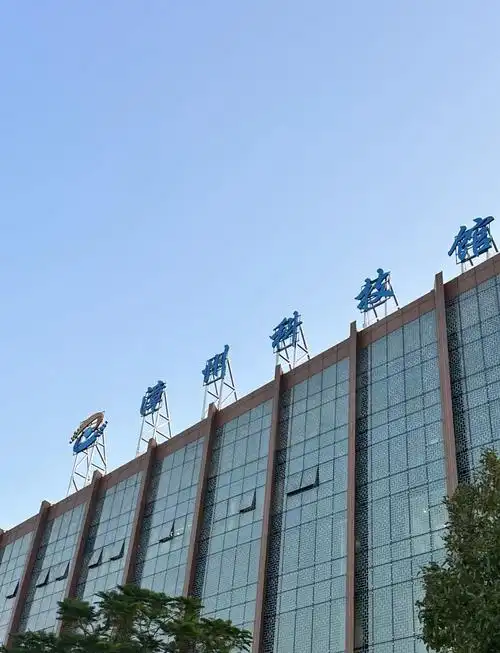 **A New Hub for Public Science**
Western visitors accustomed to flagship science institutions like London's Science Museum or Munich's Deutsches Museum will find a familiar formula here, scaled for a fast-rising Chinese regional capital. The new Zhangzhou facility opened its doors in January 2025 as a flagship project for science education in southern Fujian, part of a nationwide wave of investment in public science centers following the model of Shanghai's Science and Technology Museum. Its scale, over 21,000 square meters of floor space with more than half dedicated to exhibition halls, signals Fujian's ambition to become a knowledge-based economy along the Taiwan Strait corridor, and the museum aims to serve both local families and a growing domestic tourism audience.
**Architecture Rooted in Minnan Identity**
The building itself is a striking fusion of regional tradition and futuristic aspiration. Architects drew on the iconic red-brick facades of southern Fujian, a vernacular style seen across the region's ancestral halls and the celebrated earthen houses of the wider Min cultural zone, then reshaped them around the silhouette of Zhangzhou's city flower, the narcissus daffodil. Inside, climate-controlled halls with generous proportions ensure year-round comfort, though visitors should pack a light layer as the air conditioning runs briskly, a small price for relief from the subtropical coastal heat outside.
**Eight Themed Zones Packed with Interaction**
The museum divides its offering into eight themed areas, each designed for hands-on engagement. The Children's Wonderland caters to young visitors with playful installations, while the Fundamental Science Hall covers mechanics, optics, and electricity through working experiments. The Electromagnetic Stage hosts Fujian's largest high-voltage electricity demonstration, where arcs literally play music, an experience reminiscent of the dramatic Tesla coil shows at European science festivals. The Great National Achievements Hall showcases scale replicas of the Type 99A tank, the Fujian aircraft carrier, and the Hualong-One nuclear reactor, giving context to China's industrial rise. The Astronomy Hall houses the province's largest 600mm refracting telescope alongside a naked-eye 3D cylindrical screen and planetarium theater.
**Local Heritage and Cultural Texture**
What sets this museum apart from generic science centers is the dedicated Zhangzhou Story zone, weaving indigenous industrial and craft heritage into the science narrative. Visitors encounter interactive explainers on Pien Tze Huang, the centuries-old medicinal formulation that made Zhangzhou famous across the Chinese-speaking world, alongside petrochemical processes from the Gulei industrial port and the remarkably modern Klein bottle-inspired ceramics inspired by local Kraak porcelain. A Smart Living section with AI-driven robots and gesture-controlled pianos, plus a Human Body Hall and a maker space, round out the experience, while an XD interactive theater anchors the immersive offerings.
**Practical Information for Visitors**
The main exhibition halls operate on a free reservation system, requiring a real-name booking one to five days ahead through the museum's WeChat mini-program. Opening hours run from Wednesday to Sunday, 9:00 am to 5:00 pm, with last entry at 4:30 pm; Monday and Tuesday are closed, though summer months (July through August) extend Tuesday hours to 6:00 pm. Some special venues, including the XD theater, certain Children's Wonderland zones, and science shows, charge separate fees, so check the official platform in advance. The old museum on Shengli West Road has permanently closed. Plan for three to four hours to see the full complex, following the recommended route from Fundamental Science through the Electromagnetic Stage and Great National Achievements Hall to the Astronomy Hall. Free parking is available on-site, but food choices inside are limited, so bringing water is wise. Weekends and holidays draw crowds, making weekday mornings far more relaxed.
**A New Hub for Public Science**
Western visitors accustomed to flagship science institutions like London's Science Museum or Munich's Deutsches Museum will find a familiar formula here, scaled for a fast-rising Chinese regional capital. The new Zhangzhou facility opened its doors in January 2025 as a flagship project for science education in southern Fujian, part of a nationwide wave of investment in public science centers following the model of Shanghai's Science and Technology Museum. Its scale, over 21,000 square meters of floor space with more than half dedicated to exhibition halls, signals Fujian's ambition to become a knowledge-based economy along the Taiwan Strait corridor, and the museum aims to serve both local families and a growing domestic tourism audience.
**Architecture Rooted in Minnan Identity**
The building itself is a striking fusion of regional tradition and futuristic aspiration. Architects drew on the iconic red-brick facades of southern Fujian, a vernacular style seen across the region's ancestral halls and the celebrated earthen houses of the wider Min cultural zone, then reshaped them around the silhouette of Zhangzhou's city flower, the narcissus daffodil. Inside, climate-controlled halls with generous proportions ensure year-round comfort, though visitors should pack a light layer as the air conditioning runs briskly, a small price for relief from the subtropical coastal heat outside.
**Eight Themed Zones Packed with Interaction**
The museum divides its offering into eight themed areas, each designed for hands-on engagement. The Children's Wonderland caters to young visitors with playful installations, while the Fundamental Science Hall covers mechanics, optics, and electricity through working experiments. The Electromagnetic Stage hosts Fujian's largest high-voltage electricity demonstration, where arcs literally play music, an experience reminiscent of the dramatic Tesla coil shows at European science festivals. The Great National Achievements Hall showcases scale replicas of the Type 99A tank, the Fujian aircraft carrier, and the Hualong-One nuclear reactor, giving context to China's industrial rise. The Astronomy Hall houses the province's largest 600mm refracting telescope alongside a naked-eye 3D cylindrical screen and planetarium theater.
**Local Heritage and Cultural Texture**
What sets this museum apart from generic science centers is the dedicated Zhangzhou Story zone, weaving indigenous industrial and craft heritage into the science narrative. Visitors encounter interactive explainers on Pien Tze Huang, the centuries-old medicinal formulation that made Zhangzhou famous across the Chinese-speaking world, alongside petrochemical processes from the Gulei industrial port and the remarkably modern Klein bottle-inspired ceramics inspired by local Kraak porcelain. A Smart Living section with AI-driven robots and gesture-controlled pianos, plus a Human Body Hall and a maker space, round out the experience, while an XD interactive theater anchors the immersive offerings.
**Practical Information for Visitors**
The main exhibition halls operate on a free reservation system, requiring a real-name booking one to five days ahead through the museum's WeChat mini-program. Opening hours run from Wednesday to Sunday, 9:00 am to 5:00 pm, with last entry at 4:30 pm; Monday and Tuesday are closed, though summer months (July through August) extend Tuesday hours to 6:00 pm. Some special venues, including the XD theater, certain Children's Wonderland zones, and science shows, charge separate fees, so check the official platform in advance. The old museum on Shengli West Road has permanently closed. Plan for three to four hours to see the full complex, following the recommended route from Fundamental Science through the Electromagnetic Stage and Great National Achievements Hall to the Astronomy Hall. Free parking is available on-site, but food choices inside are limited, so bringing water is wise. Weekends and holidays draw crowds, making weekday mornings far more relaxed.