Chuzhou Old Street
⭐ 3.50
Chuzhou Old Street, Langya District, Chuzhou City, Anhui Province, China
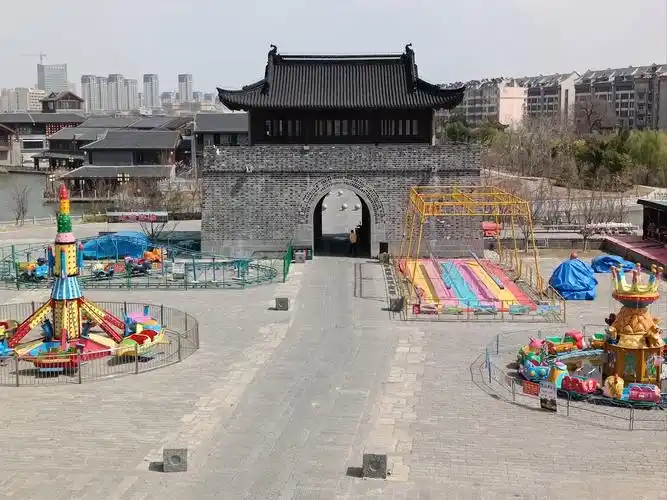 The Chuzhou region has been continuously settled since antiquity, and its two surviving old streets tell complementary chapters of that long story. Zunyang Street preserves the everyday texture of a late-imperial Anhui town, while Wuyi Old Street, dating from the Southern Tang kingdom (937–975)—roughly contemporary with Ottonian Germany and late Anglo-Saxon England—offers one of the few large clusters of traditional Hui-style architecture east of the Yangtze. Visiting both in sequence provides a rare side-by-side contrast between vernacular urbanity and formal merchant grandeur.
Zunyang Street lies just outside the old Ming-Qing city wall in eastern Langya District, laid out in a herringbone pattern that still channels foot traffic through narrow lanes of grey brick and dark tile. The name honors Wang Yangming, the great Ming Neo-Confucian philosopher whose ideas are often compared to Montaigne's essays or Pico della Mirandola's humanism; he is said to have lectured and taught here. Unlike many "ancient streets" across China that have been sanitized into tourist strips, Zunyang retains working residents, a morning vegetable market, and evening food stalls—closer in feel to a southern European *borgo* or a North African medina than to a museum piece.
Wuyi Old Street sits in Nanqiao District, roughly seventeen kilometers from downtown Chuzhou, in a town founded under Southern Tang rule and later thriving through Ming and Qing river-and-road trade. Its flagstone main street is lined with continuous front-shop, rear-workshop row houses whose stepped gables, whitewashed walls, and grey tile roofs recall the merchants' quarters of Germany's Rothenburg ob der Tauber or the alpine villages of South Tyrol. The area is still in the early stages of heritage-tourism redevelopment, so amenities are basic—but that very rawness appeals to travelers who prize authenticity over polish.
Both streets share the classic Anhui vocabulary of cyan-grey brick, small green roof tiles, and carved brick gate-tops, yet their scales differ. Zunyang leans intimate—low eaves, narrow alleys, modest wooden doors, and hand-painted shop signs suited to daily trade. Wuyi is grander: multi-bay facades, central courtyards, and the distinctive horse-head gables that became the Huizhou merchant signature across the lower Yangtze. Seen back to back, they form a near-textbook survey of regional building traditions rarely encountered together outside Anhui.
Both streets are free to enter, with no tickets, though signage and English interpretation are minimal—load offline maps before arriving. Reach Zunyang easily by local bus or on foot from central Chuzhou, and pair it with the well-curated Chuzhou Museum a short stroll away. Wuyi is best reached by taxi or rented car; weekdays offer the quietest conditions and the cleanest photographic light on pale walls and eaves. Wear flat, non-slip shoes—polished, often damp flagstones and uneven thresholds are the rule on both streets.
A thoughtful one-day plan: morning at Wuyi Old Street while the air is cool, then a short transfer to Langya Mountain in the afternoon for the woodland walks immortalized by Song-dynasty essayist Ouyang Xiu, whose Drunken Old Man's Pavilion essay ranks among East Asia's great prose classics. End the day from 17:30 onward at Zunyang Street, when red lanterns are lit and stalls serve Chuzhou signatures—savory tofu pudding, pan-fried rice dumplings, and rustic wheat noodles. Foreign visitors should bind an international card to WeChat or Alipay in advance, carry some cash for small vendors, and photograph key addresses in Chinese before setting out.
The Chuzhou region has been continuously settled since antiquity, and its two surviving old streets tell complementary chapters of that long story. Zunyang Street preserves the everyday texture of a late-imperial Anhui town, while Wuyi Old Street, dating from the Southern Tang kingdom (937–975)—roughly contemporary with Ottonian Germany and late Anglo-Saxon England—offers one of the few large clusters of traditional Hui-style architecture east of the Yangtze. Visiting both in sequence provides a rare side-by-side contrast between vernacular urbanity and formal merchant grandeur.
Zunyang Street lies just outside the old Ming-Qing city wall in eastern Langya District, laid out in a herringbone pattern that still channels foot traffic through narrow lanes of grey brick and dark tile. The name honors Wang Yangming, the great Ming Neo-Confucian philosopher whose ideas are often compared to Montaigne's essays or Pico della Mirandola's humanism; he is said to have lectured and taught here. Unlike many "ancient streets" across China that have been sanitized into tourist strips, Zunyang retains working residents, a morning vegetable market, and evening food stalls—closer in feel to a southern European *borgo* or a North African medina than to a museum piece.
Wuyi Old Street sits in Nanqiao District, roughly seventeen kilometers from downtown Chuzhou, in a town founded under Southern Tang rule and later thriving through Ming and Qing river-and-road trade. Its flagstone main street is lined with continuous front-shop, rear-workshop row houses whose stepped gables, whitewashed walls, and grey tile roofs recall the merchants' quarters of Germany's Rothenburg ob der Tauber or the alpine villages of South Tyrol. The area is still in the early stages of heritage-tourism redevelopment, so amenities are basic—but that very rawness appeals to travelers who prize authenticity over polish.
Both streets share the classic Anhui vocabulary of cyan-grey brick, small green roof tiles, and carved brick gate-tops, yet their scales differ. Zunyang leans intimate—low eaves, narrow alleys, modest wooden doors, and hand-painted shop signs suited to daily trade. Wuyi is grander: multi-bay facades, central courtyards, and the distinctive horse-head gables that became the Huizhou merchant signature across the lower Yangtze. Seen back to back, they form a near-textbook survey of regional building traditions rarely encountered together outside Anhui.
Both streets are free to enter, with no tickets, though signage and English interpretation are minimal—load offline maps before arriving. Reach Zunyang easily by local bus or on foot from central Chuzhou, and pair it with the well-curated Chuzhou Museum a short stroll away. Wuyi is best reached by taxi or rented car; weekdays offer the quietest conditions and the cleanest photographic light on pale walls and eaves. Wear flat, non-slip shoes—polished, often damp flagstones and uneven thresholds are the rule on both streets.
A thoughtful one-day plan: morning at Wuyi Old Street while the air is cool, then a short transfer to Langya Mountain in the afternoon for the woodland walks immortalized by Song-dynasty essayist Ouyang Xiu, whose Drunken Old Man's Pavilion essay ranks among East Asia's great prose classics. End the day from 17:30 onward at Zunyang Street, when red lanterns are lit and stalls serve Chuzhou signatures—savory tofu pudding, pan-fried rice dumplings, and rustic wheat noodles. Foreign visitors should bind an international card to WeChat or Alipay in advance, carry some cash for small vendors, and photograph key addresses in Chinese before setting out.