Longpan Park
⭐ 3.80
Longpan Park, Langya District, Chuzhou, Anhui, China
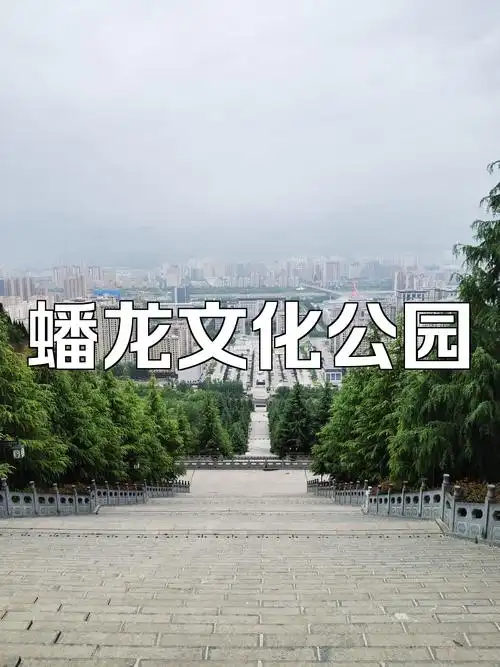 Chuzhou sits on Anhui Province's eastern edge, with 1,500 years of recorded history and a literary pedigree that rivals any provincial capital of Song Dynasty China. The park's western section honors three literary giants who lived or were exiled here between the eleventh and thirteenth centuries—roughly contemporary with the Norman Conquest and the founding of Europe's first universities. Ouyang Xiu, a Northern Song statesman-poet, is often compared to Samuel Johnson for his moral essays; Su Shi, who wrote his celebrated "Memories of Chuzhou" during exile, sits in the canon somewhere between Dante and Byron; and the patriotic Southern Song lyricist Xin Qiji stands with the troubadours of Occitania. Bronze statues of all three line the riverbank.
The park follows a "one river, three sections" master plan, with the Longpan River as its green spine. The western end unfolds as an open-air museum: a bronze relief group depicting scenes from "The Scholars," an eighteenth-century satirical novel often compared to Cervantes' Don Quixote for its gentle mockery of pedantry. Nearby stand the Phoenix Painting Gallery, showcasing a Chuzhou intangible-heritage craft whose vivid bird imagery dates back more than six centuries, and an Ancient Zither Terrace echoing its better-known namesake at Wuhan. Sculptural and landscape elements are calibrated for leisurely walking—closer in spirit to a New England arboretum than a theme park.
The middle section becomes a Sports Culture Park, housing a swimming complex, basketball and badminton halls, and outdoor fitness equipment strung along a sinuous riverside jogging path. The contrast with the contemplative west is striking, much as an English churchyard gives way to a Victorian bandstand: visitors move from literati reverie to living civic life. Evenings bring music from the sports halls and rippling light dancing on the water—a reminder that parks of this kind function as community stages, not just scenery. For travelers curious about how modern Chinese cities invest public space, this stretch offers a candid case study.
At the eastern end, the countryside section leans into Anhui's agricultural roots with demonstration plots where families can try planting, plus extensive wetlands that recall a slimmed-down English fen or a Dutch polder reserve. From late spring through autumn, climbing roses and dense reed beds provide shifting color; in winter, the wetlands turn stark and atmospheric. A recreated old street with snack vendors anchors the zone, making it the most family-friendly stretch—parents can let children run while adults sample local treats. Hanfu-clad photographers flock here on weekends for the misty, willow-fringed backdrops.
Entry is free around the clock, every day. Drivers should set navigation for the Xijian Road entrance, which has the easiest parking; transit riders take bus 4, 7, 21, or 25 to the "Longpanhe Park" stop. Early morning between six and eight, and again after half past five in the evening, offers the coolest temperatures and most flattering river light; weekends from April to October crowd between ten and four. Bring water, sunscreen, and—between June and September—a strong insect repellent, since the wetlands draw mosquitoes. Comfortable walking shoes are wise, as the park spans 4.5 kilometers end to end.
For most Western travelers, Chuzhou is a pause between the Ming tombs of Nanjing and the carved peaks of Huangshan, and Longpan Park is precisely the sort of pause such a journey deserves: contemporary Chinese civic life laid gently over deep literary ground, with no admission fee and minimal tourist infrastructure. It offers what a packed day at the Great Wall or the Bund of Shanghai cannot—a chance to walk, read, eat, and overhear a Chinese city going about its evening, with Song Dynasty verses carved into stone and herons lifting off the wetlands at dusk. Pack a picnic, allow three unhurried hours, and let the river set the pace.
Chuzhou sits on Anhui Province's eastern edge, with 1,500 years of recorded history and a literary pedigree that rivals any provincial capital of Song Dynasty China. The park's western section honors three literary giants who lived or were exiled here between the eleventh and thirteenth centuries—roughly contemporary with the Norman Conquest and the founding of Europe's first universities. Ouyang Xiu, a Northern Song statesman-poet, is often compared to Samuel Johnson for his moral essays; Su Shi, who wrote his celebrated "Memories of Chuzhou" during exile, sits in the canon somewhere between Dante and Byron; and the patriotic Southern Song lyricist Xin Qiji stands with the troubadours of Occitania. Bronze statues of all three line the riverbank.
The park follows a "one river, three sections" master plan, with the Longpan River as its green spine. The western end unfolds as an open-air museum: a bronze relief group depicting scenes from "The Scholars," an eighteenth-century satirical novel often compared to Cervantes' Don Quixote for its gentle mockery of pedantry. Nearby stand the Phoenix Painting Gallery, showcasing a Chuzhou intangible-heritage craft whose vivid bird imagery dates back more than six centuries, and an Ancient Zither Terrace echoing its better-known namesake at Wuhan. Sculptural and landscape elements are calibrated for leisurely walking—closer in spirit to a New England arboretum than a theme park.
The middle section becomes a Sports Culture Park, housing a swimming complex, basketball and badminton halls, and outdoor fitness equipment strung along a sinuous riverside jogging path. The contrast with the contemplative west is striking, much as an English churchyard gives way to a Victorian bandstand: visitors move from literati reverie to living civic life. Evenings bring music from the sports halls and rippling light dancing on the water—a reminder that parks of this kind function as community stages, not just scenery. For travelers curious about how modern Chinese cities invest public space, this stretch offers a candid case study.
At the eastern end, the countryside section leans into Anhui's agricultural roots with demonstration plots where families can try planting, plus extensive wetlands that recall a slimmed-down English fen or a Dutch polder reserve. From late spring through autumn, climbing roses and dense reed beds provide shifting color; in winter, the wetlands turn stark and atmospheric. A recreated old street with snack vendors anchors the zone, making it the most family-friendly stretch—parents can let children run while adults sample local treats. Hanfu-clad photographers flock here on weekends for the misty, willow-fringed backdrops.
Entry is free around the clock, every day. Drivers should set navigation for the Xijian Road entrance, which has the easiest parking; transit riders take bus 4, 7, 21, or 25 to the "Longpanhe Park" stop. Early morning between six and eight, and again after half past five in the evening, offers the coolest temperatures and most flattering river light; weekends from April to October crowd between ten and four. Bring water, sunscreen, and—between June and September—a strong insect repellent, since the wetlands draw mosquitoes. Comfortable walking shoes are wise, as the park spans 4.5 kilometers end to end.
For most Western travelers, Chuzhou is a pause between the Ming tombs of Nanjing and the carved peaks of Huangshan, and Longpan Park is precisely the sort of pause such a journey deserves: contemporary Chinese civic life laid gently over deep literary ground, with no admission fee and minimal tourist infrastructure. It offers what a packed day at the Great Wall or the Bund of Shanghai cannot—a chance to walk, read, eat, and overhear a Chinese city going about its evening, with Song Dynasty verses carved into stone and herons lifting off the wetlands at dusk. Pack a picnic, allow three unhurried hours, and let the river set the pace.