Chuzhou Museum
⭐ 3.80
No. 169, Fengle South Road, Langya District, Chuzhou City, Anhui Province, China
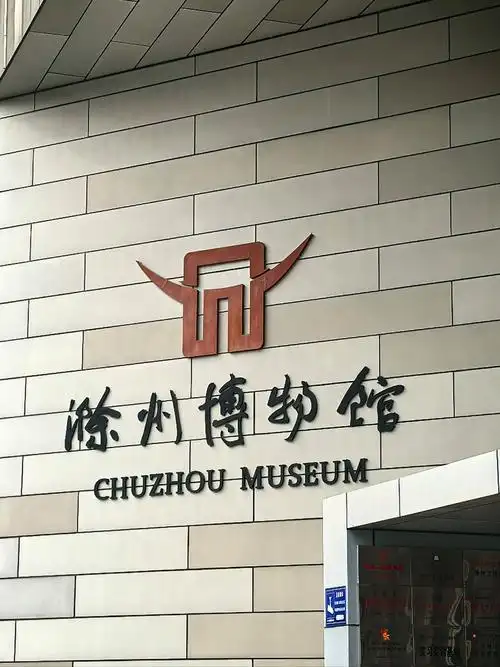 Chuzhou Museum, which opened in May 2017 and was elevated to National Second-Class status in 2024, occupies a strategic position in the cultural landscape of eastern Anhui. The city itself holds a distinguished place in Chinese history, most famously as the setting of Ouyang Xiu's "Zuiweng Pavilion Preface," a Song dynasty prose masterpiece written in 1046, contemporary with the Norman Conquest of England. The museum's narrative traces the region's story from ancient river-valley civilisations through successive dynasties, including the hometown of Ming dynasty founder Zhu Yuanzhang and the philosophical circle of Wang Yangming, whose ideas paralleled Europe's rationalist thinkers of the sixteenth and seventeenth centuries.
The museum's modern architectural shell, reminiscent of contemporary European civic institutions like Madrid's CaixaForum in its clean lines and generous proportions, houses two principal exhibitions. The ground-floor gallery, "Between River and Lake: Mountains and Waters," brings Chuzhou's karst formations, ancient volcanic remains, and wetland ecosystems to life through three-dimensional topographical models and interactive digital displays. Upstairs, "Poetry and History of Langya" unfolds across five thematic zones, weaving together the stories of the Huai River civilisation, Ouyang Xiu's literary circle, the founding emperor Zhu Yuanzhang, and the moral philosophy of Wang Yangming in a sequence that rewards careful pacing.
Among more than 2,000 objects, the museum safeguards six first-class national relics, fifteen second-class, and 243 third-class items. The signature piece, a Han dynasty bronze yan steamer vessel with spout, was selected among Anhui province's "Hundred Museum Treasures" and offers a glimpse into a ritual culture flourishing during the same centuries that produced Rome's imperial bronzework. Equally striking is a Kangxi-period (1662–1722) monumental blue-and-white jar bearing the full text of "Zuiweng Pavilion Preface," a porcelain cousin to the blue-and-white wares then dazzling European courts from Delft to Meissen.
Beyond its permanent collections, the museum functions as a living cultural hub, hosting rotating exhibitions, public lectures, and hands-on programmes that include intangible heritage craft workshops and artefact-conservation demonstrations. These offerings echo the educational mandate of Europe's great encyclopaedic museums such as the British Museum or Vienna's Kunsthistorisches, making scholarship accessible to general audiences. The institution's 2024 recognition as one of Anhui's "Most Beautiful Public Cultural Spaces" reflects both its architectural ambition and its commitment to community engagement.
The museum welcomes visitors Tuesday through Sunday from 9:00 to 16:30, with last entry at 16:00; it closes on Mondays except during public holidays. Admission is free but requires advance booking through the official WeChat account, and foreign visitors are encouraged to call 0550-3036228 to confirm English-language guided tours, available at scheduled times. Allow between ninety minutes and two hours for a comfortable visit, beginning on the second floor before descending to the natural-history galleries. Photography without flash or tripods is permitted, though touching artefacts is strictly prohibited.
For travellers tracing China's literary heritage or seeking an unhurried counterpoint to the bigger draws of Nanjing and Huangshan, Chuzhou Museum delivers surprising depth. Its location on Longpan Avenue in Nanqiao District places it within walking distance of Chuzhou Old Street, where visitors can sample regional specialities such as Chuzu pastries and Langya Mountain flatbreads. Combined with a half-day excursion to nearby Langya Mountain, the celebrated site of Ouyang Xiu's famous pavilion, the museum anchors an ideal cultural itinerary that reveals the layered identity of a region often overlooked by international tourists.
Chuzhou Museum, which opened in May 2017 and was elevated to National Second-Class status in 2024, occupies a strategic position in the cultural landscape of eastern Anhui. The city itself holds a distinguished place in Chinese history, most famously as the setting of Ouyang Xiu's "Zuiweng Pavilion Preface," a Song dynasty prose masterpiece written in 1046, contemporary with the Norman Conquest of England. The museum's narrative traces the region's story from ancient river-valley civilisations through successive dynasties, including the hometown of Ming dynasty founder Zhu Yuanzhang and the philosophical circle of Wang Yangming, whose ideas paralleled Europe's rationalist thinkers of the sixteenth and seventeenth centuries.
The museum's modern architectural shell, reminiscent of contemporary European civic institutions like Madrid's CaixaForum in its clean lines and generous proportions, houses two principal exhibitions. The ground-floor gallery, "Between River and Lake: Mountains and Waters," brings Chuzhou's karst formations, ancient volcanic remains, and wetland ecosystems to life through three-dimensional topographical models and interactive digital displays. Upstairs, "Poetry and History of Langya" unfolds across five thematic zones, weaving together the stories of the Huai River civilisation, Ouyang Xiu's literary circle, the founding emperor Zhu Yuanzhang, and the moral philosophy of Wang Yangming in a sequence that rewards careful pacing.
Among more than 2,000 objects, the museum safeguards six first-class national relics, fifteen second-class, and 243 third-class items. The signature piece, a Han dynasty bronze yan steamer vessel with spout, was selected among Anhui province's "Hundred Museum Treasures" and offers a glimpse into a ritual culture flourishing during the same centuries that produced Rome's imperial bronzework. Equally striking is a Kangxi-period (1662–1722) monumental blue-and-white jar bearing the full text of "Zuiweng Pavilion Preface," a porcelain cousin to the blue-and-white wares then dazzling European courts from Delft to Meissen.
Beyond its permanent collections, the museum functions as a living cultural hub, hosting rotating exhibitions, public lectures, and hands-on programmes that include intangible heritage craft workshops and artefact-conservation demonstrations. These offerings echo the educational mandate of Europe's great encyclopaedic museums such as the British Museum or Vienna's Kunsthistorisches, making scholarship accessible to general audiences. The institution's 2024 recognition as one of Anhui's "Most Beautiful Public Cultural Spaces" reflects both its architectural ambition and its commitment to community engagement.
The museum welcomes visitors Tuesday through Sunday from 9:00 to 16:30, with last entry at 16:00; it closes on Mondays except during public holidays. Admission is free but requires advance booking through the official WeChat account, and foreign visitors are encouraged to call 0550-3036228 to confirm English-language guided tours, available at scheduled times. Allow between ninety minutes and two hours for a comfortable visit, beginning on the second floor before descending to the natural-history galleries. Photography without flash or tripods is permitted, though touching artefacts is strictly prohibited.
For travellers tracing China's literary heritage or seeking an unhurried counterpoint to the bigger draws of Nanjing and Huangshan, Chuzhou Museum delivers surprising depth. Its location on Longpan Avenue in Nanqiao District places it within walking distance of Chuzhou Old Street, where visitors can sample regional specialities such as Chuzu pastries and Langya Mountain flatbreads. Combined with a half-day excursion to nearby Langya Mountain, the celebrated site of Ouyang Xiu's famous pavilion, the museum anchors an ideal cultural itinerary that reveals the layered identity of a region often overlooked by international tourists.