Fushan Scenic Area
⭐ 3.80
Fushan Scenic Area, Zongyang County, Tongling City, Anhui Province, China
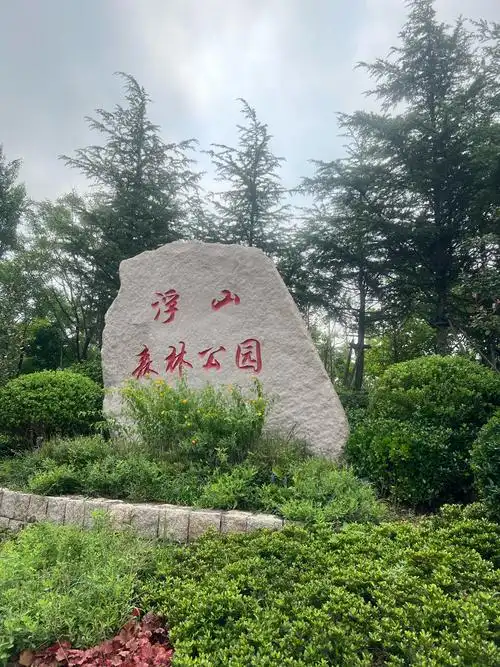 Float Mountain's documented history stretches back to the Jin and Liang dynasties (3rd-6th centuries CE), when it emerged as a significant religious sanctuary. By the Tang and Song dynasties (7th-13th centuries), it reached its golden age, with the Tiantai and Caodong Buddhist schools establishing foundational lineages here. Famous literati including poet Meng Jiao, statesman Ouyang Xiu, and Southern Song poet Lu You all left inscriptions and verses. Ouyang Xiu's legendary "chess sermon" reportedly occurred here—drawing parallels to European mountain monasteries like Italy's Monte Cassino, where spiritual and intellectual traditions profoundly intertwined across centuries.
The mountain's most extraordinary scientific feature is its exceptionally preserved Cretaceous-era volcanic caldera, roughly 200 meters in diameter—earning comparisons to Italy's Mount Vesuvius. Formed approximately 100 million years ago, visitors can examine volcanic bombs, hexagonal columnar jointing, and notably, pumice stones light enough to float on water, which gave the mountain its evocative name. A dedicated geological museum explains volcanic formation processes through interactive displays, making this an exceptional destination for educational travel and earth science enthusiasts seeking experiences beyond typical mountain scenery found elsewhere in China.
The cliff carvings represent one of Jiangnan's largest surviving collections of rock-cut inscriptions, with over 480 works carved into dramatic rock faces at sites like Huisheng and Jingu Cliffs. These works span over a millennium, encompassing classical poetry, Buddhist and Taoist scripture, and historical records. The carvings showcase all major Chinese calligraphy styles—regular, cursive, clerical, and seal scripts—creating what locals call a "natural calligraphy gallery." This artistic treasure rivals European traditions of monumental stone inscriptions found in ancient Roman triumphal arches or medieval cathedral tympana.
Unlike towering Chinese peaks such as Huangshan or Zhangjiajie, Mount Fu charms visitors with its modest 165-meter elevation and gentle hiking trails, ideal for families and casual trekkers. Thirty-six rock formations and seventy-two caves dot the landscape, including highlights like Miaogao Peak, Tianchi Pool, and Guanyin Cave. The surrounding Baidang Lake creates stunning reflections, embodying the classic Chinese aesthetic of "mountain floating on water, water embracing mountain"—a scene reminiscent of Italy's Lake Como or Switzerland's alpine lakes, yet distinctly Chinese in character.
Admission costs approximately 60 yuan (around $8 USD), with half-price discounts for Zongyang residents. The park lies about 20 minutes by car from Zongyang town and 1.5 hours from Anqing city. Visitors should enter through the West Gate and follow a counterclockwise route: Geological Museum, Lanke Stone, Huisheng Cliff, then ascend to Miaogao Peak before exiting at the East Gate. Allow 4-5 hours for thorough exploration, or 3 hours for highlights. Best visiting seasons are April-May during azalea blooms and September-October autumn.
This destination offers an unparalleled combination of scientific interest and cultural depth rarely found at a single site. Best visited during spring azalea season or crisp autumn months; summer brings slippery rocks and frequent rain requiring caution. Wear sturdy hiking shoes, carry ample water (supplies within the park are limited), and maintain respectful silence near ancient temples and carvings—these are irreplaceable cultural treasures. Early morning and late afternoon light beautifully reveals the textured volcanic rock surfaces, perfect for photographers seeking landscapes beyond China's more famous tourist mountains.
Float Mountain's documented history stretches back to the Jin and Liang dynasties (3rd-6th centuries CE), when it emerged as a significant religious sanctuary. By the Tang and Song dynasties (7th-13th centuries), it reached its golden age, with the Tiantai and Caodong Buddhist schools establishing foundational lineages here. Famous literati including poet Meng Jiao, statesman Ouyang Xiu, and Southern Song poet Lu You all left inscriptions and verses. Ouyang Xiu's legendary "chess sermon" reportedly occurred here—drawing parallels to European mountain monasteries like Italy's Monte Cassino, where spiritual and intellectual traditions profoundly intertwined across centuries.
The mountain's most extraordinary scientific feature is its exceptionally preserved Cretaceous-era volcanic caldera, roughly 200 meters in diameter—earning comparisons to Italy's Mount Vesuvius. Formed approximately 100 million years ago, visitors can examine volcanic bombs, hexagonal columnar jointing, and notably, pumice stones light enough to float on water, which gave the mountain its evocative name. A dedicated geological museum explains volcanic formation processes through interactive displays, making this an exceptional destination for educational travel and earth science enthusiasts seeking experiences beyond typical mountain scenery found elsewhere in China.
The cliff carvings represent one of Jiangnan's largest surviving collections of rock-cut inscriptions, with over 480 works carved into dramatic rock faces at sites like Huisheng and Jingu Cliffs. These works span over a millennium, encompassing classical poetry, Buddhist and Taoist scripture, and historical records. The carvings showcase all major Chinese calligraphy styles—regular, cursive, clerical, and seal scripts—creating what locals call a "natural calligraphy gallery." This artistic treasure rivals European traditions of monumental stone inscriptions found in ancient Roman triumphal arches or medieval cathedral tympana.
Unlike towering Chinese peaks such as Huangshan or Zhangjiajie, Mount Fu charms visitors with its modest 165-meter elevation and gentle hiking trails, ideal for families and casual trekkers. Thirty-six rock formations and seventy-two caves dot the landscape, including highlights like Miaogao Peak, Tianchi Pool, and Guanyin Cave. The surrounding Baidang Lake creates stunning reflections, embodying the classic Chinese aesthetic of "mountain floating on water, water embracing mountain"—a scene reminiscent of Italy's Lake Como or Switzerland's alpine lakes, yet distinctly Chinese in character.
Admission costs approximately 60 yuan (around $8 USD), with half-price discounts for Zongyang residents. The park lies about 20 minutes by car from Zongyang town and 1.5 hours from Anqing city. Visitors should enter through the West Gate and follow a counterclockwise route: Geological Museum, Lanke Stone, Huisheng Cliff, then ascend to Miaogao Peak before exiting at the East Gate. Allow 4-5 hours for thorough exploration, or 3 hours for highlights. Best visiting seasons are April-May during azalea blooms and September-October autumn.
This destination offers an unparalleled combination of scientific interest and cultural depth rarely found at a single site. Best visited during spring azalea season or crisp autumn months; summer brings slippery rocks and frequent rain requiring caution. Wear sturdy hiking shoes, carry ample water (supplies within the park are limited), and maintain respectful silence near ancient temples and carvings—these are irreplaceable cultural treasures. Early morning and late afternoon light beautifully reveals the textured volcanic rock surfaces, perfect for photographers seeking landscapes beyond China's more famous tourist mountains.