Zuiweng Pavilion
⭐ 4.20
Zuiweng Pavilion Scenic Area, Langya District, Chuzhou, Anhui Province, China
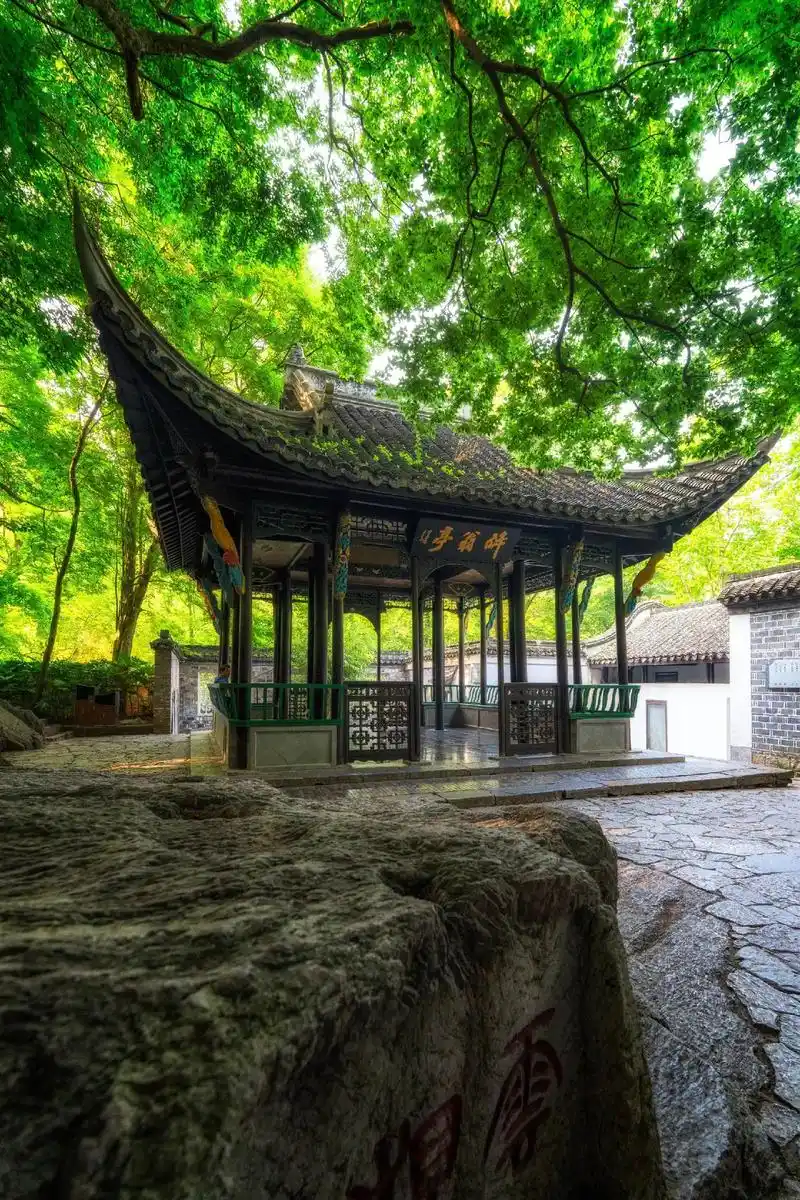 Built in 1046 AD, just two decades before the Norman Conquest reshaped medieval England, the pavilion was commissioned by a local Buddhist monk named Zhixian for Ouyang Xiu, the recently demoted Prefect of Chuzhou. A celebrated poet and historian whose political reforms had failed, Ouyang found solace in these limestone hills and named the pavilion after himself—ironically, given his stated preference for山水 (mountains and waters) over wine. Like Petrarch retreating to Fontaine-de-Vaucluse or a disgraced Cicero seeking consolation in his Tusculan villa, Ouyang transformed personal exile into timeless literature, producing one of the finest pieces of classical Chinese prose ever written.
The surrounding garden, covering roughly 1,000 square meters, unfolds like a Chinese counterpart to the Italian Renaissance pleasure garden—except this one predates them by four centuries. Nine intimate courtyards and seven pavilions are connected by winding covered walkways, employing the principle of "changing scenery with every step." The spring-fed pool, whose waters remain a constant 17–18°C year-round, supplies the pavilion with the cool, sweet water that so enchanted Ouyang. The clever integration of architecture, water, and ancient trees mirrors the philosophy behind European monastic gardens, yet achieves a distinctly Chinese harmony between human craft and natural setting.
The garden's supreme treasure is the so-called "Ou's Words in Su's Handwriting" stele—a singular collaboration where Ouyang Xiu's immortal text was calligraphed by Su Shi, perhaps China's greatest poet-calligrapher. Comparable in cultural weight to a Shakespeare sonnet inscribed by a contemporary master of penmanship, this stone tablet represents the dual pinnacle of Song dynasty literary and artistic achievement. Nearby stands a wild plum tree reputedly planted by Ouyang himself over nine centuries ago, its gnarled branches still bursting into bloom each winter—a living link to the Song literati ideal of resilience through adversity.
Practical visitors should purchase the combined Mount Langya ticket (around 60–70 RMB) at the north gate, where multilingual audio guides are available for rent and are highly recommended for appreciating the layered literary allusions. The pavilion sits within a 5A-rated scenic area that also encompasses the Buddhist Langya Temple and the picturesque Shenshuxiu Lake, allowing for a half-day cultural circuit. Plan for two to three hours at the pavilion itself, wear sturdy walking shoes, and bring insect repellent during summer months.
For the deepest experience, arrive before 8 AM or after a rain shower, when soft light filters through the ancient canopy and crowds thin to almost nothing. Read the original "Account of the Old Drunkard's Pavilion" in translation before your visit—ideally by the British sinologist Cyril Birch or Arthur Waley's renderings—to fully appreciate how Ouyang's text still breathes through every mossy stone and rippling pool. Few places on earth allow such direct communion with the soul of a writer who lived nearly a thousand years ago.
Built in 1046 AD, just two decades before the Norman Conquest reshaped medieval England, the pavilion was commissioned by a local Buddhist monk named Zhixian for Ouyang Xiu, the recently demoted Prefect of Chuzhou. A celebrated poet and historian whose political reforms had failed, Ouyang found solace in these limestone hills and named the pavilion after himself—ironically, given his stated preference for山水 (mountains and waters) over wine. Like Petrarch retreating to Fontaine-de-Vaucluse or a disgraced Cicero seeking consolation in his Tusculan villa, Ouyang transformed personal exile into timeless literature, producing one of the finest pieces of classical Chinese prose ever written.
The surrounding garden, covering roughly 1,000 square meters, unfolds like a Chinese counterpart to the Italian Renaissance pleasure garden—except this one predates them by four centuries. Nine intimate courtyards and seven pavilions are connected by winding covered walkways, employing the principle of "changing scenery with every step." The spring-fed pool, whose waters remain a constant 17–18°C year-round, supplies the pavilion with the cool, sweet water that so enchanted Ouyang. The clever integration of architecture, water, and ancient trees mirrors the philosophy behind European monastic gardens, yet achieves a distinctly Chinese harmony between human craft and natural setting.
The garden's supreme treasure is the so-called "Ou's Words in Su's Handwriting" stele—a singular collaboration where Ouyang Xiu's immortal text was calligraphed by Su Shi, perhaps China's greatest poet-calligrapher. Comparable in cultural weight to a Shakespeare sonnet inscribed by a contemporary master of penmanship, this stone tablet represents the dual pinnacle of Song dynasty literary and artistic achievement. Nearby stands a wild plum tree reputedly planted by Ouyang himself over nine centuries ago, its gnarled branches still bursting into bloom each winter—a living link to the Song literati ideal of resilience through adversity.
Practical visitors should purchase the combined Mount Langya ticket (around 60–70 RMB) at the north gate, where multilingual audio guides are available for rent and are highly recommended for appreciating the layered literary allusions. The pavilion sits within a 5A-rated scenic area that also encompasses the Buddhist Langya Temple and the picturesque Shenshuxiu Lake, allowing for a half-day cultural circuit. Plan for two to three hours at the pavilion itself, wear sturdy walking shoes, and bring insect repellent during summer months.
For the deepest experience, arrive before 8 AM or after a rain shower, when soft light filters through the ancient canopy and crowds thin to almost nothing. Read the original "Account of the Old Drunkard's Pavilion" in translation before your visit—ideally by the British sinologist Cyril Birch or Arthur Waley's renderings—to fully appreciate how Ouyang's text still breathes through every mossy stone and rippling pool. Few places on earth allow such direct communion with the soul of a writer who lived nearly a thousand years ago.