Huguang Crater
⭐ 4.30
Huguang Crater Scenic Area, Huguang Town, Leizhou City, Zhanjiang City, Guangdong Province, China
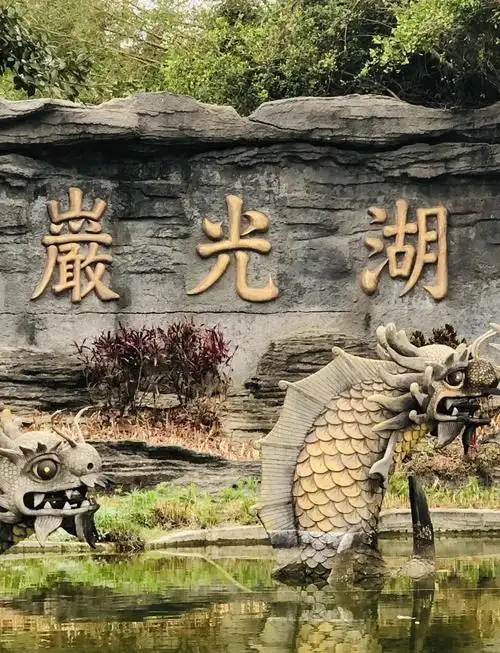 Huguang Yan is one of the world's best-preserved maar lakes—a rare volcanic landform created when rising magma met groundwater and exploded with such force that the ground collapsed inward. Its low, dish-shaped profile makes it almost invisible from the surrounding plain, yet the crater formed 140,000 to 160,000 years ago, during the late Pleistocene when early humans were migrating across Asia. Comparable to the celebrated maar lakes of Germany's Eifel region, this site has been singled out by UNESCO geological experts as a "living archive" of Earth science. The 2.3-square-kilometer lake holds a perfectly stable water level year-round, reflecting encircling cliffs and forest like a classical Chinese landscape scroll.
The lake harbors a striking ecological paradox: no frogs croak along its shores, no snakes slip through its reeds, and not a single fallen leaf settles on the mirror surface, yet large dragonfish and revered turtles thrive in its waters. Scientists attribute these mysteries to the unique mineral composition of the lakebed and a distinctive microbial community, with research still ongoing. The surrounding forest generates exceptionally high concentrations of negative oxygen ions, earning the area the nickname "Natural Oxygen Bar." Summer temperatures hover around 25°C (77°F), offering a refreshing escape from the humid tropical heat of coastal Guangdong.
Human history intertwines dramatically with geology here. Lingyan Temple, founded during the Sui and Tang dynasties—a period roughly contemporary with the rise of Tang China and the early Middle Ages in Europe—was built directly into a natural volcanic rock cave and has kept its incense burning for over a millennium, making it one of southern China's most respected Buddhist sanctuaries. The smaller Baiyi Nunnery and a stone statue honoring Li Gang, a Song dynasty statesman famed for his defiant stand against invaders, dot the lakeshore. The three bold characters "Hu Guang Yan" carved into the cliff face bear witness to centuries of pilgrimage.
At the heart of the Lei-Qiong UNESCO Global Geopark Museum, visitors find an engaging introduction to the volcanic forces that shaped this landscape. Exhibits include striking columnar jointing specimens, ancient climate sediment records, and bilingual explanations in Chinese and English of maar-lake formation. The museum transforms a scenic lake into a hands-on classroom where families and geology enthusiasts can trace 16 million years of regional tectonic activity. It is the ideal first stop before walking the crater rim and easily rivals the interpretive centers found at major European volcanic parks.
The park opens daily from 7:00 a.m. to 6:30 p.m. Adult admission is 50 RMB, with an optional 20 RMB ring-lake sightseeing cart; visitors aged 65 and over enter free with ID. The 7-kilometer crater-rim path is gently graded and typically takes three to four hours to complete on foot, though bicycles are also welcome. Early morning or late afternoon visits are recommended to avoid midday heat and mosquitoes—bring repellent, sunscreen, and sturdy walking shoes. Allow at least half a day, or a full day if combining the museum, temple, and lakeside trails.
Few places on the planet allow travelers to circle a 150,000-year-old volcanic crater on foot, breathe oxygen-rich forest air, and then step into a 1,400-year-old temple carved from lava rock. Huguang Yan offers that rare combination of geological rarity, ecological mystery, and living cultural heritage, all within easy reach of Zhanjiang's tropical coastline. For Western travelers seeking an off-the-beaten-path experience that fuses natural science with Chinese spiritual tradition, this crater lake delivers something as memorable as it is unusual—an encounter with the deep forces that shaped both the Earth and the civilizations living upon it.
Huguang Yan is one of the world's best-preserved maar lakes—a rare volcanic landform created when rising magma met groundwater and exploded with such force that the ground collapsed inward. Its low, dish-shaped profile makes it almost invisible from the surrounding plain, yet the crater formed 140,000 to 160,000 years ago, during the late Pleistocene when early humans were migrating across Asia. Comparable to the celebrated maar lakes of Germany's Eifel region, this site has been singled out by UNESCO geological experts as a "living archive" of Earth science. The 2.3-square-kilometer lake holds a perfectly stable water level year-round, reflecting encircling cliffs and forest like a classical Chinese landscape scroll.
The lake harbors a striking ecological paradox: no frogs croak along its shores, no snakes slip through its reeds, and not a single fallen leaf settles on the mirror surface, yet large dragonfish and revered turtles thrive in its waters. Scientists attribute these mysteries to the unique mineral composition of the lakebed and a distinctive microbial community, with research still ongoing. The surrounding forest generates exceptionally high concentrations of negative oxygen ions, earning the area the nickname "Natural Oxygen Bar." Summer temperatures hover around 25°C (77°F), offering a refreshing escape from the humid tropical heat of coastal Guangdong.
Human history intertwines dramatically with geology here. Lingyan Temple, founded during the Sui and Tang dynasties—a period roughly contemporary with the rise of Tang China and the early Middle Ages in Europe—was built directly into a natural volcanic rock cave and has kept its incense burning for over a millennium, making it one of southern China's most respected Buddhist sanctuaries. The smaller Baiyi Nunnery and a stone statue honoring Li Gang, a Song dynasty statesman famed for his defiant stand against invaders, dot the lakeshore. The three bold characters "Hu Guang Yan" carved into the cliff face bear witness to centuries of pilgrimage.
At the heart of the Lei-Qiong UNESCO Global Geopark Museum, visitors find an engaging introduction to the volcanic forces that shaped this landscape. Exhibits include striking columnar jointing specimens, ancient climate sediment records, and bilingual explanations in Chinese and English of maar-lake formation. The museum transforms a scenic lake into a hands-on classroom where families and geology enthusiasts can trace 16 million years of regional tectonic activity. It is the ideal first stop before walking the crater rim and easily rivals the interpretive centers found at major European volcanic parks.
The park opens daily from 7:00 a.m. to 6:30 p.m. Adult admission is 50 RMB, with an optional 20 RMB ring-lake sightseeing cart; visitors aged 65 and over enter free with ID. The 7-kilometer crater-rim path is gently graded and typically takes three to four hours to complete on foot, though bicycles are also welcome. Early morning or late afternoon visits are recommended to avoid midday heat and mosquitoes—bring repellent, sunscreen, and sturdy walking shoes. Allow at least half a day, or a full day if combining the museum, temple, and lakeside trails.
Few places on the planet allow travelers to circle a 150,000-year-old volcanic crater on foot, breathe oxygen-rich forest air, and then step into a 1,400-year-old temple carved from lava rock. Huguang Yan offers that rare combination of geological rarity, ecological mystery, and living cultural heritage, all within easy reach of Zhanjiang's tropical coastline. For Western travelers seeking an off-the-beaten-path experience that fuses natural science with Chinese spiritual tradition, this crater lake delivers something as memorable as it is unusual—an encounter with the deep forces that shaped both the Earth and the civilizations living upon it.