Huzhou Silk Museum
⭐ 4.20
West Side of South Gate, Zhaxi Park, Feiying Subdistrict, Wuxing District, Huzhou City, Zhejiang Province, China
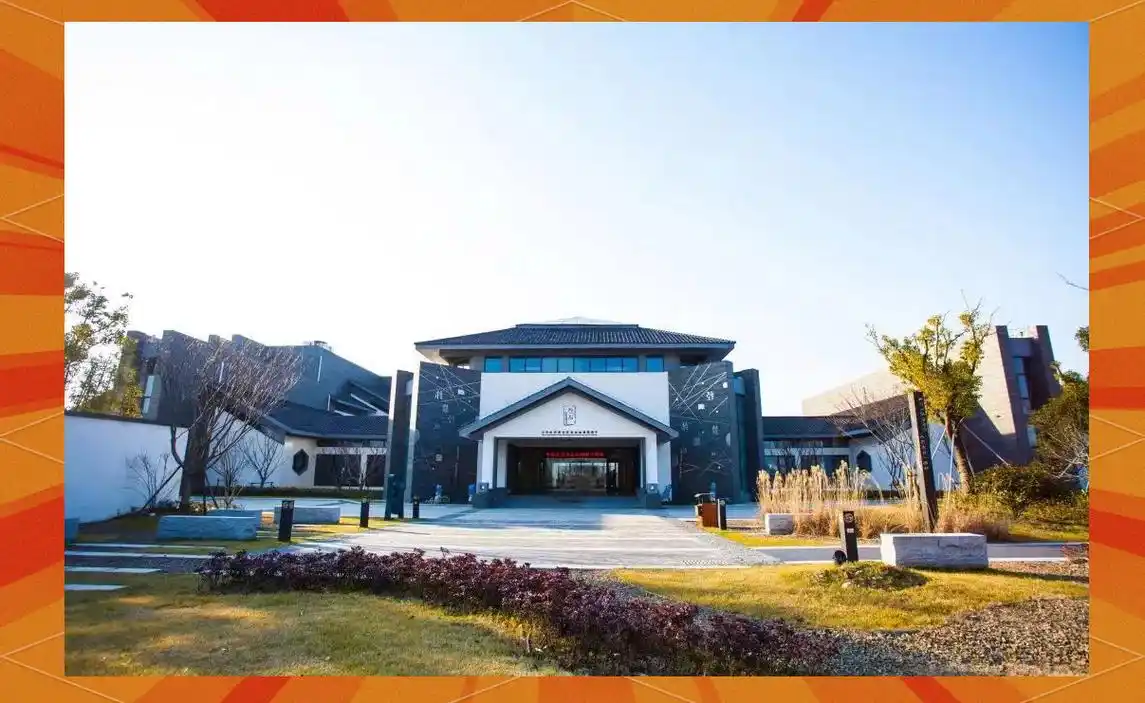 Long before the Silk Road earned its name, Huzhou's mulberry groves and silkworm houses were already feeding China's emerging luxury trade. The Qianshanyang archaeological site, dated to roughly 2700 BCE, contains some of the world's oldest surviving silk fragments—predating Egypt's pyramid age and rivaling finds from Anyang. Standing at the Cultural Exchange Center, visitors grasp that Huzhou was not merely a producer but arguably the original birthplace of organized silk manufacturing, a status recognized by UNESCO and echoed later by Italy's Venetian and French Lyonnais weavers, who learned their craft partly through goods originating from this very region.
Occupying about 5,000 square meters within the scenic Xishanyang Park, the Qianshanyang Center is divided into seven themed halls covering everything from mulberry cultivation and cocoon sorting to dyeing and finished textiles. Its standout feature is the immersive technology: augmented-reality stations let visitors "see" ancient looms in motion, while a dome-screen film dramatizes the journey from caterpillar to court robe. Hands-on zones with replica reeling machines and pedal looms appeal especially to families and school groups, transforming an academic subject into a tactile adventure.
Across town, the Jili Lake Silk Hall occupies a stately 1926 guildhall on Nanxun's South-West Street, once the headquarters of the town's powerful merchants. The building itself is a draw—a fusion of Chinese carved timberwork with Western Art Deco detailing, reminiscent of Shanghai's Bund-era trading houses. Inside, exhibits chronicle "Jili silk," a brand so refined it won gold medals at the 1915 Panama-Pacific International Exposition and supplied European couturiers for generations.
The exhibits also illuminate Nanxun's astonishing mercantile elite, the so-called "Four Elephants and Eight Bulls"—a handful of families whose wealth in the 19th century rivaled that of Europe's Rothschilds or America's Vanderbilts. Their fortunes, built on raw silk exports, funded the town's extraordinary gardens, libraries, and mansions still visible along its canals. The hall thus serves as a cultural key to understanding Nanxun's broader appeal, often called the "Venice of the East."
Both venues are free, but arrangements differ. Qianshanyang Center opens 9:30–16:30 and requires advance booking via the "Wenlv Huzhou" WeChat account; the Jili Hall runs 9:00–16:30 (closed some Mondays for maintenance) and is included in the Nanxun Ancient Town combined ticket. Allow roughly 1.5 to 2.5 hours if visiting both. For visitors passionate about textiles, trade history, or simply elegant canalside towns, this pairing offers one of China's richest silk experiences outside Suzhou or Hangzhou.
Long before the Silk Road earned its name, Huzhou's mulberry groves and silkworm houses were already feeding China's emerging luxury trade. The Qianshanyang archaeological site, dated to roughly 2700 BCE, contains some of the world's oldest surviving silk fragments—predating Egypt's pyramid age and rivaling finds from Anyang. Standing at the Cultural Exchange Center, visitors grasp that Huzhou was not merely a producer but arguably the original birthplace of organized silk manufacturing, a status recognized by UNESCO and echoed later by Italy's Venetian and French Lyonnais weavers, who learned their craft partly through goods originating from this very region.
Occupying about 5,000 square meters within the scenic Xishanyang Park, the Qianshanyang Center is divided into seven themed halls covering everything from mulberry cultivation and cocoon sorting to dyeing and finished textiles. Its standout feature is the immersive technology: augmented-reality stations let visitors "see" ancient looms in motion, while a dome-screen film dramatizes the journey from caterpillar to court robe. Hands-on zones with replica reeling machines and pedal looms appeal especially to families and school groups, transforming an academic subject into a tactile adventure.
Across town, the Jili Lake Silk Hall occupies a stately 1926 guildhall on Nanxun's South-West Street, once the headquarters of the town's powerful merchants. The building itself is a draw—a fusion of Chinese carved timberwork with Western Art Deco detailing, reminiscent of Shanghai's Bund-era trading houses. Inside, exhibits chronicle "Jili silk," a brand so refined it won gold medals at the 1915 Panama-Pacific International Exposition and supplied European couturiers for generations.
The exhibits also illuminate Nanxun's astonishing mercantile elite, the so-called "Four Elephants and Eight Bulls"—a handful of families whose wealth in the 19th century rivaled that of Europe's Rothschilds or America's Vanderbilts. Their fortunes, built on raw silk exports, funded the town's extraordinary gardens, libraries, and mansions still visible along its canals. The hall thus serves as a cultural key to understanding Nanxun's broader appeal, often called the "Venice of the East."
Both venues are free, but arrangements differ. Qianshanyang Center opens 9:30–16:30 and requires advance booking via the "Wenlv Huzhou" WeChat account; the Jili Hall runs 9:00–16:30 (closed some Mondays for maintenance) and is included in the Nanxun Ancient Town combined ticket. Allow roughly 1.5 to 2.5 hours if visiting both. For visitors passionate about textiles, trade history, or simply elegant canalside towns, this pairing offers one of China's richest silk experiences outside Suzhou or Hangzhou.