Zhili Silk Culture Museum
⭐ 4.20
Zhili Town, Wuxing District, Huzhou City, Zhejiang Province, China
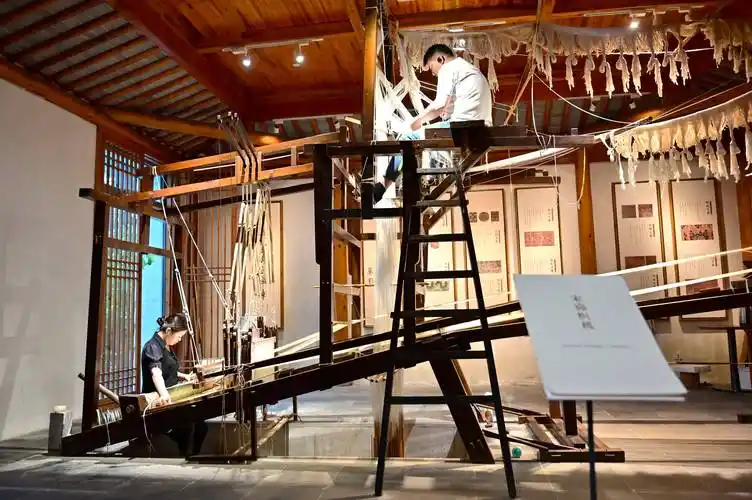 The Qianshanyang site, excavated in 1958, yielded silk fragments dating back roughly 4,700 years—older than the Great Pyramid of Giza and placing Huzhou among the earliest cradles of sericulture anywhere on Earth. Comparable in importance to early Egyptian linen discoveries, these artifacts established the region as one of China's definitive silk-producing heartlands. The museum uses this prehistoric find as its narrative anchor, weaving Huzhou's unbroken thread of silk production from Neolithic workshops through imperial dynastic tributes and into the modern global textile industry.
Set within the Xishanyang National Urban Wetland Park, the museum blends classic Jiangnan water-town architecture—sweeping tiled roofs, whitewashed walls, and timber-frame pavilions that echo the merchant quarters of historic Venice—with sleek contemporary exhibition design. Seven themed halls, including dedicated History, Intangible Heritage, and Industry galleries, deploy digital immersion, multimedia projections, and curated physical artifacts for layered storytelling. A Hanfu photography zone and a silk-fan handicraft workshop add playful, interactive appeal for visitors of every age.
Huzhou silk has long been celebrated as "the finest under heaven," a reputation matched in Europe only by the great traditions of French Lyon and Italian Como. The city's Jili Husi brand achieved international fame when it claimed a gold medal at the 1851 Great Exhibition inside London's Crystal Palace—the very showcase that introduced Victorian industrial might to the world. Today the center serves as a designated guardian of Chinese sericulture and silk-weaving intangible heritage, preserving traditional reeling and weaving techniques while hosting lively cultural markets.
The museum sits inside the Xishanyang National Urban Wetland Park, roughly 10 kilometers from Zhili town in Wuxing District. Admission is generally free, but advance online reservation through official channels is required. Chinese-language guided tours are available; foreign visitors are advised to book a bilingual volunteer ahead of time or bring a translation device. Opening hours run Tuesday through Sunday, 9:30 a.m. to 4:30 p.m., with the museum closed Mondays for routine maintenance.
Allow half a day to a full day for an unhurried visit. Mornings work best for exploring the exhibition halls; lunch at the nearby Silk Creative Market offers local Huzhou specialties such as Dingsheng victory rice cakes. Spend the afternoon crafting a personalized silk fan or trying traditional reeling—finished pieces can be taken home as souvenirs. At sunset, stroll the wetland park's atmospheric mulberry-and-fish-pond landscapes. Travelers with extra time should pair this stop with the Jili Silk Museum in nearby Nanxun Ancient Town, completing a Huzhou silk itinerary that rivals the great textile tours of Lyon or Como.
The Qianshanyang site, excavated in 1958, yielded silk fragments dating back roughly 4,700 years—older than the Great Pyramid of Giza and placing Huzhou among the earliest cradles of sericulture anywhere on Earth. Comparable in importance to early Egyptian linen discoveries, these artifacts established the region as one of China's definitive silk-producing heartlands. The museum uses this prehistoric find as its narrative anchor, weaving Huzhou's unbroken thread of silk production from Neolithic workshops through imperial dynastic tributes and into the modern global textile industry.
Set within the Xishanyang National Urban Wetland Park, the museum blends classic Jiangnan water-town architecture—sweeping tiled roofs, whitewashed walls, and timber-frame pavilions that echo the merchant quarters of historic Venice—with sleek contemporary exhibition design. Seven themed halls, including dedicated History, Intangible Heritage, and Industry galleries, deploy digital immersion, multimedia projections, and curated physical artifacts for layered storytelling. A Hanfu photography zone and a silk-fan handicraft workshop add playful, interactive appeal for visitors of every age.
Huzhou silk has long been celebrated as "the finest under heaven," a reputation matched in Europe only by the great traditions of French Lyon and Italian Como. The city's Jili Husi brand achieved international fame when it claimed a gold medal at the 1851 Great Exhibition inside London's Crystal Palace—the very showcase that introduced Victorian industrial might to the world. Today the center serves as a designated guardian of Chinese sericulture and silk-weaving intangible heritage, preserving traditional reeling and weaving techniques while hosting lively cultural markets.
The museum sits inside the Xishanyang National Urban Wetland Park, roughly 10 kilometers from Zhili town in Wuxing District. Admission is generally free, but advance online reservation through official channels is required. Chinese-language guided tours are available; foreign visitors are advised to book a bilingual volunteer ahead of time or bring a translation device. Opening hours run Tuesday through Sunday, 9:30 a.m. to 4:30 p.m., with the museum closed Mondays for routine maintenance.
Allow half a day to a full day for an unhurried visit. Mornings work best for exploring the exhibition halls; lunch at the nearby Silk Creative Market offers local Huzhou specialties such as Dingsheng victory rice cakes. Spend the afternoon crafting a personalized silk fan or trying traditional reeling—finished pieces can be taken home as souvenirs. At sunset, stroll the wetland park's atmospheric mulberry-and-fish-pond landscapes. Travelers with extra time should pair this stop with the Jili Silk Museum in nearby Nanxun Ancient Town, completing a Huzhou silk itinerary that rivals the great textile tours of Lyon or Como.