Changxing Longshan Scenic Area
⭐ 3.80
Longshan Scenic Area, Changxing County, Huzhou City, Zhejiang Province, China
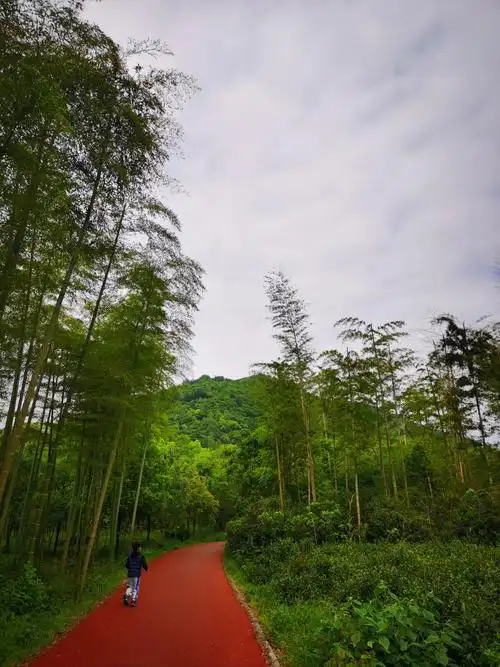 Stretching roughly 22 kilometres through the rolling hills north of Huzhou, the Dragon Mountain Greenway follows an ancient valley once used by tea merchants transporting leaves from the surrounding plantations toward the Grand Canal. Huzhou's tea heritage runs remarkably deep—local farmers have been cultivating green teas in this region for well over a thousand years, predating the rise of Japan's Uji tea gardens by several centuries. The red-paved trail rises only about 300 metres in total elevation, making it comparable in ease to a leisurely Alpine valley walk, yet it threads through scenery distinctly Chinese: dense moso bamboo corridors reminiscent of Kyoto's Arashiyama groves, but entirely untouristed.
The heart of the attraction is its glass suspension bridge, soaring 186 metres across a forested gorge. Built in the wave of daring Chinese pedestrian bridges that began with Shiniuzhai's glass walkway in Hunan in 2014, it ranks among the longest of its kind in Zhejiang Province. Walking across feels akin to crossing a single-span rope bridge of the kind once found in Nepal's Himalayan valleys, but reinforced with modern engineering and transparent floor panels that reveal bamboo tops, mountain streams, and the distant rooftops of Chuanbu Village far below. A separate ticket of roughly 50 RMB is required for the bridge.
Culturally, the area embodies the pastoral ideals celebrated for centuries in Chinese landscape poetry and ink painting—those misty river scenes of fishermen, scholars, and reclusive monks wandering among bamboo and plum blossoms. The neighbouring Peach Blossom Forest Park and the ancient waxberry groves of Zhushan preserve that aesthetic in living form: plum blossoms bloom in winter, waxberries ripen in early summer, and the bamboo provides shade and a steady breeze through the hottest months. Visitors seeking a slice of traditional Jiangnan countryside will find it here without the filters of a tourist bus.
Practical access is refreshingly informal. The greenway itself is free, open at all hours, and connects seamlessly with the two villages, where family-run guesthouses serve local dishes such as bamboo-shoot stew with pork for roughly 30 to 40 RMB per person. Drivers should navigate to the Chuanbu Village car park or the "Longshan Greenway" pin; there is no formal entrance gate, just country lanes. Sturdy walking shoes, insect repellent, sunscreen, and plenty of water are essential. Those uneasy with heights can skip the glass bridge and still enjoy the loveliest stretches of trail near the bamboo streams.
Summer is unquestionably the prime season, with canopy-shaded paths and water temperatures several degrees cooler than the nearby cities—perfect for families with children who want to splash in shallow streams. Spring and autumn bring pleasant cycling conditions and the waxberry or plum blossom harvests, while winter offers crisp views across the surrounding tea country. Wildlife is modest but present: kingfishers, bamboo warblers, and the occasional pond heron reward quiet observers. A morning start allows visitors to combine the lower trail loop with a mid-afternoon bridge crossing before evening light softens the bamboo canopy.
[DETAILED]
A final note on etiquette and atmosphere: because the area is genuinely open countryside rather than a fenced park, travellers are asked to respect the working farms, orchards, and villages they pass through. Litter is to be carried out, voices kept low near dwellings, and private paths not diverted onto without invitation. In return, locals are famously welcoming, and many homestay hosts will gladly point guests toward seasonal harvests or hidden streams. For Western visitors accustomed to the manicured trails of Switzerland or the heritage routes of Tuscany, Longshan offers something rarer—an unpretentious, living Chinese landscape where tea culture, bamboo craft, and village life continue much as they have for generations.
Stretching roughly 22 kilometres through the rolling hills north of Huzhou, the Dragon Mountain Greenway follows an ancient valley once used by tea merchants transporting leaves from the surrounding plantations toward the Grand Canal. Huzhou's tea heritage runs remarkably deep—local farmers have been cultivating green teas in this region for well over a thousand years, predating the rise of Japan's Uji tea gardens by several centuries. The red-paved trail rises only about 300 metres in total elevation, making it comparable in ease to a leisurely Alpine valley walk, yet it threads through scenery distinctly Chinese: dense moso bamboo corridors reminiscent of Kyoto's Arashiyama groves, but entirely untouristed.
The heart of the attraction is its glass suspension bridge, soaring 186 metres across a forested gorge. Built in the wave of daring Chinese pedestrian bridges that began with Shiniuzhai's glass walkway in Hunan in 2014, it ranks among the longest of its kind in Zhejiang Province. Walking across feels akin to crossing a single-span rope bridge of the kind once found in Nepal's Himalayan valleys, but reinforced with modern engineering and transparent floor panels that reveal bamboo tops, mountain streams, and the distant rooftops of Chuanbu Village far below. A separate ticket of roughly 50 RMB is required for the bridge.
Culturally, the area embodies the pastoral ideals celebrated for centuries in Chinese landscape poetry and ink painting—those misty river scenes of fishermen, scholars, and reclusive monks wandering among bamboo and plum blossoms. The neighbouring Peach Blossom Forest Park and the ancient waxberry groves of Zhushan preserve that aesthetic in living form: plum blossoms bloom in winter, waxberries ripen in early summer, and the bamboo provides shade and a steady breeze through the hottest months. Visitors seeking a slice of traditional Jiangnan countryside will find it here without the filters of a tourist bus.
Practical access is refreshingly informal. The greenway itself is free, open at all hours, and connects seamlessly with the two villages, where family-run guesthouses serve local dishes such as bamboo-shoot stew with pork for roughly 30 to 40 RMB per person. Drivers should navigate to the Chuanbu Village car park or the "Longshan Greenway" pin; there is no formal entrance gate, just country lanes. Sturdy walking shoes, insect repellent, sunscreen, and plenty of water are essential. Those uneasy with heights can skip the glass bridge and still enjoy the loveliest stretches of trail near the bamboo streams.
Summer is unquestionably the prime season, with canopy-shaded paths and water temperatures several degrees cooler than the nearby cities—perfect for families with children who want to splash in shallow streams. Spring and autumn bring pleasant cycling conditions and the waxberry or plum blossom harvests, while winter offers crisp views across the surrounding tea country. Wildlife is modest but present: kingfishers, bamboo warblers, and the occasional pond heron reward quiet observers. A morning start allows visitors to combine the lower trail loop with a mid-afternoon bridge crossing before evening light softens the bamboo canopy.
[DETAILED]
A final note on etiquette and atmosphere: because the area is genuinely open countryside rather than a fenced park, travellers are asked to respect the working farms, orchards, and villages they pass through. Litter is to be carried out, voices kept low near dwellings, and private paths not diverted onto without invitation. In return, locals are famously welcoming, and many homestay hosts will gladly point guests toward seasonal harvests or hidden streams. For Western visitors accustomed to the manicured trails of Switzerland or the heritage routes of Tuscany, Longshan offers something rarer—an unpretentious, living Chinese landscape where tea culture, bamboo craft, and village life continue much as they have for generations.