Huzhou Museum
⭐ 4.20
No. 888, Renhuangshan Road, Wuxing District, Huzhou City, Zhejiang Province, China
 Located in the Renhuangshan New District, Huzhou Museum opened in 2003 and earned national second-level status in 2009, making it the largest municipal museum in northern Zhejiang. It sits within a region that has been continuously inhabited since the Neolithic era; the nearby Qianshanyang archaeological site yielded silk fragments dating to around 2700 BCE, among the world's oldest known silk textiles, predating even the famed Silk Road by nearly two millennia. Like the British Museum's sweeping chronological galleries or the Musée de Cluny's medieval collections, the museum organizes its narrative to reveal how Huzhou evolved from a lakeside settlement into a cradle of Jiangnan civilization.
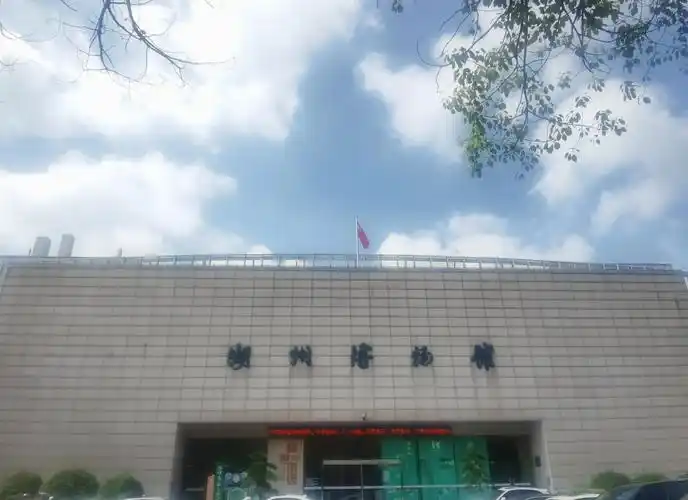
The museum's architecture is restrained and dignified, covering 10,274 square meters with 4,000 square meters of exhibition space. While less ornate than Suzhou's classical gardens or the imperial grandeur of Beijing's Palace Museum, the building's clean lines harmonize with the surrounding Renhuangshan Park landscape. Inside, visitors move through the permanent "Wu Xing Fu" chronological hall, the Zhao Yannian Art Hall celebrating the modern woodblock-print master, and a gallery of Ming-Qing classical furniture, all presented in a traditional, understated style reminiscent of European provincial museums.
The collection's treasures illuminate Huzhou's identity as the "homeland of celadon, capital of writing brushes, and city of silk." A standout piece is an Eastern Han dynasty celadon lei (leiyun) incised with the Chinese character for "tea," one of the earliest physical references to tea culture anywhere in the world, contemporary with the late Roman Empire. Equally remarkable are some 30 inscribed stones featuring calligraphy by Zhao Mengfu, a Yuan-dynasty polymath whose work influenced East Asian calligraphy for centuries, comparable in stature to Europe's medieval scribal masters.
Practical details make visiting straightforward. The museum is free and open without reservation; simply present an ID card or passport at the entrance. Hours are Tuesday through Sunday, 9:00 a.m. to 4:30 p.m., with last entry at 4:00 p.m.; closed Mondays except during Chinese public holidays. In summer weekends, hours extend to 8:00 p.m. Plan 1.5 to 2.5 hours for a comfortable visit, and consider combining it with the nearby Chinese Huzhou Brush Museum for a deeper dive into craft traditions. Bilingual Chinese-English signage and a WeChat audio guide help international visitors navigate the galleries, though dedicated foreign-language tour guides are not available.
While the museum lacks cutting-edge VR exhibits, it offers hands-on rubbing experiences and immersive light projections that work well for families and casual learners. Visitors should note that air conditioning keeps interiors quite cool, so a light jacket is advisable. Food, drinks, and smoking are prohibited inside, exhibits may not be touched, and photography is allowed only without flash or tripods. For travelers exploring the Jiangnan region, Huzhou Museum provides a quieter, more scholarly counterpoint to the bustling tourist circuits of Hangzhou's West Lake or Suzhou's canals, rewarding those curious about the deeper currents of Chinese cultural history.
Located in the Renhuangshan New District, Huzhou Museum opened in 2003 and earned national second-level status in 2009, making it the largest municipal museum in northern Zhejiang. It sits within a region that has been continuously inhabited since the Neolithic era; the nearby Qianshanyang archaeological site yielded silk fragments dating to around 2700 BCE, among the world's oldest known silk textiles, predating even the famed Silk Road by nearly two millennia. Like the British Museum's sweeping chronological galleries or the Musée de Cluny's medieval collections, the museum organizes its narrative to reveal how Huzhou evolved from a lakeside settlement into a cradle of Jiangnan civilization.
The museum's architecture is restrained and dignified, covering 10,274 square meters with 4,000 square meters of exhibition space. While less ornate than Suzhou's classical gardens or the imperial grandeur of Beijing's Palace Museum, the building's clean lines harmonize with the surrounding Renhuangshan Park landscape. Inside, visitors move through the permanent "Wu Xing Fu" chronological hall, the Zhao Yannian Art Hall celebrating the modern woodblock-print master, and a gallery of Ming-Qing classical furniture, all presented in a traditional, understated style reminiscent of European provincial museums.
The collection's treasures illuminate Huzhou's identity as the "homeland of celadon, capital of writing brushes, and city of silk." A standout piece is an Eastern Han dynasty celadon lei (leiyun) incised with the Chinese character for "tea," one of the earliest physical references to tea culture anywhere in the world, contemporary with the late Roman Empire. Equally remarkable are some 30 inscribed stones featuring calligraphy by Zhao Mengfu, a Yuan-dynasty polymath whose work influenced East Asian calligraphy for centuries, comparable in stature to Europe's medieval scribal masters.
Practical details make visiting straightforward. The museum is free and open without reservation; simply present an ID card or passport at the entrance. Hours are Tuesday through Sunday, 9:00 a.m. to 4:30 p.m., with last entry at 4:00 p.m.; closed Mondays except during Chinese public holidays. In summer weekends, hours extend to 8:00 p.m. Plan 1.5 to 2.5 hours for a comfortable visit, and consider combining it with the nearby Chinese Huzhou Brush Museum for a deeper dive into craft traditions. Bilingual Chinese-English signage and a WeChat audio guide help international visitors navigate the galleries, though dedicated foreign-language tour guides are not available.
While the museum lacks cutting-edge VR exhibits, it offers hands-on rubbing experiences and immersive light projections that work well for families and casual learners. Visitors should note that air conditioning keeps interiors quite cool, so a light jacket is advisable. Food, drinks, and smoking are prohibited inside, exhibits may not be touched, and photography is allowed only without flash or tripods. For travelers exploring the Jiangnan region, Huzhou Museum provides a quieter, more scholarly counterpoint to the bustling tourist circuits of Hangzhou's West Lake or Suzhou's canals, rewarding those curious about the deeper currents of Chinese cultural history.