Nanxun Ancient Town
⭐ 4.60
Nanxun District, Huzhou, Zhejiang, China
 Nanxun's story stretches back to the Southern Song dynasty, but the town reached its golden age during the late 19th century, when local silk merchants—known collectively as the "Four Elephants and Eight Bulls" for the staggering scale of their fortunes—dominated China's lucrative silk trade. Their wealth, comparable to that of Renaissance-era Venetian or Florentine merchant dynasties, funded the extraordinary architectural legacy that survives today. This commercial golden age produced a refined blend of merchant sophistication and scholarly ambition that distinguishes Nanxun from its better-known Jiangnan neighbors.
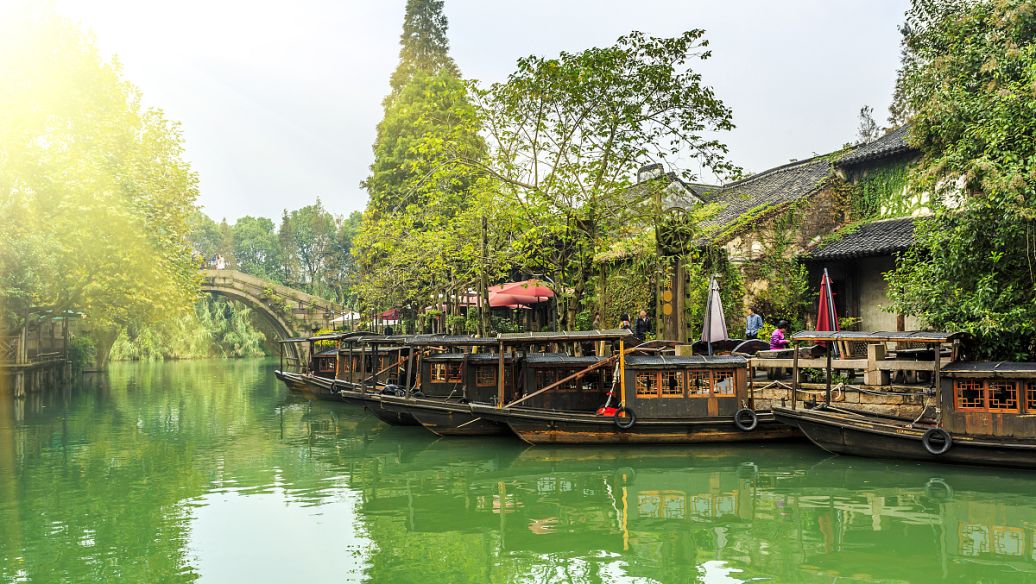
The town's most striking feature is its bold East-meets-West architecture, a phenomenon that flourished during the same decades when Art Nouveau was transforming European cities. The Zhang Shiming Mansion dazzles with embedded French cobalt-blue glass and a full European-style ballroom, while the Liu family residence (Liu's Stairs) stuns visitors with its red-brick Roman columns and arched windows. Yet just steps away, the 400-meter-long Baijian Lou—400 meters of Ming-dynasty waterfront houses—preserves an entirely traditional riverside vernacular, their weathered facades glowing atmospherically through morning mist and evening lamplight.
Cultural depth reaches its peak at two headline sites. Little Lotus Garden (Xiaolianzhuang) is a classic late-Qing private garden where summer lotus blooms transform its ponds into a living Impressionist canvas. Nearby stands Jiaye Library, among the largest private book repositories in modern China, where visitors can try their hand at traditional movable-type printing—a hands-on connection to a literary heritage predating Gutenberg's press by centuries. Together, these two treasures anchor the town's identity as both a garden retreat and a scholarly sanctuary.
Plan for two unhurried days to fully appreciate Nanxun's shifting moods. On day one, follow the combo-ticket circuit through Little Lotus Garden, Jiaye Library, and the Zhang Shiming Mansion, finishing with an evening stroll along Baijian Lou as lanterns flicker on the canal. Rise early on day two to catch the magical morning light over Baijian Lou before the boats stir. A punted wooden boat weaving through narrow water-lanes, with the boatwoman singing traditional Wu-dialect ballads, offers the most authentic glimpse of old Jiangnan life.
Don't leave without sampling the local specialties: Shuangjiao noodles (a clever double-topping dish), Xunti braised pork trotters, Dingsheng victory cakes, and the celebrated "Three Tea Ceremony" featuring maple-leaf, smoked-bean, and green teas—best enjoyed at time-honored shops along East Street. Spring and autumn offer the most comfortable weather, while July and August bring spectacular lotus viewing alongside sweltering humidity. The town is easily reached: the high-speed rail station at Nanxun sits just 15 minutes by taxi from the historic core, and driving is equally convenient.
[DETAILED]
Nanxun's story stretches back to the Southern Song dynasty, but the town reached its golden age during the late 19th century, when local silk merchants—known collectively as the "Four Elephants and Eight Bulls" for the staggering scale of their fortunes—dominated China's lucrative silk trade. Their wealth, comparable to that of Renaissance-era Venetian or Florentine merchant dynasties, funded the extraordinary architectural legacy that survives today. This commercial golden age produced a refined blend of merchant sophistication and scholarly ambition that distinguishes Nanxun from its better-known Jiangnan neighbors.
The town's most striking feature is its bold East-meets-West architecture, a phenomenon that flourished during the same decades when Art Nouveau was transforming European cities. The Zhang Shiming Mansion dazzles with embedded French cobalt-blue glass and a full European-style ballroom, while the Liu family residence (Liu's Stairs) stuns visitors with its red-brick Roman columns and arched windows. Yet just steps away, the 400-meter-long Baijian Lou—400 meters of Ming-dynasty waterfront houses—preserves an entirely traditional riverside vernacular, their weathered facades glowing atmospherically through morning mist and evening lamplight.
Cultural depth reaches its peak at two headline sites. Little Lotus Garden (Xiaolianzhuang) is a classic late-Qing private garden where summer lotus blooms transform its ponds into a living Impressionist canvas. Nearby stands Jiaye Library, among the largest private book repositories in modern China, where visitors can try their hand at traditional movable-type printing—a hands-on connection to a literary heritage predating Gutenberg's press by centuries. Together, these two treasures anchor the town's identity as both a garden retreat and a scholarly sanctuary.
Plan for two unhurried days to fully appreciate Nanxun's shifting moods. On day one, follow the combo-ticket circuit through Little Lotus Garden, Jiaye Library, and the Zhang Shiming Mansion, finishing with an evening stroll along Baijian Lou as lanterns flicker on the canal. Rise early on day two to catch the magical morning light over Baijian Lou before the boats stir. A punted wooden boat weaving through narrow water-lanes, with the boatwoman singing traditional Wu-dialect ballads, offers the most authentic glimpse of old Jiangnan life.
Don't leave without sampling the local specialties: Shuangjiao noodles (a clever double-topping dish), Xunti braised pork trotters, Dingsheng victory cakes, and the celebrated "Three Tea Ceremony" featuring maple-leaf, smoked-bean, and green teas—best enjoyed at time-honored shops along East Street. Spring and autumn offer the most comfortable weather, while July and August bring spectacular lotus viewing alongside sweltering humidity. The town is easily reached: the high-speed rail station at Nanxun sits just 15 minutes by taxi from the historic core, and driving is equally convenient.
Nanxun's story stretches back to the Southern Song dynasty, but the town reached its golden age during the late 19th century, when local silk merchants—known collectively as the "Four Elephants and Eight Bulls" for the staggering scale of their fortunes—dominated China's lucrative silk trade. Their wealth, comparable to that of Renaissance-era Venetian or Florentine merchant dynasties, funded the extraordinary architectural legacy that survives today. This commercial golden age produced a refined blend of merchant sophistication and scholarly ambition that distinguishes Nanxun from its better-known Jiangnan neighbors.
The town's most striking feature is its bold East-meets-West architecture, a phenomenon that flourished during the same decades when Art Nouveau was transforming European cities. The Zhang Shiming Mansion dazzles with embedded French cobalt-blue glass and a full European-style ballroom, while the Liu family residence (Liu's Stairs) stuns visitors with its red-brick Roman columns and arched windows. Yet just steps away, the 400-meter-long Baijian Lou—400 meters of Ming-dynasty waterfront houses—preserves an entirely traditional riverside vernacular, their weathered facades glowing atmospherically through morning mist and evening lamplight.
Cultural depth reaches its peak at two headline sites. Little Lotus Garden (Xiaolianzhuang) is a classic late-Qing private garden where summer lotus blooms transform its ponds into a living Impressionist canvas. Nearby stands Jiaye Library, among the largest private book repositories in modern China, where visitors can try their hand at traditional movable-type printing—a hands-on connection to a literary heritage predating Gutenberg's press by centuries. Together, these two treasures anchor the town's identity as both a garden retreat and a scholarly sanctuary.
Plan for two unhurried days to fully appreciate Nanxun's shifting moods. On day one, follow the combo-ticket circuit through Little Lotus Garden, Jiaye Library, and the Zhang Shiming Mansion, finishing with an evening stroll along Baijian Lou as lanterns flicker on the canal. Rise early on day two to catch the magical morning light over Baijian Lou before the boats stir. A punted wooden boat weaving through narrow water-lanes, with the boatwoman singing traditional Wu-dialect ballads, offers the most authentic glimpse of old Jiangnan life.
Don't leave without sampling the local specialties: Shuangjiao noodles (a clever double-topping dish), Xunti braised pork trotters, Dingsheng victory cakes, and the celebrated "Three Tea Ceremony" featuring maple-leaf, smoked-bean, and green teas—best enjoyed at time-honored shops along East Street. Spring and autumn offer the most comfortable weather, while July and August bring spectacular lotus viewing alongside sweltering humidity. The town is easily reached: the high-speed rail station at Nanxun sits just 15 minutes by taxi from the historic core, and driving is equally convenient.
[DETAILED]
Nanxun's story stretches back to the Southern Song dynasty, but the town reached its golden age during the late 19th century, when local silk merchants—known collectively as the "Four Elephants and Eight Bulls" for the staggering scale of their fortunes—dominated China's lucrative silk trade. Their wealth, comparable to that of Renaissance-era Venetian or Florentine merchant dynasties, funded the extraordinary architectural legacy that survives today. This commercial golden age produced a refined blend of merchant sophistication and scholarly ambition that distinguishes Nanxun from its better-known Jiangnan neighbors.
The town's most striking feature is its bold East-meets-West architecture, a phenomenon that flourished during the same decades when Art Nouveau was transforming European cities. The Zhang Shiming Mansion dazzles with embedded French cobalt-blue glass and a full European-style ballroom, while the Liu family residence (Liu's Stairs) stuns visitors with its red-brick Roman columns and arched windows. Yet just steps away, the 400-meter-long Baijian Lou—400 meters of Ming-dynasty waterfront houses—preserves an entirely traditional riverside vernacular, their weathered facades glowing atmospherically through morning mist and evening lamplight.
Cultural depth reaches its peak at two headline sites. Little Lotus Garden (Xiaolianzhuang) is a classic late-Qing private garden where summer lotus blooms transform its ponds into a living Impressionist canvas. Nearby stands Jiaye Library, among the largest private book repositories in modern China, where visitors can try their hand at traditional movable-type printing—a hands-on connection to a literary heritage predating Gutenberg's press by centuries. Together, these two treasures anchor the town's identity as both a garden retreat and a scholarly sanctuary.
Plan for two unhurried days to fully appreciate Nanxun's shifting moods. On day one, follow the combo-ticket circuit through Little Lotus Garden, Jiaye Library, and the Zhang Shiming Mansion, finishing with an evening stroll along Baijian Lou as lanterns flicker on the canal. Rise early on day two to catch the magical morning light over Baijian Lou before the boats stir. A punted wooden boat weaving through narrow water-lanes, with the boatwoman singing traditional Wu-dialect ballads, offers the most authentic glimpse of old Jiangnan life.
Don't leave without sampling the local specialties: Shuangjiao noodles (a clever double-topping dish), Xunti braised pork trotters, Dingsheng victory cakes, and the celebrated "Three Tea Ceremony" featuring maple-leaf, smoked-bean, and green teas—best enjoyed at time-honored shops along East Street. Spring and autumn offer the most comfortable weather, while July and August bring spectacular lotus viewing alongside sweltering humidity. The town is easily reached: the high-speed rail station at Nanxun sits just 15 minutes by taxi from the historic core, and driving is equally convenient.