Pucheng Xiaoxian Temple
⭐ 3.20
Xiaoxian Temple, Pucheng County, Weinan City, Shaanxi Province, China
 **A Tang-Era Foundation with Ming-Era Splendour**
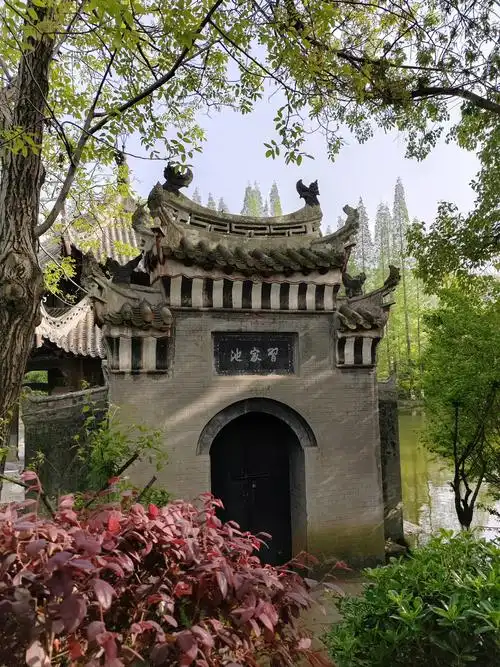
Pucheng's temple complex traces its origins to 630 CE, just two years after Emperor Taizong ascended the Tang throne—a period when China was as cosmopolitan and culturally dominant as contemporary Constantinople under Heraclius. While the original Tang buildings have vanished, the surviving Ming Dynasty (1368–1644) halls preserve the same axial symmetry found in Rome's later basilicas, drawing the eye along a processional path from gate to sanctuary. Think of it as a smaller, more intimate cousin of Beijing's Confucius Temple, but without the crowds.
**Architecture and Ritual Sequence**
Four courtyards unfold in classic progression: a lingxing gate (a stylised ceremonial entrance echoing the cosmic pillars of ancient Chinese cosmology), the dramatic jiemen with its displayed halberds, the great hall, and the scripture pavilion. The Ming-style bracket sets and sweeping eaves have weathered nearly six centuries yet retain their refined dignity. Much like a Greek temple complex where each element carried precise symbolic weight, every beam and courtyard here encodes Confucian hierarchy—earth below, heaven above, humanity in harmonious middle.
**Cultural Significance: Honouring the Local Sage**
The shrines embody a uniquely Chinese civic tradition: memorialising "gentlemen worthy of the countryside" alongside exemplary officials who served them. This dual veneration parallels the European medieval practice of patron-saint cults that anchored community identity, but with a distinctly Confucian moral focus rather than religious devotion. Stone tablets and ritual furnishings preserve biographies of Pucheng's notable sons—figures largely unknown outside China yet representing the bedrock of local governance and scholarly continuity across dynasties.
**Planning Your Visit**
The complex sits on Hongqi Street in central Pucheng, administered as part of the Pucheng County Museum. Entry is free, though the site occasionally closes for restoration—call the local cultural affairs office before travelling. Allow 30 minutes to one hour for a considered visit, ideally combined with the museum's artefact galleries. Explanatory signage is in Chinese only, so download a translation app or arrange an English guide in advance through the museum.
**Combining the Visit**
Just two kilometres away stands the Yang Hucheng Memorial Hall, honouring the patriotic general whose 1936 Xi'an Incident helped halt China's civil war. Together the two sites create a compelling thematic pairing—"classical Confucian virtue meets modern national conscience"—that few regional Chinese itineraries can match.
**After Your Visit**
Reward yourself with Pucheng's signature cuisine: *shuipen yangrou*, a clear lamb broth served with hand-torn flatbread perfect for dipping, alongside chewy *chuantou zhengmo* steamed buns. Small family-run eateries cluster near the museum, offering an authentic taste of Guanzhong home cooking rarely found in tourist guides.
**A Tang-Era Foundation with Ming-Era Splendour**
Pucheng's temple complex traces its origins to 630 CE, just two years after Emperor Taizong ascended the Tang throne—a period when China was as cosmopolitan and culturally dominant as contemporary Constantinople under Heraclius. While the original Tang buildings have vanished, the surviving Ming Dynasty (1368–1644) halls preserve the same axial symmetry found in Rome's later basilicas, drawing the eye along a processional path from gate to sanctuary. Think of it as a smaller, more intimate cousin of Beijing's Confucius Temple, but without the crowds.
**Architecture and Ritual Sequence**
Four courtyards unfold in classic progression: a lingxing gate (a stylised ceremonial entrance echoing the cosmic pillars of ancient Chinese cosmology), the dramatic jiemen with its displayed halberds, the great hall, and the scripture pavilion. The Ming-style bracket sets and sweeping eaves have weathered nearly six centuries yet retain their refined dignity. Much like a Greek temple complex where each element carried precise symbolic weight, every beam and courtyard here encodes Confucian hierarchy—earth below, heaven above, humanity in harmonious middle.
**Cultural Significance: Honouring the Local Sage**
The shrines embody a uniquely Chinese civic tradition: memorialising "gentlemen worthy of the countryside" alongside exemplary officials who served them. This dual veneration parallels the European medieval practice of patron-saint cults that anchored community identity, but with a distinctly Confucian moral focus rather than religious devotion. Stone tablets and ritual furnishings preserve biographies of Pucheng's notable sons—figures largely unknown outside China yet representing the bedrock of local governance and scholarly continuity across dynasties.
**Planning Your Visit**
The complex sits on Hongqi Street in central Pucheng, administered as part of the Pucheng County Museum. Entry is free, though the site occasionally closes for restoration—call the local cultural affairs office before travelling. Allow 30 minutes to one hour for a considered visit, ideally combined with the museum's artefact galleries. Explanatory signage is in Chinese only, so download a translation app or arrange an English guide in advance through the museum.
**Combining the Visit**
Just two kilometres away stands the Yang Hucheng Memorial Hall, honouring the patriotic general whose 1936 Xi'an Incident helped halt China's civil war. Together the two sites create a compelling thematic pairing—"classical Confucian virtue meets modern national conscience"—that few regional Chinese itineraries can match.
**After Your Visit**
Reward yourself with Pucheng's signature cuisine: *shuipen yangrou*, a clear lamb broth served with hand-torn flatbread perfect for dipping, alongside chewy *chuantou zhengmo* steamed buns. Small family-run eateries cluster near the museum, offering an authentic taste of Guanzhong home cooking rarely found in tourist guides.