Lushan Conference Site
⭐ 3.80
Lushan Conference Site, Lushan City, Jiujiang, Jiangxi Province, China
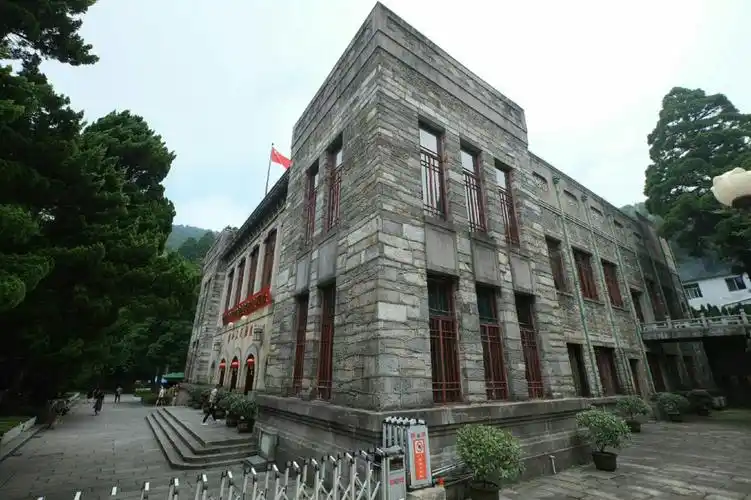 The building's origins lie in the Republican era, when Kuling served as China's premier summer retreat—often compared to India's British hill stations such as Shimla or to European spa towns like Baden-Baden. Completed in 1937 amid gathering war clouds, the auditorium hosted Chiang Kai-shek's wartime briefings before passing into new hands after 1949. The three conferences held here between 1959 and 1970 each marked watershed moments: the 1959 Eighth Plenum triggered a sharp ideological turn during the Great Leap Forward famine; the 1961 Work Conference initiated pragmatic economic readjustment; and the 1970 Second Plenum saw the final political eclipse of defense minister Lin Biao. For Western visitors familiar with the Yalta Conference or postwar European party congresses, these chambers offer an analogous window into 20th-century authoritarian decision-making.
Architecturally, the hall presents a fascinating hybrid that echoes the eclectic modernism popular in late-1930s civic buildings from Berlin to Shanghai. Its T-shaped plan stretches nearly 40 meters across, crowned by Chinese-style blue-glazed tile eaves draped over a Western modernist frame—a visual dialogue reminiscent of the Sino-Russian wedding cake towers of 1950s Beijing. Inside, rattan chairs and long tables remain exactly as they were arranged for the leadership, while a solitary statue of Mao Zedong presides over the silent rostrum, lending the space an almost cathedral-like gravity.
Culturally, the site functions as a pilgrimage destination for Party history enthusiasts and a sobering lesson in modern political history for international visitors. Two looped documentaries, "Mists of Lushan" and "Glimpses of History," contextualize the meetings through archival footage, while the adjacent Meilu Villa—former residence of both Chiang and Mao—completes a narrative arc from "where decisions were made" to "how leaders lived." Pairing the two venues provides a fuller portrait of power than either alone.
Practical access is straightforward: the site is included in the main Lushan scenic area pass, with no separate ticket required. The hall opens daily from 8:00 to 17:30, with last admission at 17:00; allow 45 to 60 minutes for a meaningful visit. English-speaking guides are available for hire at the entrance, and audio guides in multiple languages are strongly recommended—without context, the seating arrangements and slogans carry little meaning to foreign visitors.
To make the most of the experience, consider a morning visit followed by the 15-to-20-minute stroll down to Meilu Villa, where you can compare the sterile grandeur of the conference hall against the more intimate domestic spaces of the leadership. Comfortable, slip-resistant shoes are essential, as the mountain paths are steep and often damp; a light jacket is wise even in summer, since Guling's 1,000-meter elevation keeps temperatures noticeably cooler than the valleys below. Photography is prohibited in core interior areas—please observe posted signs and maintain a respectful silence befitting the venue's solemnity.
The building's origins lie in the Republican era, when Kuling served as China's premier summer retreat—often compared to India's British hill stations such as Shimla or to European spa towns like Baden-Baden. Completed in 1937 amid gathering war clouds, the auditorium hosted Chiang Kai-shek's wartime briefings before passing into new hands after 1949. The three conferences held here between 1959 and 1970 each marked watershed moments: the 1959 Eighth Plenum triggered a sharp ideological turn during the Great Leap Forward famine; the 1961 Work Conference initiated pragmatic economic readjustment; and the 1970 Second Plenum saw the final political eclipse of defense minister Lin Biao. For Western visitors familiar with the Yalta Conference or postwar European party congresses, these chambers offer an analogous window into 20th-century authoritarian decision-making.
Architecturally, the hall presents a fascinating hybrid that echoes the eclectic modernism popular in late-1930s civic buildings from Berlin to Shanghai. Its T-shaped plan stretches nearly 40 meters across, crowned by Chinese-style blue-glazed tile eaves draped over a Western modernist frame—a visual dialogue reminiscent of the Sino-Russian wedding cake towers of 1950s Beijing. Inside, rattan chairs and long tables remain exactly as they were arranged for the leadership, while a solitary statue of Mao Zedong presides over the silent rostrum, lending the space an almost cathedral-like gravity.
Culturally, the site functions as a pilgrimage destination for Party history enthusiasts and a sobering lesson in modern political history for international visitors. Two looped documentaries, "Mists of Lushan" and "Glimpses of History," contextualize the meetings through archival footage, while the adjacent Meilu Villa—former residence of both Chiang and Mao—completes a narrative arc from "where decisions were made" to "how leaders lived." Pairing the two venues provides a fuller portrait of power than either alone.
Practical access is straightforward: the site is included in the main Lushan scenic area pass, with no separate ticket required. The hall opens daily from 8:00 to 17:30, with last admission at 17:00; allow 45 to 60 minutes for a meaningful visit. English-speaking guides are available for hire at the entrance, and audio guides in multiple languages are strongly recommended—without context, the seating arrangements and slogans carry little meaning to foreign visitors.
To make the most of the experience, consider a morning visit followed by the 15-to-20-minute stroll down to Meilu Villa, where you can compare the sterile grandeur of the conference hall against the more intimate domestic spaces of the leadership. Comfortable, slip-resistant shoes are essential, as the mountain paths are steep and often damp; a light jacket is wise even in summer, since Guling's 1,000-meter elevation keeps temperatures noticeably cooler than the valleys below. Photography is prohibited in core interior areas—please observe posted signs and maintain a respectful silence befitting the venue's solemnity.