Binjiang Park
⭐ 3.60
North Section, Xiangshan Street, Fuyuan City, Shuangyangsban City, Heilongjiang Province, China
 **Geography and Setting**
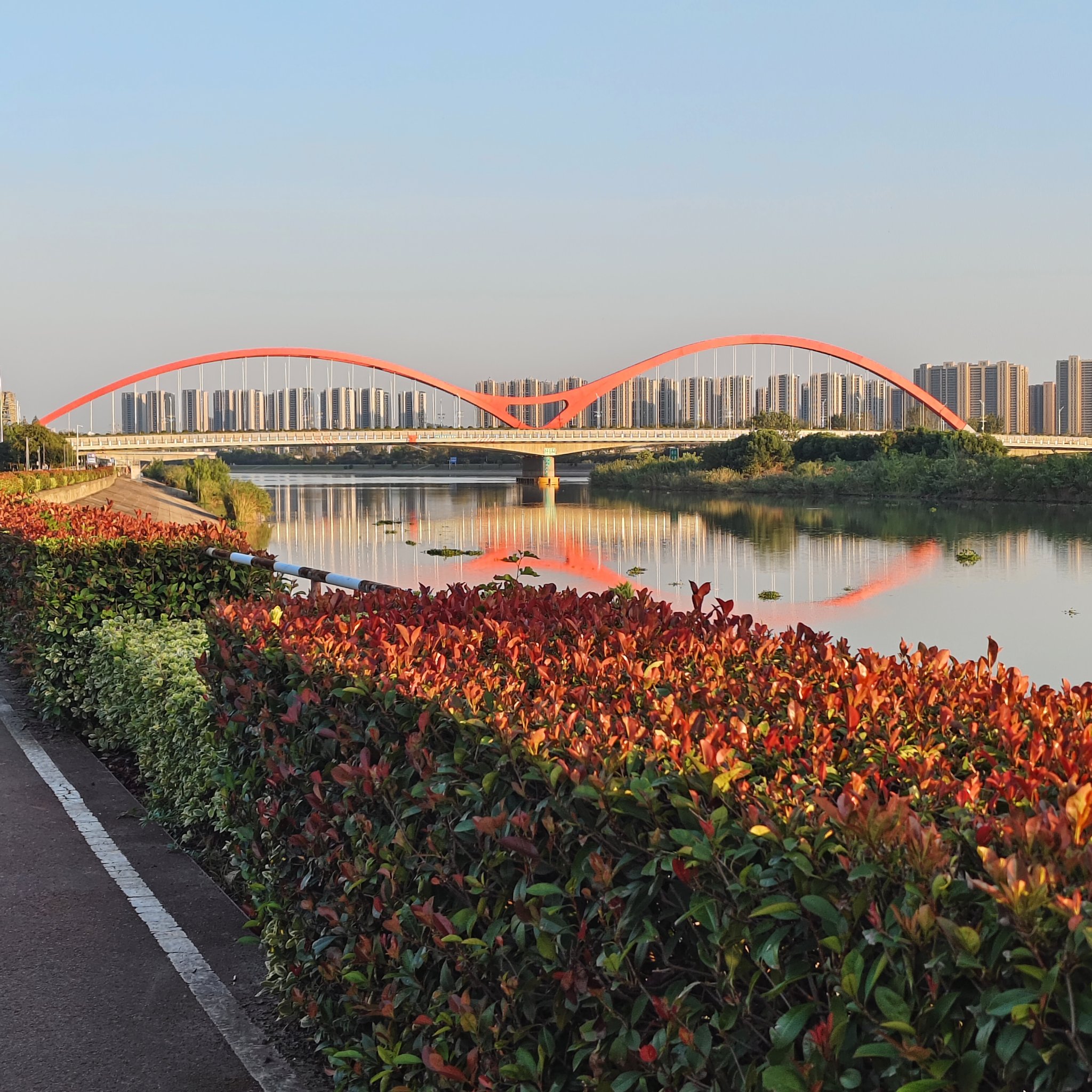
Binjiang Park runs as a slender ribbon of greenery between Binjiang Road and the Yangtze dike in Jiujiang's Xunyang District, just north of the massive Jiujiang Yangtze River Bridge. Think of it as a Chinese counterpart to Budapest's riverfront promenades or the Rhine walkways of Cologne—broad, level paths edged with mature shade trees, where the only soundtrack is the breeze off one of the world's longest rivers. Wooden boardwalks and paved trails make the entire stretch easily walkable or bikeable.
**History and Cultural Context**
The park occupies the heart of ancient Jiangzhou, a river port that has welcomed travelers and poets for over a thousand years. The Tang dynasty poet Bai Juyi immortalized a moonlit farewell here in his masterpiece "Pipa Xing," while the nearby Xunyang Tower earned literary fame through its appearance in the classic novel "Water Margin." This same riverside hosted merchant fleets bound for the Mediterranean via the Silk Road's maritime extension—linking Jiujiang historically to Venice and Alexandria as a trading nexus.
**Architecture and Design**
The park embraces a deliberately minimalist aesthetic: continuous greenways, scattered lawn pockets, and river-view platforms punctuated by law-themed stone reliefs and sculptural installations. Like a modern Berlin Tiergarten reforged for public art, the landscape lets the river remain the true protagonist. At night, subtle uplighting transforms the dike path, and reflections of the illuminated Suojiang Tower across the water create a quietly cinematic scene.
**Cultural Significance**
A modern sculpture trail themed around rule-of-law values threads through the greenery, giving the park an identity beyond pure recreation. More importantly, it serves as a connective tissue linking Xunyang Tower, Pipa Pavilion, and Suojiang Tower—ancient watchtowers that once guarded this strategic Yangtze crossing. Together they form an open-air museum of Chinese literary and military heritage comparable in density to Florence's historic center.
**Practical Visitor Information**
Entry is free and unrestricted around the clock, year-round. The best times to visit are early morning (7–9 AM) or after 5 PM, when soft golden light bathes the river. Bring your own water and snacks—vending machines are the only on-site refreshment option, and mosquitoes can be aggressive in summer. Buses 9, 23, and 29 stop at Suojiang Tower or Xunyang Tower stations; taxis start around 10 yuan, and shared e-bikes make short hops easy.
**Why Visit**
Binjiang Park offers something rare in modern China: an unhurried, car-free riverside experience where you can wander beneath ancient city walls, photograph a Yangtze sunset, and step directly into the landscapes immortalized by Tang-dynasty poetry—all within a single leisurely afternoon.
**Geography and Setting**
Binjiang Park runs as a slender ribbon of greenery between Binjiang Road and the Yangtze dike in Jiujiang's Xunyang District, just north of the massive Jiujiang Yangtze River Bridge. Think of it as a Chinese counterpart to Budapest's riverfront promenades or the Rhine walkways of Cologne—broad, level paths edged with mature shade trees, where the only soundtrack is the breeze off one of the world's longest rivers. Wooden boardwalks and paved trails make the entire stretch easily walkable or bikeable.
**History and Cultural Context**
The park occupies the heart of ancient Jiangzhou, a river port that has welcomed travelers and poets for over a thousand years. The Tang dynasty poet Bai Juyi immortalized a moonlit farewell here in his masterpiece "Pipa Xing," while the nearby Xunyang Tower earned literary fame through its appearance in the classic novel "Water Margin." This same riverside hosted merchant fleets bound for the Mediterranean via the Silk Road's maritime extension—linking Jiujiang historically to Venice and Alexandria as a trading nexus.
**Architecture and Design**
The park embraces a deliberately minimalist aesthetic: continuous greenways, scattered lawn pockets, and river-view platforms punctuated by law-themed stone reliefs and sculptural installations. Like a modern Berlin Tiergarten reforged for public art, the landscape lets the river remain the true protagonist. At night, subtle uplighting transforms the dike path, and reflections of the illuminated Suojiang Tower across the water create a quietly cinematic scene.
**Cultural Significance**
A modern sculpture trail themed around rule-of-law values threads through the greenery, giving the park an identity beyond pure recreation. More importantly, it serves as a connective tissue linking Xunyang Tower, Pipa Pavilion, and Suojiang Tower—ancient watchtowers that once guarded this strategic Yangtze crossing. Together they form an open-air museum of Chinese literary and military heritage comparable in density to Florence's historic center.
**Practical Visitor Information**
Entry is free and unrestricted around the clock, year-round. The best times to visit are early morning (7–9 AM) or after 5 PM, when soft golden light bathes the river. Bring your own water and snacks—vending machines are the only on-site refreshment option, and mosquitoes can be aggressive in summer. Buses 9, 23, and 29 stop at Suojiang Tower or Xunyang Tower stations; taxis start around 10 yuan, and shared e-bikes make short hops easy.
**Why Visit**
Binjiang Park offers something rare in modern China: an unhurried, car-free riverside experience where you can wander beneath ancient city walls, photograph a Yangtze sunset, and step directly into the landscapes immortalized by Tang-dynasty poetry—all within a single leisurely afternoon.