Yellow River Grand Canyon
⭐ 4.20
Wuzhong City, Ningxia Hui Autonomous Region, China
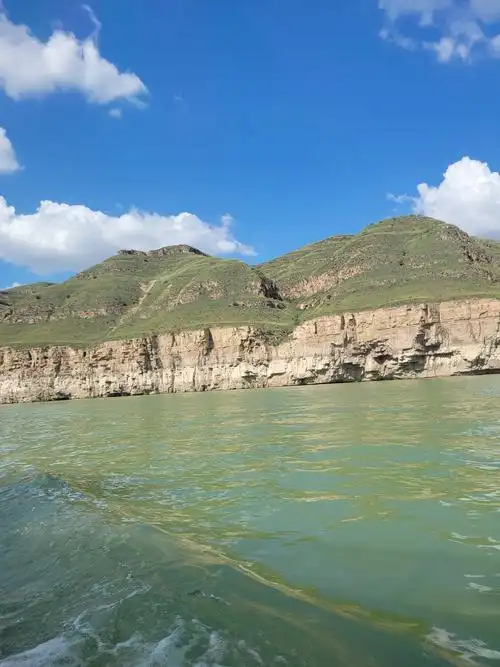 Qingtongxia Canyon carves a narrow passage between the Helan and Niushou Mountains, where the Yellow River has sliced through bedrock for millennia to enter the Ningxia Plain. Long a strategic chokepoint controlling movement between the northern steppes and the Central Plains, the gorge served as a vital military and trade corridor; in scale and dramatic limestone walls, it echoes the Rhine Gorge or the steep defiles of the Danube. The cliffs themselves take on a distinctive bronze patina, giving the site its old name and lending the landscape an almost mythic quality.
The 108 Pagodas, arrayed in a striking twelve-row triangular formation climbing the western slope, constitute one of the largest and best-preserved Buddhist pagoda clusters in China. Erected during the Western Xia dynasty (roughly contemporary with the Norman conquests of England and the rise of the Song empire), the towers demonstrate a fusion of Buddhist cosmology and indigenous Tangut artistic traditions—comparable to how Mont Saint-Michel blends spiritual symbolism with local craftsmanship. Designated a national key cultural relic, the site offers rare insight into a lost civilization that dominated this region for nearly two centuries.
A leisurely boat cruise remains the most evocative way to absorb the canyon. Over roughly an hour, vessels glide past the Sleeping Buddha Mountain and the so-called "Heavenly Book Pavilion," fantastical rock formations rising from ochre cliffs above jade-green water. Locals proudly call the gorge the "Little Three Gorges of the Yellow River," a confident nod to the famous Yangtze equivalent, and photographers flock here for the interplay of mirrored water and sculpted stone.
The Qingtongxia Hydroelectric Station, completed in the late 1960s, is celebrated as the "Pearl of the Frontier" and represents a landmark achievement in Chinese river engineering. Its companion Water Conservancy Museum traces millennia of Yellow River irrigation—from ancient canals to modern turbines—while the nearby Dayu Cultural Park, built in Han-dynasty architectural style, honors the legendary flood-tamer Yu the Great in a setting reminiscent of reconstructed bastles and imperial parks. Together, these sites form an open-air textbook on humanity's enduring struggle with one of the world's most unpredictable rivers.
Admission is a modest 40 yuan per person, with gates open from 8:00 until 18:30 (extended during peak summer through August). The canyon sits roughly 74 kilometers by car from Yinchong, or visitors can reach it via Bus 29 from Wuzhong. Allow half a day minimum, ideally a full day, prioritizing the boat tour and the pagoda complex over the museum if time is tight. Strong winds funnel through the gorge year-round, so pack a windproof jacket and sun protection; confirm boat departure times in advance, as schedules shift with the season.
Qingtongxia Canyon carves a narrow passage between the Helan and Niushou Mountains, where the Yellow River has sliced through bedrock for millennia to enter the Ningxia Plain. Long a strategic chokepoint controlling movement between the northern steppes and the Central Plains, the gorge served as a vital military and trade corridor; in scale and dramatic limestone walls, it echoes the Rhine Gorge or the steep defiles of the Danube. The cliffs themselves take on a distinctive bronze patina, giving the site its old name and lending the landscape an almost mythic quality.
The 108 Pagodas, arrayed in a striking twelve-row triangular formation climbing the western slope, constitute one of the largest and best-preserved Buddhist pagoda clusters in China. Erected during the Western Xia dynasty (roughly contemporary with the Norman conquests of England and the rise of the Song empire), the towers demonstrate a fusion of Buddhist cosmology and indigenous Tangut artistic traditions—comparable to how Mont Saint-Michel blends spiritual symbolism with local craftsmanship. Designated a national key cultural relic, the site offers rare insight into a lost civilization that dominated this region for nearly two centuries.
A leisurely boat cruise remains the most evocative way to absorb the canyon. Over roughly an hour, vessels glide past the Sleeping Buddha Mountain and the so-called "Heavenly Book Pavilion," fantastical rock formations rising from ochre cliffs above jade-green water. Locals proudly call the gorge the "Little Three Gorges of the Yellow River," a confident nod to the famous Yangtze equivalent, and photographers flock here for the interplay of mirrored water and sculpted stone.
The Qingtongxia Hydroelectric Station, completed in the late 1960s, is celebrated as the "Pearl of the Frontier" and represents a landmark achievement in Chinese river engineering. Its companion Water Conservancy Museum traces millennia of Yellow River irrigation—from ancient canals to modern turbines—while the nearby Dayu Cultural Park, built in Han-dynasty architectural style, honors the legendary flood-tamer Yu the Great in a setting reminiscent of reconstructed bastles and imperial parks. Together, these sites form an open-air textbook on humanity's enduring struggle with one of the world's most unpredictable rivers.
Admission is a modest 40 yuan per person, with gates open from 8:00 until 18:30 (extended during peak summer through August). The canyon sits roughly 74 kilometers by car from Yinchong, or visitors can reach it via Bus 29 from Wuzhong. Allow half a day minimum, ideally a full day, prioritizing the boat tour and the pagoda complex over the museum if time is tight. Strong winds funnel through the gorge year-round, so pack a windproof jacket and sun protection; confirm boat departure times in advance, as schedules shift with the season.