Hancheng Ancient City Wall
⭐ 4.20
Hancheng Ancient City Wall, Hancheng, Weinan, Shaanxi Province, China
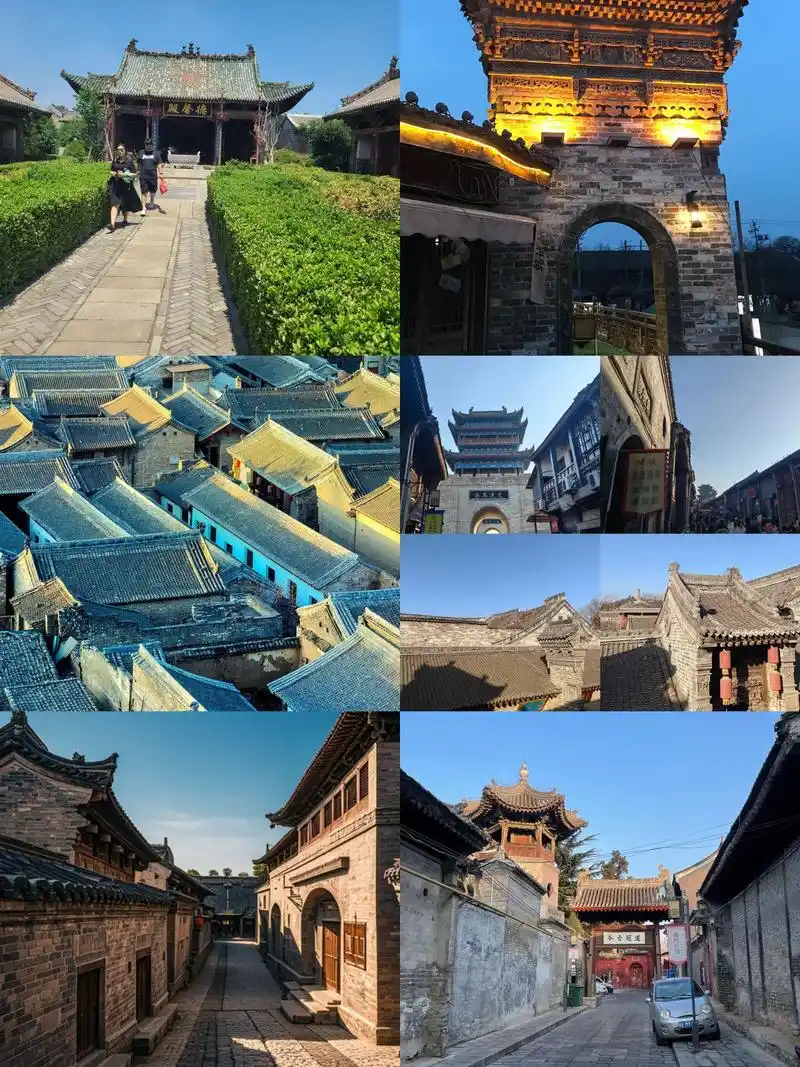 Hancheng's walls trace their origins to the Sui and Tang dynasties, though most surviving masonry dates from Ming-era renovations (roughly 1368–1644), making them contemporaries of Europe's late medieval fortifications like those of Carcassonne or Tallinn's UNESCO-listed ramparts. Unlike those European citadels, however, Hancheng's defenses were never preserved as a museum piece but remained embedded in a living townscape, similar in spirit to how sections of York's Roman walls still punctuate an active English city. The South Gate and western stretches retain impressive authenticity, while some northern towers are modern reconstructions—worth knowing when interpreting what you see.
Standing between 6 and 8 meters tall, the walls feel deliberately understated, trading spectacle for intimacy. Where Xi'an's perfectly restored ramparts form a continuous 12-meter-high rectangle best appreciated from afar, Hancheng's brickwork presses close against alleyways and modest homes, creating the textured, layered character of an organic medieval town. Some sections remain walkable, inviting visitors to climb up and gaze outward exactly as Ming-era sentries once did—an experience increasingly rare in China.
Beyond their defensive function, these walls form the spiritual backbone of Hancheng's historic quarter, linking the Confucian Temple, City God Temple, Dongying Temple, and Jiulang Temple into a coherent Ming-Qing urban ensemble. The city proudly claims the birthplace of Sima Qian, the Han dynasty's greatest historian, lending the surrounding lanes a palpable literary gravity. As one of Guanzhong's finest surviving living heritage districts, it offers a counterpoint to the more polished tourist towns of Pingyao or Lijiang.
Entry is free for the walls and old town. Located at Xuexiang 45 in Hancheng city (Weinan, Shaanxi Province), the site is roughly a two-hour drive from Xi'an, or accessible via high-speed rail to Hancheng Station followed by a ten-minute taxi ride. A combined ticket for the "Three Temples" runs about 50 RMB. The city itself stays open around the clock, though interior halls typically operate 8:00–18:00.
Aim to arrive after 4:00 PM, when the slanting sun warms the gray bricks into glowing amber—the single most photogenic window. A clockwise walk along East Street toward the South Gate is the highest-yield route for striking images. Skip the midday heat, and note that October through November brings strong winds that can leave recently repaired sections looking unusually exposed. For genuine local snacks, duck into the narrow side alleys; the main street tends toward inflated tourist pricing.
What ultimately distinguishes Hancheng is its refusal to freeze in time. Children play beside crumbling parapets, grandmothers dry peppers on stones older than most American cities, and commuters pass through gates that witnessed six centuries of Silk Road-adjacent history. For travelers seeking a measured, contemplative encounter with the real Guanzhong—away from performance and crowds—this living walled town delivers an unhurried reward that the grander Xi'an walls, for all their majesty, simply cannot match.
Hancheng's walls trace their origins to the Sui and Tang dynasties, though most surviving masonry dates from Ming-era renovations (roughly 1368–1644), making them contemporaries of Europe's late medieval fortifications like those of Carcassonne or Tallinn's UNESCO-listed ramparts. Unlike those European citadels, however, Hancheng's defenses were never preserved as a museum piece but remained embedded in a living townscape, similar in spirit to how sections of York's Roman walls still punctuate an active English city. The South Gate and western stretches retain impressive authenticity, while some northern towers are modern reconstructions—worth knowing when interpreting what you see.
Standing between 6 and 8 meters tall, the walls feel deliberately understated, trading spectacle for intimacy. Where Xi'an's perfectly restored ramparts form a continuous 12-meter-high rectangle best appreciated from afar, Hancheng's brickwork presses close against alleyways and modest homes, creating the textured, layered character of an organic medieval town. Some sections remain walkable, inviting visitors to climb up and gaze outward exactly as Ming-era sentries once did—an experience increasingly rare in China.
Beyond their defensive function, these walls form the spiritual backbone of Hancheng's historic quarter, linking the Confucian Temple, City God Temple, Dongying Temple, and Jiulang Temple into a coherent Ming-Qing urban ensemble. The city proudly claims the birthplace of Sima Qian, the Han dynasty's greatest historian, lending the surrounding lanes a palpable literary gravity. As one of Guanzhong's finest surviving living heritage districts, it offers a counterpoint to the more polished tourist towns of Pingyao or Lijiang.
Entry is free for the walls and old town. Located at Xuexiang 45 in Hancheng city (Weinan, Shaanxi Province), the site is roughly a two-hour drive from Xi'an, or accessible via high-speed rail to Hancheng Station followed by a ten-minute taxi ride. A combined ticket for the "Three Temples" runs about 50 RMB. The city itself stays open around the clock, though interior halls typically operate 8:00–18:00.
Aim to arrive after 4:00 PM, when the slanting sun warms the gray bricks into glowing amber—the single most photogenic window. A clockwise walk along East Street toward the South Gate is the highest-yield route for striking images. Skip the midday heat, and note that October through November brings strong winds that can leave recently repaired sections looking unusually exposed. For genuine local snacks, duck into the narrow side alleys; the main street tends toward inflated tourist pricing.
What ultimately distinguishes Hancheng is its refusal to freeze in time. Children play beside crumbling parapets, grandmothers dry peppers on stones older than most American cities, and commuters pass through gates that witnessed six centuries of Silk Road-adjacent history. For travelers seeking a measured, contemplative encounter with the real Guanzhong—away from performance and crowds—this living walled town delivers an unhurried reward that the grander Xi'an walls, for all their majesty, simply cannot match.