Chengcheng City God Temple
⭐ 3.00
Shuangqiao District, Chengde City, Hebei Province, China
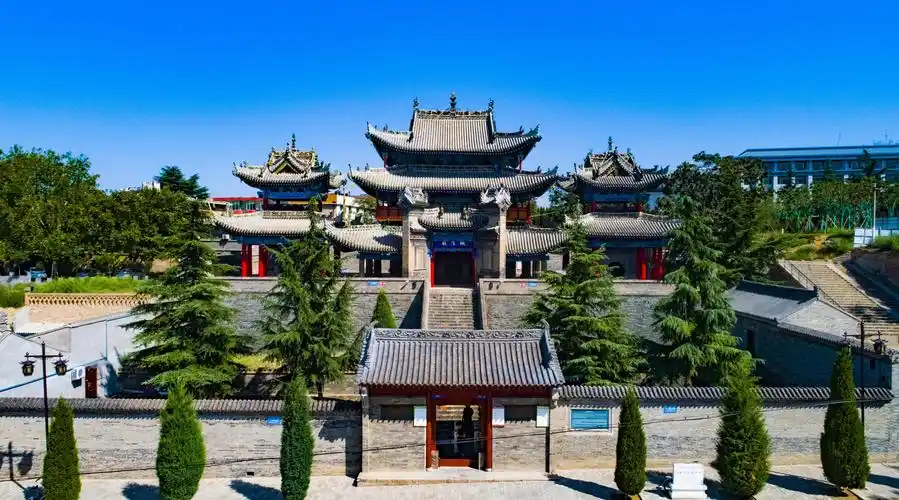 Built in 1772 by the Qianlong Emperor, the Chengde City God Temple stands as the most prestigious City God shrine in Qing dynasty China, far surpassing the modest temples typically found in provincial towns. Its construction was part of Qianlong's grand vision for Chengde as a summer capital and a showcase of multi-ethnic harmony, alongside the UNESCO-listed Summer Resort and the surrounding Eight Outer Temples—architectural cousins to the great imperial complexes of Versailles or Topkapi, yet distinctively Chinese. This temple offers rare insight into how the Manchu Qing rulers integrated Taoist worship into their broader strategy of governing a vast, culturally diverse empire.
The temple's layout follows the classic blueprint of an imperial Taoist palace, with structures aligned along a central axis: the mountain gate, theater stage, worship hall, and main hall. Visitors will admire the sweeping upturned eaves, intricate dougong bracket sets, and vividly painted beams—details that echo the Forbidden City's grandeur while embodying the mystical solemnity of Daoist sacred space. The craftsmanship reflects the height of Qing royal architectural artistry, making the complex a valuable study in traditional Chinese building techniques and ceremonial spatial design.
The temple's crown jewel is its remarkable assembly of sixty Yuanchen deities—celestial guardians linked to the Chinese zodiac and the stars. Each statue displays unique expression and pose, making this one of the very few complete Yuanchen collections preserved anywhere in China. For travelers familiar with European cathedrals' patron saint sculptures or Greek mythology's pantheon, this ensemble offers a fascinating parallel: a vivid sculptural universe where cosmic order, fate, and folk belief intersect. The collection holds deep significance for scholars of religious art and folk traditions alike.
Among the temple's most cherished treasures are Emperor Qianlong's own calligraphy on plaques and couplets, plus a series of imperial steles, including the "Eight-Verse Preface on the Founding of the Rehe City God Temple." These inscriptions are invaluable primary sources documenting Qing court rituals and the symbolic role of City God worship in maintaining cosmic and social order. Art and history enthusiasts will find these artifacts as revealing as any imperial decree housed in the Palace Museum in Beijing.
A visit to the temple rewards those with curiosity about Chinese spirituality, imperial history, and traditional architecture. Before exploring, consider reading briefly about Taoist City God beliefs and Qing sacrificial rites to fully appreciate the statuary and inscriptions. The site sits in Shuangqiao District along the lively West Street, easily combined with a day touring the Summer Resort and other Outer Temples. Plan for a relaxed morning or afternoon visit, and remember that Chengde's mountain climate can be cooler than expected—comfortable walking shoes and a light jacket are recommended.
Built in 1772 by the Qianlong Emperor, the Chengde City God Temple stands as the most prestigious City God shrine in Qing dynasty China, far surpassing the modest temples typically found in provincial towns. Its construction was part of Qianlong's grand vision for Chengde as a summer capital and a showcase of multi-ethnic harmony, alongside the UNESCO-listed Summer Resort and the surrounding Eight Outer Temples—architectural cousins to the great imperial complexes of Versailles or Topkapi, yet distinctively Chinese. This temple offers rare insight into how the Manchu Qing rulers integrated Taoist worship into their broader strategy of governing a vast, culturally diverse empire.
The temple's layout follows the classic blueprint of an imperial Taoist palace, with structures aligned along a central axis: the mountain gate, theater stage, worship hall, and main hall. Visitors will admire the sweeping upturned eaves, intricate dougong bracket sets, and vividly painted beams—details that echo the Forbidden City's grandeur while embodying the mystical solemnity of Daoist sacred space. The craftsmanship reflects the height of Qing royal architectural artistry, making the complex a valuable study in traditional Chinese building techniques and ceremonial spatial design.
The temple's crown jewel is its remarkable assembly of sixty Yuanchen deities—celestial guardians linked to the Chinese zodiac and the stars. Each statue displays unique expression and pose, making this one of the very few complete Yuanchen collections preserved anywhere in China. For travelers familiar with European cathedrals' patron saint sculptures or Greek mythology's pantheon, this ensemble offers a fascinating parallel: a vivid sculptural universe where cosmic order, fate, and folk belief intersect. The collection holds deep significance for scholars of religious art and folk traditions alike.
Among the temple's most cherished treasures are Emperor Qianlong's own calligraphy on plaques and couplets, plus a series of imperial steles, including the "Eight-Verse Preface on the Founding of the Rehe City God Temple." These inscriptions are invaluable primary sources documenting Qing court rituals and the symbolic role of City God worship in maintaining cosmic and social order. Art and history enthusiasts will find these artifacts as revealing as any imperial decree housed in the Palace Museum in Beijing.
A visit to the temple rewards those with curiosity about Chinese spirituality, imperial history, and traditional architecture. Before exploring, consider reading briefly about Taoist City God beliefs and Qing sacrificial rites to fully appreciate the statuary and inscriptions. The site sits in Shuangqiao District along the lively West Street, easily combined with a day touring the Summer Resort and other Outer Temples. Plan for a relaxed morning or afternoon visit, and remember that Chengde's mountain climate can be cooler than expected—comfortable walking shoes and a light jacket are recommended.