Pucheng Tail Mausoleum
⭐ 2.80
Tail Mausoleum, Pucheng County, Weinan City, Shaanxi Province, China
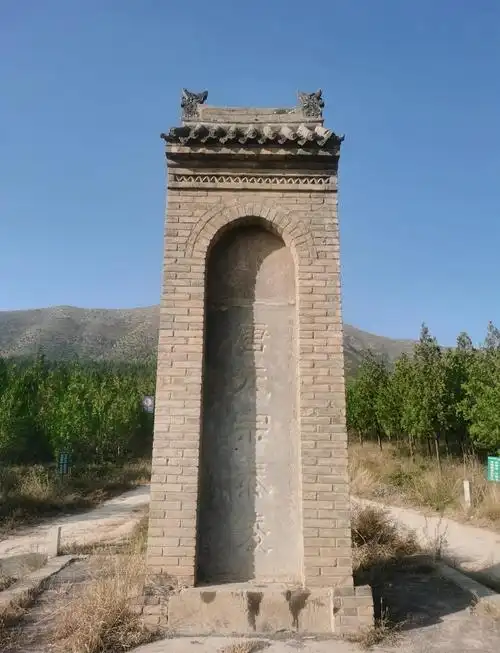 Tailing was constructed in the 740s for Emperor Xuanzong (Li Longji), who reigned from 712 to 756, an era contemporaries compared to the glory days of Rome under Augustus. Xuanzong presided over the Kaiyuan-Tianbao prosperity, a period when Tang China was arguably the most powerful and cosmopolitan civilization on earth, producing porcelain finer than anything in Europe, banking instruments centuries ahead of their time, and a poetry culture rivaling the Italian Renaissance. His reign ended tragically with the An Lushan Rebellion, an upheaval so devastating that some historians liken it to the fall of Rome. It is poignant to wander the tomb of an emperor whose twilight years were so shadowed by loss, yet whose memorial radiates the grandeur of his prime.
The mausoleum follows the "mountain-as-tomb" tradition favored by earlier Tang rulers, but Tailing is the last and arguably the most refined example. The complex was carefully modeled on the imperial city of Chang'an, the world's largest metropolis of the eighth century, larger than contemporary Constantinople or Baghdad, and home to nearly a million residents including Sogdian merchants, Persian monks, and Japanese students. Visitors approach through the southern Vermilion Bird Gate, then proceed along a Spirit Way extending several kilometers, mirroring the processional avenues of pharaonic Egypt at Luxor or the sacred way at Persepolis, though animated by distinctly Tang artistic sensibilities.
Thirty-four pairs of stone sculptures line the Spirit Way, each carved with extraordinary naturalism: muscular winged horses recalling the Pegasus of Greek myth, dignified civil officials whose individualized faces suggest portraiture rather than idealization, and stern warriors that anticipate the equestrian monuments of Renaissance Italy. The realistic drapery, anatomical precision, and dynamic poses mark these carvings as the high-water mark of Tang stonecutting, a tradition that would later influence Japanese Nara-period sculpture and, indirectly, Korean and Southeast Asian funerary art.
Beyond the main tomb, a modest satellite burial belongs to Gao Lishi, the powerful eunuch who served Xuanzong faithfully for half a century. His honored burial beside the emperor speaks to the intimate, complicated bond between ruler and servant, a relationship echoed in stories of Byzantine courtiers or English Tudor favorites. This human dimension adds depth to what might otherwise be a purely architectural experience, reminding visitors that great monuments are also intimate memorials to individual lives.
Practical planning is essential, as Tailing receives almost no tourist infrastructure. The site sits roughly 2.5 hours by car or hired vehicle from Xi'an, and there are no tickets, toilets, restaurants, or English signage on site. Visitors should bring water, sun protection, translation apps, and arrange a licensed Chinese-speaking guide in advance through a reputable agency; without interpretation, the deeper historical layers of the sculptures and layout remain inaccessible. Allow three to four hours for a thorough exploration, including the walk to Gao Lishi's tomb and, for the energetic, a climb up Jinsu Mountain for sweeping views over the entire necropolis.
For travelers with extra time, Tailing pairs beautifully with the nearby Qiaoling Mausoleum, which boasts even more spectacular stone carvings, or with a return to Xi'an for the Shaanxi History Museum's unrivaled Tang dynasty collections. The juxtaposition brings the High Tang vividly to life: from the abstract museum cases to the sun-baked mountainside where emperors still rest, surrounded by stone companions standing watch across twelve centuries.
Tailing was constructed in the 740s for Emperor Xuanzong (Li Longji), who reigned from 712 to 756, an era contemporaries compared to the glory days of Rome under Augustus. Xuanzong presided over the Kaiyuan-Tianbao prosperity, a period when Tang China was arguably the most powerful and cosmopolitan civilization on earth, producing porcelain finer than anything in Europe, banking instruments centuries ahead of their time, and a poetry culture rivaling the Italian Renaissance. His reign ended tragically with the An Lushan Rebellion, an upheaval so devastating that some historians liken it to the fall of Rome. It is poignant to wander the tomb of an emperor whose twilight years were so shadowed by loss, yet whose memorial radiates the grandeur of his prime.
The mausoleum follows the "mountain-as-tomb" tradition favored by earlier Tang rulers, but Tailing is the last and arguably the most refined example. The complex was carefully modeled on the imperial city of Chang'an, the world's largest metropolis of the eighth century, larger than contemporary Constantinople or Baghdad, and home to nearly a million residents including Sogdian merchants, Persian monks, and Japanese students. Visitors approach through the southern Vermilion Bird Gate, then proceed along a Spirit Way extending several kilometers, mirroring the processional avenues of pharaonic Egypt at Luxor or the sacred way at Persepolis, though animated by distinctly Tang artistic sensibilities.
Thirty-four pairs of stone sculptures line the Spirit Way, each carved with extraordinary naturalism: muscular winged horses recalling the Pegasus of Greek myth, dignified civil officials whose individualized faces suggest portraiture rather than idealization, and stern warriors that anticipate the equestrian monuments of Renaissance Italy. The realistic drapery, anatomical precision, and dynamic poses mark these carvings as the high-water mark of Tang stonecutting, a tradition that would later influence Japanese Nara-period sculpture and, indirectly, Korean and Southeast Asian funerary art.
Beyond the main tomb, a modest satellite burial belongs to Gao Lishi, the powerful eunuch who served Xuanzong faithfully for half a century. His honored burial beside the emperor speaks to the intimate, complicated bond between ruler and servant, a relationship echoed in stories of Byzantine courtiers or English Tudor favorites. This human dimension adds depth to what might otherwise be a purely architectural experience, reminding visitors that great monuments are also intimate memorials to individual lives.
Practical planning is essential, as Tailing receives almost no tourist infrastructure. The site sits roughly 2.5 hours by car or hired vehicle from Xi'an, and there are no tickets, toilets, restaurants, or English signage on site. Visitors should bring water, sun protection, translation apps, and arrange a licensed Chinese-speaking guide in advance through a reputable agency; without interpretation, the deeper historical layers of the sculptures and layout remain inaccessible. Allow three to four hours for a thorough exploration, including the walk to Gao Lishi's tomb and, for the energetic, a climb up Jinsu Mountain for sweeping views over the entire necropolis.
For travelers with extra time, Tailing pairs beautifully with the nearby Qiaoling Mausoleum, which boasts even more spectacular stone carvings, or with a return to Xi'an for the Shaanxi History Museum's unrivaled Tang dynasty collections. The juxtaposition brings the High Tang vividly to life: from the abstract museum cases to the sun-baked mountainside where emperors still rest, surrounded by stone companions standing watch across twelve centuries.