Qiachuan Scenic Area
⭐ 4.20
Qiachuan Scenic Area, Linwei District, Weinan City, Shaanxi Province, China
 Qiachuan is one of the cradles of Chinese civilization, with a recorded history stretching back over 4,000 years. Legend holds that Emperor Ku, one of the mythical sage-kings, was buried here, and that the sage minister Yi Yin once farmed these lands before advising the founder of the Shang dynasty. Most famously, this watery realm inspired the very first poem in the Shijing (Book of Songs), China's earliest poetry collection compiled around 600 BCE—just a century after Homer's epics were taking shape. "Guan! Guan! cry the ospreys, on the river's isle," opens the canon of Chinese lyric verse, born amid these very reeds.
The landscape is dominated by some 25,000 acres of shimmering reed marshes—the largest along the Yellow River—interwoven with lotus ponds and meandering waterways, much like France's Camargue or Hungary's Hortobágy steppe wetlands. Seven natural hot springs bubble up through the marsh floor at a constant 29–31°C, creating the rare phenomenon of a geothermal wetland. In summer, the ten-mile lotus corridor blooms spectacularly, best explored by wooden boat at dawn when mist still clings to the water.
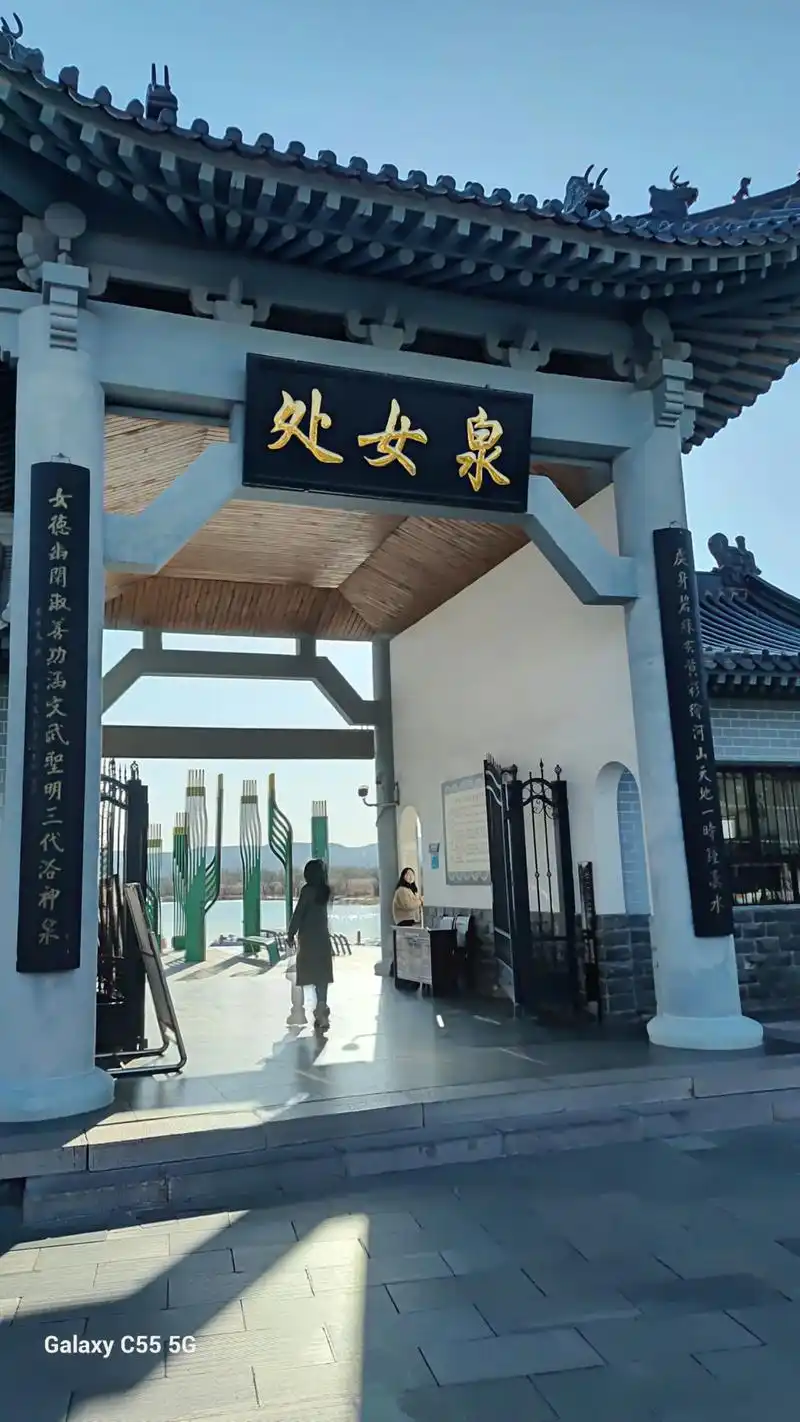
The Virgin Spring (Chunü Quan) is the park's signature experience and utterly unlike anything in Europe: the spring bottom consists of fine, shifting sand that swirls around bathers without ever letting them sink, producing a natural hydromassage. Mineral-rich and pleasantly warm, this "sand-wave bath" has been treasured for centuries and remains especially popular with families and wellness travelers seeking something authentically Chinese.
Birdwatchers will find Qiachuan on par with Europe's great sanctuaries such as the Wadden Sea. From November to April, the wetlands host thousands of migratory red-crowned cranes, whooper swans, and dozens of other species, while spring and summer bring nesting egrets and herons. Elevated boardwalks weave through the marshes, offering photographers intimate access to one of central China's most vital avian stopovers.
Crowning the park is Fushan—"Scorpion Mountain"—whose ridge resembles a giant arachnid. Its hilltop temple complex, dating to the Ming dynasty but continually restored, harmoniously blends Confucian, Buddhist, and Daoist halls in a manner reminiscent of Mount Wutai or other Chinese sacred peaks. The summit rewards visitors with commanding views of the Yellow River and the borders of Shaanxi and Shanxi provinces. Nearby, the discovery site of the Cao Quan Stele, a masterpiece of Han-dynasty calligraphy from 185 CE often ranked alongside the finest surviving Roman inscriptions for its artistic refinement, adds deep cultural resonance.
Practical information: Qiachuan lies about 20 km from Heyang town and roughly 2.5 hours by car from Xi'an. Separate tickets apply—about ¥55 for the Virgin Spring area and ¥30 for Fushan. Allow one to two full days; a suggested itinerary includes a morning sand bath and boat ride through the reed channels, followed by an afternoon climb up Fushan. Accommodation ranges from comfortable resort hotels within the park to charming village guesthouses in Qiachuan township, where local specialties like Heyang nine-eye lotus root and chewy xue noodles offer an authentic taste of rural Shaanxi.
Qiachuan is one of the cradles of Chinese civilization, with a recorded history stretching back over 4,000 years. Legend holds that Emperor Ku, one of the mythical sage-kings, was buried here, and that the sage minister Yi Yin once farmed these lands before advising the founder of the Shang dynasty. Most famously, this watery realm inspired the very first poem in the Shijing (Book of Songs), China's earliest poetry collection compiled around 600 BCE—just a century after Homer's epics were taking shape. "Guan! Guan! cry the ospreys, on the river's isle," opens the canon of Chinese lyric verse, born amid these very reeds.
The landscape is dominated by some 25,000 acres of shimmering reed marshes—the largest along the Yellow River—interwoven with lotus ponds and meandering waterways, much like France's Camargue or Hungary's Hortobágy steppe wetlands. Seven natural hot springs bubble up through the marsh floor at a constant 29–31°C, creating the rare phenomenon of a geothermal wetland. In summer, the ten-mile lotus corridor blooms spectacularly, best explored by wooden boat at dawn when mist still clings to the water.
The Virgin Spring (Chunü Quan) is the park's signature experience and utterly unlike anything in Europe: the spring bottom consists of fine, shifting sand that swirls around bathers without ever letting them sink, producing a natural hydromassage. Mineral-rich and pleasantly warm, this "sand-wave bath" has been treasured for centuries and remains especially popular with families and wellness travelers seeking something authentically Chinese.
Birdwatchers will find Qiachuan on par with Europe's great sanctuaries such as the Wadden Sea. From November to April, the wetlands host thousands of migratory red-crowned cranes, whooper swans, and dozens of other species, while spring and summer bring nesting egrets and herons. Elevated boardwalks weave through the marshes, offering photographers intimate access to one of central China's most vital avian stopovers.
Crowning the park is Fushan—"Scorpion Mountain"—whose ridge resembles a giant arachnid. Its hilltop temple complex, dating to the Ming dynasty but continually restored, harmoniously blends Confucian, Buddhist, and Daoist halls in a manner reminiscent of Mount Wutai or other Chinese sacred peaks. The summit rewards visitors with commanding views of the Yellow River and the borders of Shaanxi and Shanxi provinces. Nearby, the discovery site of the Cao Quan Stele, a masterpiece of Han-dynasty calligraphy from 185 CE often ranked alongside the finest surviving Roman inscriptions for its artistic refinement, adds deep cultural resonance.
Practical information: Qiachuan lies about 20 km from Heyang town and roughly 2.5 hours by car from Xi'an. Separate tickets apply—about ¥55 for the Virgin Spring area and ¥30 for Fushan. Allow one to two full days; a suggested itinerary includes a morning sand bath and boat ride through the reed channels, followed by an afternoon climb up Fushan. Accommodation ranges from comfortable resort hotels within the park to charming village guesthouses in Qiachuan township, where local specialties like Heyang nine-eye lotus root and chewy xue noodles offer an authentic taste of rural Shaanxi.