Tongguan Ancient City
⭐ 3.80
Gangkou Community, Qindong Town, Tongguan County, Shaanxi Province, China
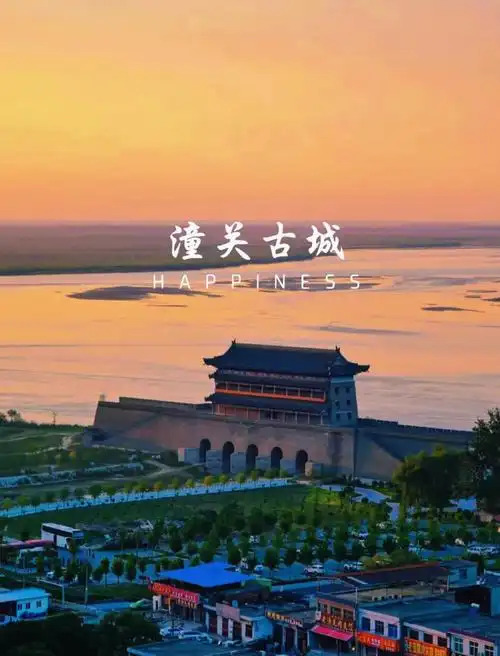 Constructed during the Eastern Han dynasty and repositioned in the Tang era, Tongguan Pass served as the critical eastern bulwark protecting Chang'an—one of antiquity's greatest capitals, rivaling Rome or Constantinople. Its position at the convergence of three rivers and three provinces made it a coveted military stronghold, immortalized in Tang poet Li Bai's verses. The pass witnessed pivotal moments in Chinese history, from dynastic transitions to warlord conflicts, earning its enduring reputation as "a place every general must contend for." Today's surviving earthen ramparts—built using Ming-era rammed-earth techniques reminiscent of medieval European fortifications—stand as tangible testimony to ancient Chinese defensive engineering.
The extant city walls, predominantly Ming dynasty rammed-earth constructions, rise along the eastern slopes in sweeping arcs that echo the defensive lines of European citadels like Carcassonne or Salzburg. Though weathered by centuries of wind and rain, the fortifications retain their formidable presence, with restoration efforts preserving original foundations while reconstructing select sections in traditional style. Ascending the gentle eastern incline rewards visitors with a commanding view of the Yellow River's great bend—a serpentine curve so iconic it rivals the Rhine Gorge in scenic drama. The interplay between restored pavilions and surviving ruins creates a poignant borderland atmosphere reminiscent of frontier poetry.
Tucked within the old city, Shuipo Lane represents the sole fully preserved Ming-Qing commercial street in Tongguan. Its distinctive V-shaped sloping alley, paved with centuries-worn bluestone, winds between grey-brick residences in traditional Guanzhong architectural style—comparable to the vernacular charm of Tuscany's hill towns or Bavaria's medieval lanes. At the lane's entrance, a venerable scholar tree planted during the Qianlong era spreads its gnarled branches like a living monument. Local specialties including crispy Tongguan rou jia mo (stuffed flatbread) and buckwheat noodles offer an authentic taste of Shaanxi's hearty cuisine, far removed from tourist clichés.
Perched on elevated terrain, the Tongguan Museum, also known as the Mountain-River Overview Tower, provides arguably the finest vantage point for witnessing three rivers merging into one—a spectacle reminiscent of Germany's Deutsches Eck at Koblenz. Inside, exhibits trace the evolution of pass defense through weaponry, customs documents, and Yellow River ferry artifacts, illuminating both military history and ancient canal commerce culture. The third-floor observation deck delivers the celebrated "one glance, three rivers; one step, three provinces" panorama—a sensation that has drawn poets and strategists alike for over two millennia. Sunset hours transform the riverscape into a tapestry of gold and crimson.
The scenic zone remains open around the clock at no charge, while the museum and indoor exhibits typically welcome visitors from 8:30 a.m. to 6:00 p.m. From Xi'an, the journey takes approximately 1.5 hours by car via the Lianyuo Expressway, or travelers may opt for high-speed rail to Weinan North Station followed by a short connecting transfer. Local dining emphasizes Shaanxi staples—particularly the celebrated Tongguan rou jia mo and duck slice soup—offering exceptional value for budget-conscious travelers. Spring and autumn provide the clearest atmospheric conditions, with evening light proving most rewarding for photography.
Tongguan offers a rare combination of accessibility and authenticity, delivering profound historical resonance without the crowds plaguing China's more famous UNESCO sites. A recommended clockwise circuit begins at the South Gate in early morning, ascending the walls before the heat intensifies, then proceeds to the museum for context. After a local lunch in Shuipo Lane, travelers linger over the riverscape before returning to the walls for sunset. Consider pairing this visit with Mount Hua—one of China's five sacred peaks, just an hour distant—or the Yellow River wetlands for a richer regional experience.
Constructed during the Eastern Han dynasty and repositioned in the Tang era, Tongguan Pass served as the critical eastern bulwark protecting Chang'an—one of antiquity's greatest capitals, rivaling Rome or Constantinople. Its position at the convergence of three rivers and three provinces made it a coveted military stronghold, immortalized in Tang poet Li Bai's verses. The pass witnessed pivotal moments in Chinese history, from dynastic transitions to warlord conflicts, earning its enduring reputation as "a place every general must contend for." Today's surviving earthen ramparts—built using Ming-era rammed-earth techniques reminiscent of medieval European fortifications—stand as tangible testimony to ancient Chinese defensive engineering.
The extant city walls, predominantly Ming dynasty rammed-earth constructions, rise along the eastern slopes in sweeping arcs that echo the defensive lines of European citadels like Carcassonne or Salzburg. Though weathered by centuries of wind and rain, the fortifications retain their formidable presence, with restoration efforts preserving original foundations while reconstructing select sections in traditional style. Ascending the gentle eastern incline rewards visitors with a commanding view of the Yellow River's great bend—a serpentine curve so iconic it rivals the Rhine Gorge in scenic drama. The interplay between restored pavilions and surviving ruins creates a poignant borderland atmosphere reminiscent of frontier poetry.
Tucked within the old city, Shuipo Lane represents the sole fully preserved Ming-Qing commercial street in Tongguan. Its distinctive V-shaped sloping alley, paved with centuries-worn bluestone, winds between grey-brick residences in traditional Guanzhong architectural style—comparable to the vernacular charm of Tuscany's hill towns or Bavaria's medieval lanes. At the lane's entrance, a venerable scholar tree planted during the Qianlong era spreads its gnarled branches like a living monument. Local specialties including crispy Tongguan rou jia mo (stuffed flatbread) and buckwheat noodles offer an authentic taste of Shaanxi's hearty cuisine, far removed from tourist clichés.
Perched on elevated terrain, the Tongguan Museum, also known as the Mountain-River Overview Tower, provides arguably the finest vantage point for witnessing three rivers merging into one—a spectacle reminiscent of Germany's Deutsches Eck at Koblenz. Inside, exhibits trace the evolution of pass defense through weaponry, customs documents, and Yellow River ferry artifacts, illuminating both military history and ancient canal commerce culture. The third-floor observation deck delivers the celebrated "one glance, three rivers; one step, three provinces" panorama—a sensation that has drawn poets and strategists alike for over two millennia. Sunset hours transform the riverscape into a tapestry of gold and crimson.
The scenic zone remains open around the clock at no charge, while the museum and indoor exhibits typically welcome visitors from 8:30 a.m. to 6:00 p.m. From Xi'an, the journey takes approximately 1.5 hours by car via the Lianyuo Expressway, or travelers may opt for high-speed rail to Weinan North Station followed by a short connecting transfer. Local dining emphasizes Shaanxi staples—particularly the celebrated Tongguan rou jia mo and duck slice soup—offering exceptional value for budget-conscious travelers. Spring and autumn provide the clearest atmospheric conditions, with evening light proving most rewarding for photography.
Tongguan offers a rare combination of accessibility and authenticity, delivering profound historical resonance without the crowds plaguing China's more famous UNESCO sites. A recommended clockwise circuit begins at the South Gate in early morning, ascending the walls before the heat intensifies, then proceeds to the museum for context. After a local lunch in Shuipo Lane, travelers linger over the riverscape before returning to the walls for sunset. Consider pairing this visit with Mount Hua—one of China's five sacred peaks, just an hour distant—or the Yellow River wetlands for a richer regional experience.