Mount Hua
⭐ 4.70
Yuquan Road, Mount Hua Scenic Area, Mount Hua Town, Huayin City, Shaanxi Province, China
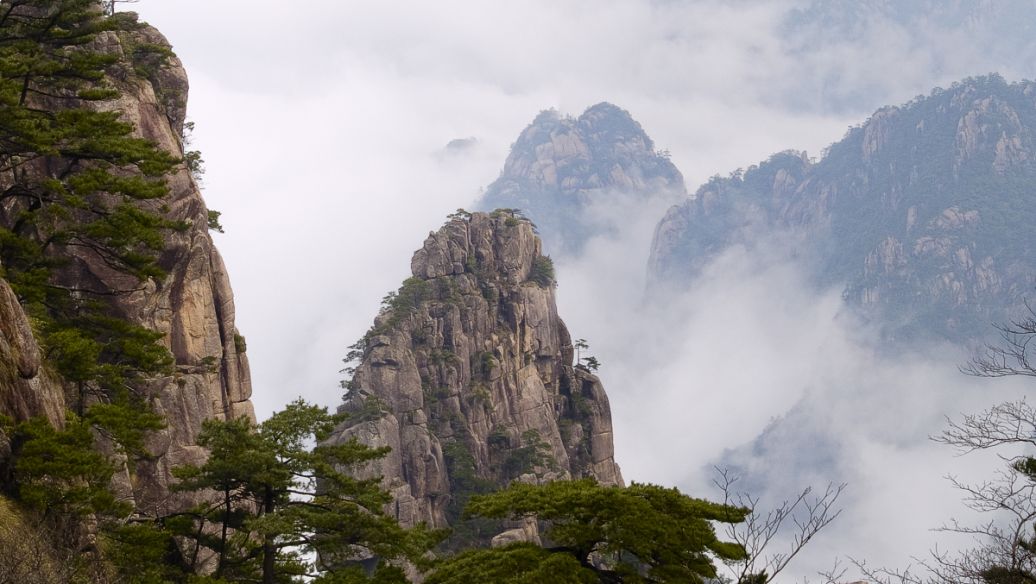 Geologically, Mount Hua is a textbook example of a horst—a fault-block mountain where a single slab of granite was lifted skyward and then sculpted by millions of years of wind and rain. The result is a landscape of breathtaking severity: five main peaks pierce the skyline like the teeth of a giant comb, with the South Peak crowning the entire Chinese sacred-mountain system at 2,154.9 meters. Western hikers will recognize the alpine grandeur of the Dolomites, but Mount Hua's scale feels more concentrated and theatrical—a stage set for mythology rather than a mere mountain range.
The mountain's signature experiences push human limits in ways few European trails can match. The Long Sky Plank Walk clings to a near-vertical cliff above a yawning chasm, often compared to Spain's El Caminito del Rey but more demanding. The Black Dragon Ridge (Canglong Ridge) is a blade of rock barely wide enough for two feet, once famously crossed only after earlier climbers were hauled up by iron chains. These are not staged attractions but genuine, still-active pilgrim paths—the same routes monks, generals, and poets have walked for two millennia.
Culturally, Mount Hua has been sacred since at least the Zhou Dynasty, and the Western Yue Temple at its foot—founded in the Han era and rebuilt through the Ming and Qing—ranks as the grandest of all imperial altars to the Five Sacred Mountains. Its courtyards and steles function much like a cathedral complex: a place where emperors paid tribute to heaven and earth. The mountain itself became one of the birthplaces of Quanzhen Taoism in the 12th century, home to legendary immortals like Chen Tuan, who was said to slumber for decades in a single cave. For readers of wuxia fiction, this is the very peak where fictional swordsmen gathered to duel for supremacy.
The most efficient route is the "West Up, North Down" loop: a spectacular cable car lifts you to the West Peak in under twenty minutes—comparable in engineering ambition to Switzerland's modern alpine lifts—then you traverse on foot across West, South, East, and Central Peaks before descending the dramatic Canglong Ridge to the North Peak and a second cable car. Allow five to six hours. Adventurous travelers with full fitness can instead start the old-fashioned way at Jinsuo Pass at midnight and climb six hours in darkness to greet sunrise from the East Peak—an experience that echoes pilgrimage traditions from Camino de Santiago to Mount Sinai.
Practicalities are non-negotiable. Mount Hua requires real-time ID booking, with tickets selling out three to seven days ahead in peak season (April–October). Bring sturdy hiking shoes with grip, leather gloves for gripping chains, and a windproof jacket—summit temperatures at night drop to around 15°C even in July. The Plank Walk and the even more vertiginous Hawk Flip cost extra, require signing a liability waiver, and close in rain or wind; those with vertigo or heart conditions should sit this out. Cable cars also halt in storms, so always check the official weather and operations bulletin the morning of your climb.
Geologically, Mount Hua is a textbook example of a horst—a fault-block mountain where a single slab of granite was lifted skyward and then sculpted by millions of years of wind and rain. The result is a landscape of breathtaking severity: five main peaks pierce the skyline like the teeth of a giant comb, with the South Peak crowning the entire Chinese sacred-mountain system at 2,154.9 meters. Western hikers will recognize the alpine grandeur of the Dolomites, but Mount Hua's scale feels more concentrated and theatrical—a stage set for mythology rather than a mere mountain range.
The mountain's signature experiences push human limits in ways few European trails can match. The Long Sky Plank Walk clings to a near-vertical cliff above a yawning chasm, often compared to Spain's El Caminito del Rey but more demanding. The Black Dragon Ridge (Canglong Ridge) is a blade of rock barely wide enough for two feet, once famously crossed only after earlier climbers were hauled up by iron chains. These are not staged attractions but genuine, still-active pilgrim paths—the same routes monks, generals, and poets have walked for two millennia.
Culturally, Mount Hua has been sacred since at least the Zhou Dynasty, and the Western Yue Temple at its foot—founded in the Han era and rebuilt through the Ming and Qing—ranks as the grandest of all imperial altars to the Five Sacred Mountains. Its courtyards and steles function much like a cathedral complex: a place where emperors paid tribute to heaven and earth. The mountain itself became one of the birthplaces of Quanzhen Taoism in the 12th century, home to legendary immortals like Chen Tuan, who was said to slumber for decades in a single cave. For readers of wuxia fiction, this is the very peak where fictional swordsmen gathered to duel for supremacy.
The most efficient route is the "West Up, North Down" loop: a spectacular cable car lifts you to the West Peak in under twenty minutes—comparable in engineering ambition to Switzerland's modern alpine lifts—then you traverse on foot across West, South, East, and Central Peaks before descending the dramatic Canglong Ridge to the North Peak and a second cable car. Allow five to six hours. Adventurous travelers with full fitness can instead start the old-fashioned way at Jinsuo Pass at midnight and climb six hours in darkness to greet sunrise from the East Peak—an experience that echoes pilgrimage traditions from Camino de Santiago to Mount Sinai.
Practicalities are non-negotiable. Mount Hua requires real-time ID booking, with tickets selling out three to seven days ahead in peak season (April–October). Bring sturdy hiking shoes with grip, leather gloves for gripping chains, and a windproof jacket—summit temperatures at night drop to around 15°C even in July. The Plank Walk and the even more vertiginous Hawk Flip cost extra, require signing a liability waiver, and close in rain or wind; those with vertigo or heart conditions should sit this out. Cable cars also halt in storms, so always check the official weather and operations bulletin the morning of your climb.